What Impacts the Price of Handcrafted Timber Furniture in NZ?

Why Nobody Gives You a Straight Price
You've found a timber table you love, but there's no price on it. Most makers don't publish prices, so you end up guessing. Then the quote lands, and it's not what you expected. That's frustrating, and it's fair to want a clearer picture before you ask.
The price of handcrafted timber furniture in NZ comes down to six things: the timber, the slab size, the design, the finish, the labour hours and delivery. This guide puts real dollar ranges on each one, so you can see where the money goes before you pick up the phone.
What affects the price of handcrafted timber furniture in NZ? Timber choice, drying time and skilled labour hours are the main drivers. A typical dining table reflects about 28 hours of hands-on work and costs roughly $2,500 to $6,000. Coffee tables and benches usually run $800 to $1,800.
The rest of this guide shows how those numbers add up.
Key Takeaways
A typical dining table costs about $2,500 to $6,000 and takes about 28 hours of hands-on work.
Coffee tables and benches usually cost $800 to $1,800.
Timber choice can change the same table's price by about $3,500.
Thicker, wider and longer slabs cost more, and width is the biggest jump.
Labour is roughly 60% of a mid-range price.
Ask for design, materials, finish, delivery and lead time in writing.
Six Cost Drivers at a Glance
Every quote is really six lines added together. This table shows what each line covers and how far it can move your price. Prices are indicative, include GST and were last reviewed.

Note: Prices are a guide only. Contact Plankville for a tailored quote.
If you're still deciding whether custom is right for you, read when custom timber furniture is worth the investment first, then come back for the numbers.
Indicative Prices by Piece
Start here if you just want a ballpark. These ranges assume macrocarpa and an oil finish.

Note: Prices are a guide only. Contact Plankville for a tailored quote.
Dining tables sit at the top because they need the biggest slabs. Coffee tables and benches cost less because they use less timber and fewer hours. Outdoor pieces are priced by timber and finish, so browse our outdoor garden furniture to see what's on offer. Planning a shop counter or reception desk? Our post on custom timber slabs for Nelson businesses covers what fit-outs involve.
How Timber Choice Changes the Price
Timber is the biggest choice you'll make, and it can swing the same table by thousands of dollars. This table prices one dining table (2.2 m long, 50 mm thick top, oil finish) in four timbers.

Note: Prices are a guide only. Contact Plankville for a tailored quote.
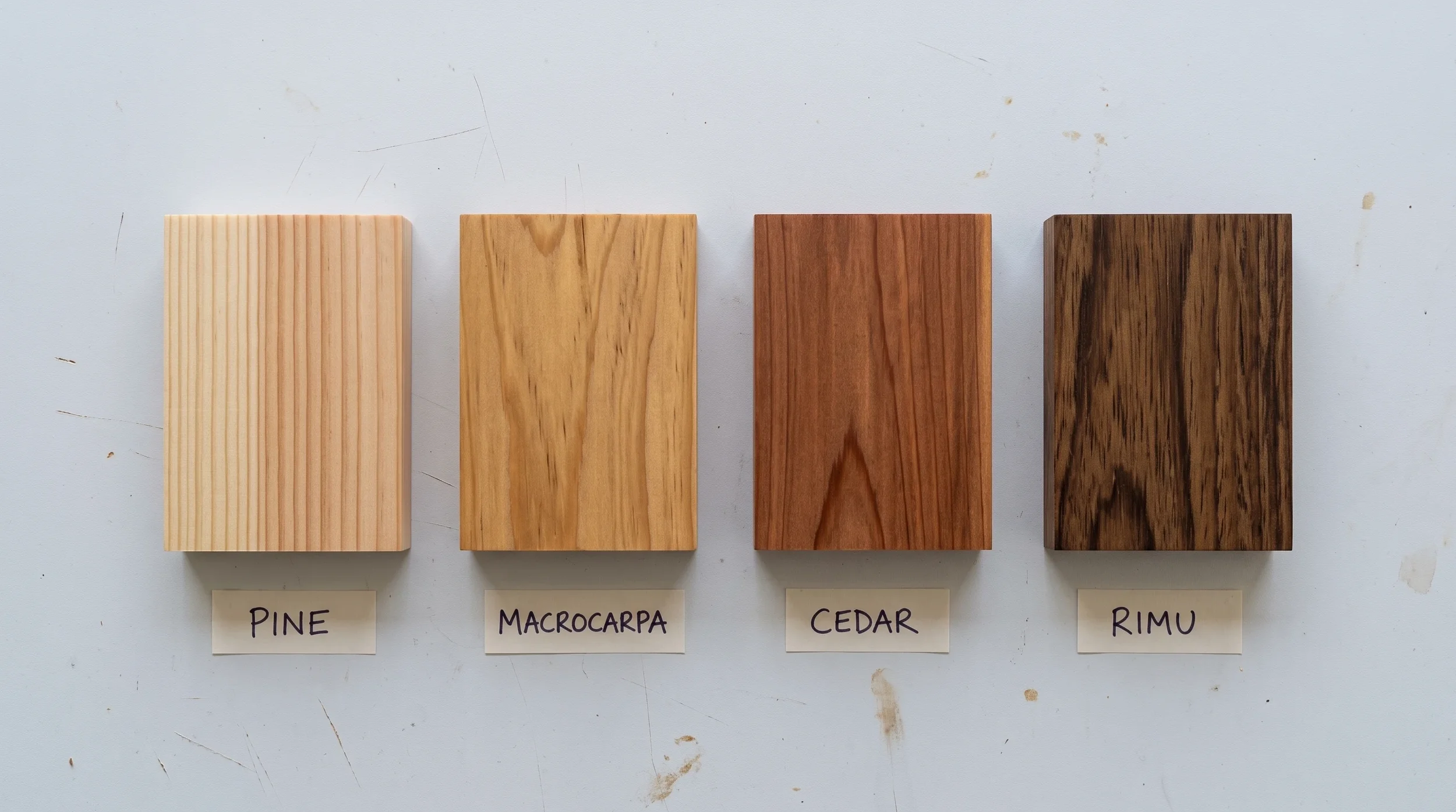
Pine is the budget pick. It grows quickly, so the timber costs less, but it's softer and dents more easily. Macrocarpa costs more because it grows slower, though it's tough and has a warm golden colour. Cedar gives you wide, light slabs, and our Himalayan cedar slabs show what's possible. Recycled Rimu and Totara sit at the top because they're scarce and need careful cleaning up before building starts.
We mill much of our timber on site, so we can tell you exactly what's in your slab. For a closer comparison, read redwood vs cedar vs macrocarpa.
What Size and Slab Choice Do to the Price
Size matters more than most people expect, because timber is priced by volume and scarcity. Three choices move the cost the most.
Thickness
A 50 mm slab holds 25% more timber than a 40 mm slab, so the timber cost rises by about the same. A 60 mm slab adds about 50%. Thicker tops look bolder, but you only need the extra if you want that chunky look. Our guide to choosing the right timber thickness shows what suits tables, benches and shelving.
Length and width
Length adds cost steadily, then jumps once slabs pass about 2.4 m, because long slabs are harder to find. Width is the bigger jump. Wide slabs come from large, old trees, and there aren't many of them. A single 900 mm slab often costs more than two 450 mm boards joined together. So yes, a bigger slab costs more per metre, and the price climbs faster the larger it gets.
Live-edge or milled
Live-edge slabs keep the tree's natural edge. Milled boards have straight, machined edges. Live-edge costs more to select but less to shape, and milled is the other way round, so final prices often sit close together. Choose by look, and see live-edge vs milled timber slabs if you're torn.
Labour, Design and Drying Time
Labour and design
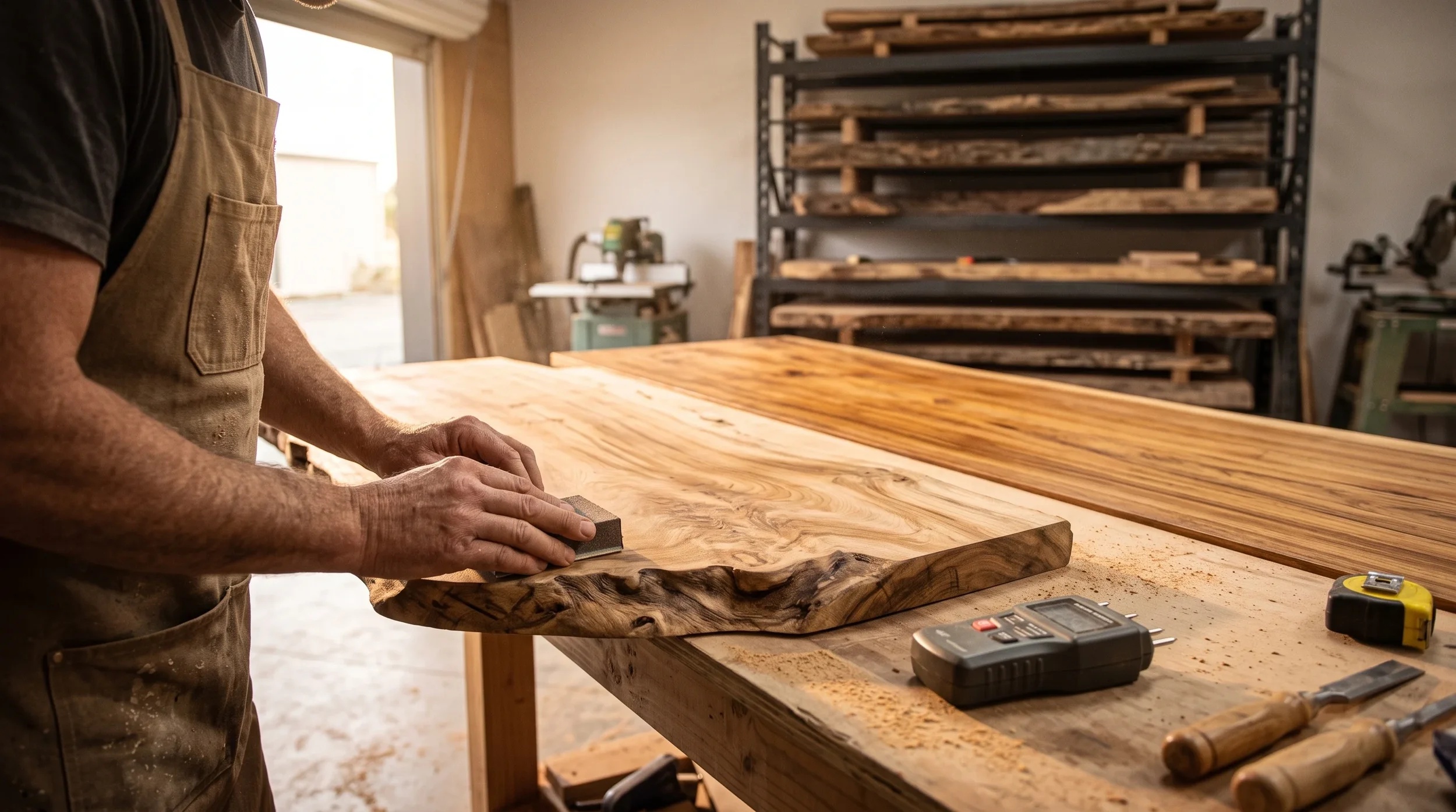
Labour is the biggest line on most quotes, at about 60% of a mid-range dining table. Our indicative workshop rate is around $90 an hour, and a typical dining table takes about 28 hours from first sketch to final coat. [CONFIRM] That covers measuring, flattening and joining the slab, building the base, sanding and finishing.
Design changes the hours. A simple trestle-style base is quicker than curved legs, a bookmatched top or butterfly keys, which can add 5 to 15 hours. For the joinery and hand-finishing detail, see what makes timber furniture truly handcrafted and how Plankville crafts timber furniture by hand.
Drying
Drying adds cost because slabs tie up yard space and time while they season, and thicker slabs take longer. That's why properly dried timber costs more than freshly cut wood. Not sure how to check a slab? Read our guide to buying dry timber slabs.
A Worked Example: One Dining Table, Line by Line
Numbers are easier to trust when you can see them add up. Here's how a quote for a 2.2 m macrocarpa dining table that seats eight might look. It has a 50 mm live-edge top, a timber trestle base and a hardwax oil finish.

Note: Prices are a guide only. Contact Plankville for a tailored quote.
Notice where the money goes. Labour is about 60% of the total ($2,475 for 27.5 hours), and timber is about a third. Finish materials and delivery make up the rest. Swap the macrocarpa for pine and the same table drops to about $3,000. Swap it for recycled Rimu and it passes $6,000.
Ways to Lower the Price Without Losing Quality
You have more control over the price than you might think. Start with the timber: macrocarpa or pine cost less than rarer species and still build a strong table. Next, keep the top around 40 mm thick and under about 2.2 m long, since those sizes avoid the steepest price jumps. A simple base saves hours, and choosing from slabs already in the yard saves search time. If the piece is going indoors, an oil finish costs less than a heavy-duty outdoor coating. You can also collect from the workshop instead of paying for delivery.
Don't cut back on drying or solid joinery. Those two things decide whether the piece still looks good in ten years.
Key Benefits of Knowing the Numbers First
A realistic budget before you visit the workshop
Like-for-like comparisons when you have more than one quote
Clear places to save, so you can trim cost without losing quality
No surprises, because you know what each line means
Turn These Ranges Into Your Own Number
Ready for a real price? Tell us the piece, the rough size and the timber you like, and we'll send you a tailored quote. Call us on 021 545575, email brent@plankville.co.nz, or use the contact page. You're also welcome to visit the workshop at 7B Cargill Place, Richmond, Monday to Friday, 8am to 5pm.
Want to see timber first? Browse our wood products and slabs, flitches and specialty wood, or read where to buy custom timber furniture in Nelson Tasman.
Now You Can Read Any Quote With Confidence
Price stops feeling like a mystery once you know the six drivers. Timber, slab size, design, finish, labour and delivery each add a line, and you now know roughly how big each line should be. Use the ranges as a starting point, then ask for a quote that shows every line. That's the easiest way to compare makers fairly, and to get a piece that fits both your space and your budget.
FREQUENTLY ASKED QUESTIONS
-
A custom solid timber dining table in NZ usually costs between $2,500 and $6,000. A smaller macrocarpa table with a simple base sits near the bottom of that range. A larger table with a wide slab, or rare timber such as recycled Rimu, sits near the top or above it. A typical Plankville table takes about 28 hours of hands-on work, and every table is quoted individually.
-
Cost follows growth speed, supply and effort. Pine grows fast and is easy to source, so it costs least. Macrocarpa and cedar grow slower and give wider, tougher slabs. Recycled Rimu and Totara are scarce, and old nails and wear mean extra preparation time. On the same 2.2 m dining table, the gap between pine and recycled Rimu can be about $3,500.
-
Yes. Timber is priced by volume, so a 50 mm slab costs about 25% more than a 40 mm slab of the same size. Width matters even more. Wide slabs come from large, old trees, and there are fewer of them, so the cost per metre rises faster. Very long slabs, past about 2.4 m, are also harder to find, which pushes the price up again.
-
A Plankville quote covers five things: design and measuring, timber and fixings, the finish, delivery or pick-up, and lead time. Lead time is usually 4 to 8 weeks. We set out each line so you can see where the money goes, and compare it fairly with other makers. If anything looks unclear, ask us to explain it before you decide.
-
Yes. Choose macrocarpa or pine instead of rarer timbers, keep the top around 40 mm thick, and pick a simple trestle-style base. Choosing from slabs already in the yard, and collecting from the workshop, can trim the bill too. Keep the proper drying and solid joinery, because they protect the piece for years. A tailored quote will show which changes save the most.
-
Handcrafted timber coffee tables and benches usually cost between $800 and $1,800. Length and thickness move the price the most, followed by the timber you choose. Most take about 6 to 16 hours of workshop time. Outdoor benches can cost a little more if they need a tougher timber or a heavy-duty finish to cope with sun and rain.
-
A typical handcrafted dining table takes about 28 hours of hands-on work. That covers design and measuring, preparing and joining the slab, building the base, and sanding and finishing. Simple tables can take around 20 hours, while large or detailed ones can take 40 or more. At about $90 an hour, labour makes up roughly 60% of a mid-range price.
-
Not always. Live-edge slabs cost more to select because each one is unique, but they need less shaping. Milled boards cost less to buy but need more machining and joining. The final price often lands close, so it's best to choose by look. Our live-edge vs milled guide shows the differences side by side, with photos to help you decide.
-
It can. Outdoor pieces need durable timber such as macrocarpa or cedar, plus a tougher finish to handle Nelson Tasman sun and rain. That can add $100 to $400 for the finish alone. Indoor pieces can use a wider range of timbers and a lighter oil finish, so there's usually more room to save if you're working to a budget.
-
Yes, usually as its own line. Delivery covers packing, transport and setting the piece in place. Within Nelson Tasman it typically costs $100 to $250, and it costs more for longer trips because solid timber is heavy. You can also collect from our Richmond workshop. Ask for delivery to be listed separately on your quote so you can compare it fairly.
