
How Can You Tell If Timber Slabs Are Properly Dried Before Buying in NZ?

Imagine spending weeks designing, sanding, and coating a beautiful new dining table. You put it in your living room, proud of your hard work. But a few months later, something terrible happens. The flat surface starts to twist. A loud pop echoes through the room as a giant crack splits right down the middle of your beautiful creation. This heartbreak happens all the time to woodworkers and DIY lovers across New Zealand. It almost always stems from a single, overlooked mistake: buying wood that was still wet on the inside.
Key Takeaways
Always aim for an internal moisture content between 8% and 12% for any indoor furniture projects.
Use a high-quality pin-type moisture meter to check the very centre of the slab before you hand over any money.
Kiln drying is the premier method for ensuring deep, uniform dryness that protects against warping inside heated homes.
Transport and store your timber with extreme care during a wet Kiwi winter to prevent the wood from absorbing damp air.
Discover more about our values and local milling expertise by visiting the about page.
Overview
When you look for the perfect piece of wood, it is easy to get caught up in beautiful grain patterns and raw edges. However, the most important feature of any wood slab is completely invisible. It is the amount of water trapped inside the cells of the timber. In this guide, we will break down exactly how to protect your hard work and budget. We will explain what wood moisture content means, compare traditional air drying with modern kiln drying, and share crucial winter buying tips for shoppers in the Tasman region. By understanding these simple principles, you can choose premium wood with total confidence every single time.
Why Properly Seasoned Slabs Matter for Furniture Projects
Wood behaves very much like a natural sponge. When a tree is alive, it is full of water. After the tree is cut down into beautiful raw pieces, that water slowly escapes. If you build furniture using wood that has not finished shrinking, the wood will continue to dry out inside your home. Because modern indoor spaces are warm and dry, wet wood will rapidly lose its remaining water. This causes different parts of the slab to shrink at different speeds, leading to severe bending, bowing, and splitting.
When you invest in high-quality raw materials, you are buying more than just a piece of a tree. You are buying structural stability. A properly seasoned piece of wood has already done all its major moving. The internal stresses have settled down. This means your tables will stay flat, your joints will remain tight, and your hard work will last for generations. Whether you are browsing through raw timber or selecting a feature piece for a commercial fit-out, choosing stable wood is the ultimate foundation for success.

Understanding Wood Moisture Content in New Zealand
What is the Ideal Moisture Percentage?
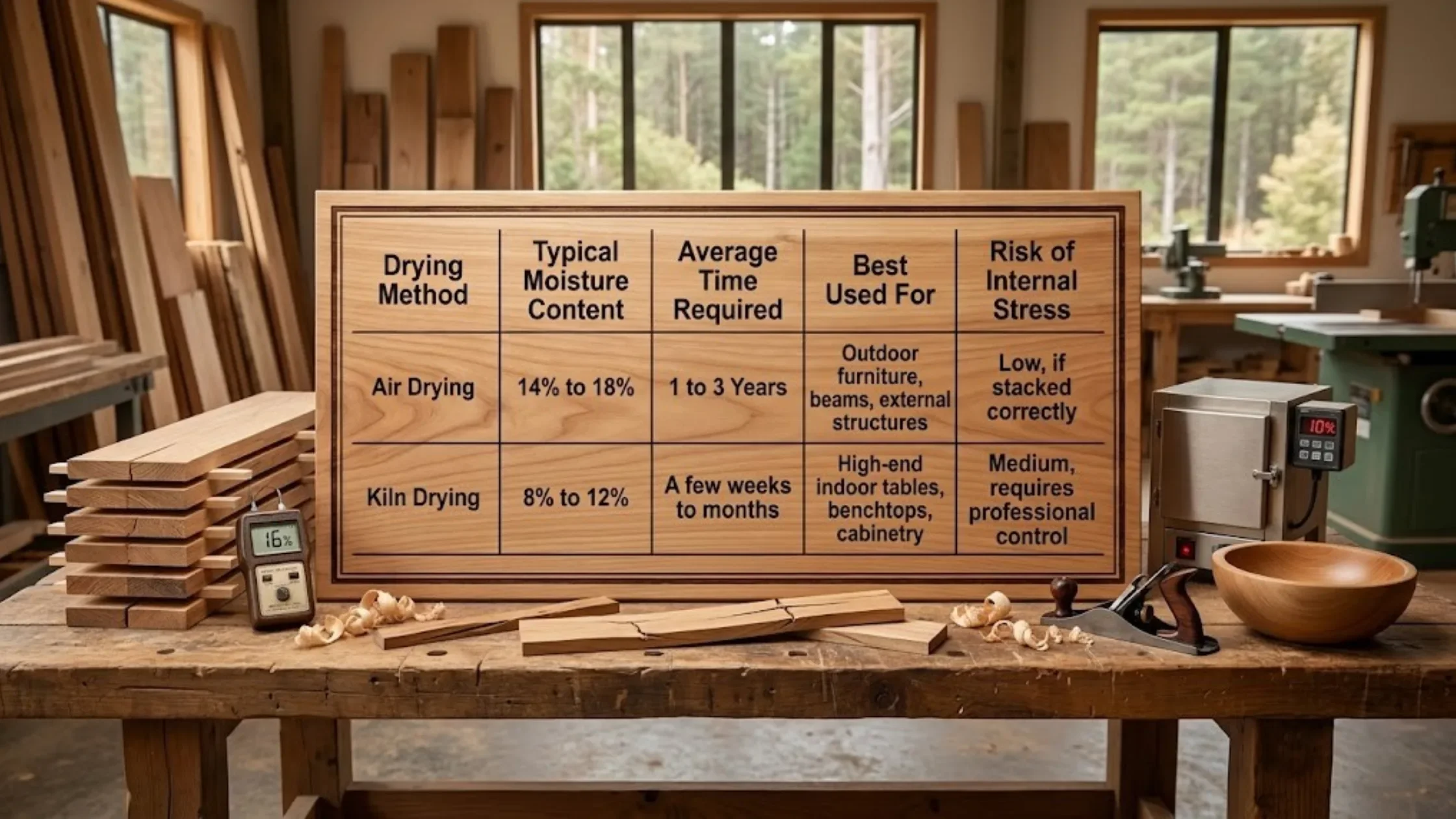
To talk about dry wood accurately, we use a measurement called Moisture Content, or MC for short. This is the weight of the water inside the wood compared to the weight of the wood when it is completely dry. For indoor furniture used in most New Zealand homes, the magic number you want to look for is between 8% and 12%.
If you are building something for the outdoors, like a garden bench, a deck, or rustic sheds, the wood can have a slightly higher moisture content of around 14% to 16%. This is because outdoor air is naturally more humid, so the wood will naturally balance out with the damp Kiwi atmosphere.
How Regional Climates Impact Your Timber
Our weather plays a massive role in how wood behaves. In places like Richmond and the wider Tasman district, we enjoy beautiful sunshine, but we also experience cold, damp winters. Wood is constantly breathing in moisture when the air is wet and breathing it out when the weather is dry.
This continuous balancing act is called reaching its equilibrium moisture content. If you buy a slab that was dried in a completely different climate, it needs time to rest and adjust to the local Tasman air before you start cutting it. If you rush into building, you risk forcing the wood to adapt too quickly while it sits in your workshop.
The Battle of the Drying Methods: Air-Dried vs. Kiln-Dried
Traditional Air Drying: The Long Game
Air drying is the traditional method used by sawmills for centuries. The green slabs are stacked carefully on flat ground with small wooden strips, called stickers, placed between each layer. This allows the fresh Tasman breeze to move freely between the pieces, slowly carrying the water away.
The golden rule for air drying is simple: it takes about one year of waiting for every 2.5 centimetres of wood thickness. While this slow process creates beautifully stable wood with excellent colour, it rarely gets the wood below 14% moisture content on its own due to our natural outdoor humidity.
Kiln Drying: Precision Engineering for Interior Furniture
To get timber down to that perfect 8% to 12% range for indoor use, it usually needs to spend time inside a kiln. A kiln is essentially a large, insulated room that acts like an oven mixed with a dehumidifier. By carefully controlling heat, airflow, and humidity, a kiln master can gently bake the remaining deep-down moisture out of the thickest slabs. This high-tech environment ensures consistency throughout the entire piece, making it the premier choice for beautiful interior wood products.
How to Test and Tell if a Timber Slab is Truly Dry
The Pin-Type Moisture Meter: Your Best Friend
You cannot determine if a slab is ready just by looking at it or touching it with your bare hand. The absolute best way to check is with a digital pin moisture meter. This handy tool has two sharp metal pins that you gently push into the surface of the timber. The meter runs a tiny, harmless electrical current between the pins. Because water conducts electricity much better than dry wood fibers, the tool can instantly calculate the exact moisture percentage.
"When testing a thick slab with a meter, always try to take a reading near the center of the wood rather than just at the very tips. The ends of a log always dry out first, but the core can still hold onto a dangerous amount of water."
The Physical Signs of Wet vs. Dry Timber
If you do not have a digital meter with you while browsing, there are a few physical clues that can help you spot wet wood. First, lift the piece if it is small enough. Wet wood feels incredibly heavy because you are literally lifting litres of water trapped inside. Dry wood feels significantly lighter and warmer to the touch.
Second, listen to the sound it makes. If you tap a dry piece of timber with a hard object, it will produce a clear, ringing sound. Wet wood will give you a dull, heavy thud. Finally, look closely at the bark. If the live edge bark is loose and falling off easily, it is generally a good indicator that the wood has lost a lot of its moisture and is shrinking away from its outer skin.
Pro Winter Buying Tips for Timber Slabs in New Zealand
Navigating Ambient Humidity and Rain
Buying raw materials during a damp New Zealand winter requires extra care. Even if a slab has been perfectly kiln-dried, leaving it exposed to misty winter air or rain during transport means it will act like a sponge and soak up surface dampness instantly. When you go to purchase your wood, always check that the supplier stores their premium stock completely indoors, safe from the elements.
Safe Storage and Transportation Secrets
When you bring your new piece home during the colder months, do not immediately store it in a damp garage or leave it uncovered in the back of your vehicle. Wrap it carefully for the drive home. Once it arrives at your workspace, lay it completely flat on elevated wooden blocks off the cold concrete floor. Give it at least a couple of weeks to rest and get used to the unique temperature of your home before you begin your project. This simple step saves endless frustration later on.
Key Benefits of Buying Properly Dried Timber
Total Structural Stability: Your finished tables, desks, and shelves will stay perfectly straight and beautiful for years to come without twisting out of shape.
Beautiful Finish Adhesion: High-quality oils, resins, and clear coats bond deeply with dry wood cells, preventing ugly bubbling or peeling over time.
Easy to Machine and Cut: Dry wood cuts cleanly, saves your power tool blades from dulling prematurely, and produces crisp, beautiful joinery.
No Unwanted Guests: The heating process used during professional drying eliminates any hidden insects or fungal spores living inside raw logs.
Conclusion
Purchasing a timber slab is the exciting start of a creative journey. By focusing on correct moisture content, understanding the difference between air and kiln drying, and protecting your timber from winter dampness, you protect your time and money. Do not risk your hard work on mysterious, cheap timber from unknown sources. Always partner with a trusted local expert who understands the science of wood. If you want to see how top-tier timber is prepared properly right here in the Tasman district, take a look at our Plankville in action page to see our team doing what they do best.
Ready to Turn Premium Wood Into Beautiful, Lasting Furniture?
Are you ready to find the perfect, stable, and beautifully seasoned piece for your next project? Browse through our incredible range of premium wood products or read more expert tips on our dedicated blogs page. The passionate team at Plankville is always here to help you select the ideal piece of timber for your specific needs. Head over to our contact us page today to send an enquiry, or visit us in Richmond to see our beautiful slabs in person!
FREQUENTLY ASKED QUESTIONS
-
As a general rule of thumb, raw timber slabs take about one full year of air drying for every 2.5 centimetres of thickness. However, because New Zealand has high natural humidity, air drying alone will rarely bring the wood's moisture content below 14%. To make it safe for indoor furniture, it usually needs to finish drying inside a professional kiln.
-
Building with wet timber is a recipe for heartbreak. As the trapped water evaporates inside your warm home, the wood fibers will shrink unevenly. This internal stress causes the timber to warp, bow, cup, or even crack right down the middle. It can also cause glue joints to fail and ruin expensive oils or resin finishes.
-
No, you cannot safely trust a surface reading alone. The outer layers of a timber slab will always dry out much faster because they are exposed to the surrounding air. The deep interior of a thick slab can still be completely wet. Always try to get a reading from a freshly cut end or press your meter firmly into the core.
-
Kiln drying uses controlled heat and airflow to remove deep internal moisture that air drying cannot reach. It brings the timber down to a stable 8% to 12% moisture level, which perfectly matches the air inside modern homes. This process also sterilises the wood, ensuring there are no bugs or fungi left alive inside.
-
You should store your slab completely flat in an indoor area that has similar humidity to the room where the finished furniture will live. Keep it elevated off concrete floors using small, even wooden blocks. Never store it standing up against a wall, as this uneven weight distribution can cause the wood to bow over time.
-
For outdoor projects like garden boxes, fences, or exterior structures, a moisture content of 14% to 16% is absolutely perfect. Because New Zealand's outdoor air is naturally damp, the wood will stay in balance with the environment. If you use wood that is too dry outdoors, it will swell up when it rains.
-
To get an accurate result, push the two metal pins firmly into the wood grain. Take multiple readings along the entire length of the slab, focusing heavily on the middle section rather than just the tips. It is also wise to take a reading from both sides of the timber to ensure the dryness is even throughout.
-
Yes, different tree species dry at completely different speeds. Softwoods like pine release their water relatively quickly and easily. Dense hardwoods and certain specialty timbers take much longer because their cell structures are tightly packed together. A skilled sawmill master will adjust drying times based on the species.
-
It is perfectly safe to buy timber in winter as long as you buy from a reputable supplier who stores their dried stock completely indoors. You must also ensure the slab is wrapped securely during transport so winter rain cannot hit the dry surface, and give it time to adjust to your home's air.
-
You can find an incredible selection of beautifully seasoned, locally sourced timber slabs at Plankville, located right here in Richmond, Tasman. The team handles the milling and drying process with expert care to ensure your project succeeds. You can reach out to them directly through their official website.
Would you like to explore further details for your upcoming woodwork project?
