
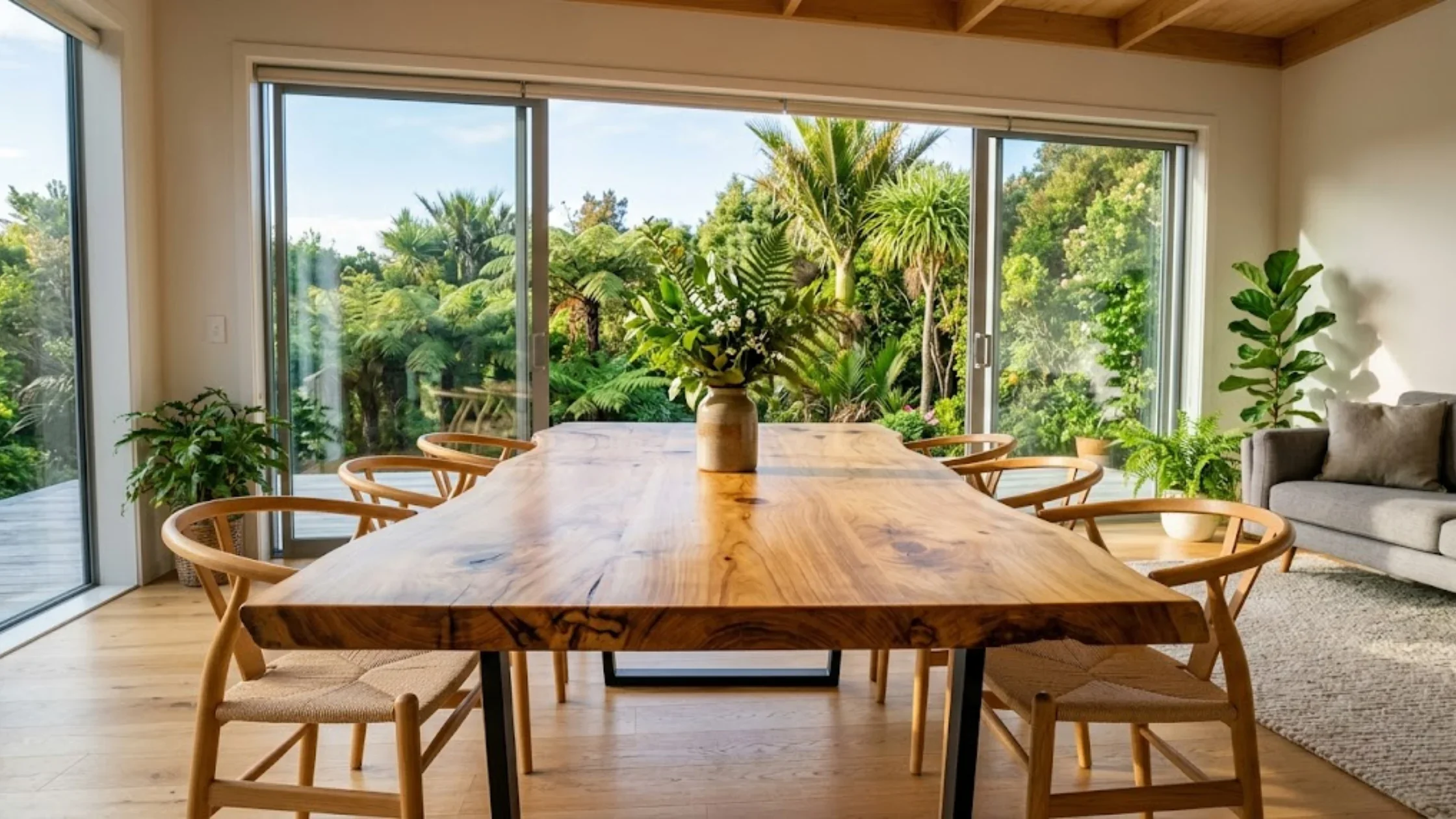
Imagine walking into your dining room and seeing a table that feels like it has a soul. You run your hand across the surface and feel the history of a New Zealand forest. It isn’t just a piece of furniture; it is a talking point, a place where family stories are told, and a solid part of your home that will be there for your grandchildren.
When you are looking for new furniture, the choices can feel overwhelming. You keep hearing terms like solid timber slabs and engineered wood, but what do they actually mean for your home? Choosing the right material is the difference between buying a forever piece and buying something that might end up in a landfill in five years. In this guide, we will look at timber slabs vs engineered wood to help you decide which is the perfect match for your lifestyle and your New Zealand home.
Key Takeaways
Timber slabs are single, solid pieces of wood with unique grains.
Engineered wood is made of layers glued together with a thin wood top.
Solid timber can be sanded and fixed many times over decades.
Engineered wood is often cheaper but cannot be easily repaired.
Natural slabs offer a unique, one-of-a-kind look for your home.
What Exactly is a Timber Slab?
A timber slab is exactly what it sounds like. It is a thick, solid slice of a tree. When a large log is cut at a sawmill like Plankville, it is sliced into long, wide pieces. These pieces keep the natural edge of the tree, which is why people love them for dining tables, kitchen islands, and desks.
Because it is one solid piece of organic material, it breathes. It has a weight and a warmth that man-made materials simply cannot copy. When you choose timber products that are solid, you are choosing a piece of nature that has been dried and crafted to stay beautiful for a lifetime.
Understanding Engineered Wood and MDF
On the other side of the shop, you will find engineered wood. This isn’t a single piece of a tree. Instead, it is a sandwich of materials. Usually, it has a core made of plywood or MDF (Medium Density Fibreboard) with a very thin layer of real wood glued on top. This top layer is called a veneer.
While it looks like real wood at first glance, it behaves very differently. In the debate of solid wood vs MDF NZ buyers often find that MDF is much lighter and easier to move, but it lacks the strength of the real thing. Because it is held together by glues and resins, it doesn't have the same life as a solid slab. You can learn more about how these compare in flooring by looking at how to choose engineered vs solid timber.

The Real Benefits of Timber Slabs
The biggest reason Kiwis choose timber slabs is the slab furniture benefits regarding durability. If you spill red wine on a solid timber table, or if your kids decide to use it as a craft station with permanent markers, you don't need to panic. You can sand the surface down and refinish it. It becomes brand new again.
Engineered wood is different. Because the top layer is so thin, you can usually only sand it once—or not at all. If the veneer peels or gets a deep scratch, the fake material underneath shows through, and the piece is often ruined. This is why many people prefer choosing hardwood over engineered options.
Style and the New Zealand Aesthetic
Our homes in New Zealand often celebrate the outdoors. We like big windows, natural light, and materials that feel grounded. A solid timber slab fits this style perfectly. Every slab has its own knots, swirls, and colour variations. No two tables will ever be the same.
Engineered wood is made in a factory to look uniform. Every piece looks like the next one. While this might work for a very modern, clinical office, it often lacks the character that makes a house feel like a home. If you are looking for something that stands out, the natural beauty of New Zealand timber is hard to beat.
The Cost of Quality
It is true that engineered wood is usually cheaper at the start. It is easier to mass-produce and cheaper to ship. However, you have to ask yourself about the long-term cost. A solid timber table from Plankville might cost more today, but it will last for 50 or 100 years. If you have to replace an engineered wood table every seven years because it has chipped or warped, you actually end up spending more money over time.
For those building or renovating, you might also be looking at outdoor structures. While we are talking about furniture, the same rules of quality apply to things like timber sheds and outdoor benches. Quality materials always win in the harsh NZ sun and rain.
Which One is Right For You?
If you want something that is easy to put together from a box and you don't mind replacing it in a few years, engineered wood is a fine choice for a temporary fix.
But, if you want a piece of furniture that grows with your family—one that can handle the bumps and scrapes of life and still look better with age—then timber slabs are the way to go. You are investing in a piece of New Zealand craft that supports local sawmills and uses sustainable resources.
Bring the Beauty of Solid Timber Into Your Home
Are you ready to find a piece of wood that tells a story? At Plankville, we specialise in high-quality, locally sourced timber slabs that transform ordinary rooms into extraordinary spaces. Don’t settle for thin veneers and glued-together dust.
Contact the team at Plankville today or visit our yard to hand-pick the slab that will become your next family heirloom.
FREQUENTLY ASKED QUESTIONS
-
The main difference is how they are built. A timber slab is one solid, continuous piece of wood cut directly from a log. Engineered wood is made by gluing together several layers of plywood or fibreboard and covering them with a very thin slice of real wood on top. Solid slabs are much heavier, stronger, and more unique than the factory-made layers found in engineered wood products.
-
In New Zealand’s changing climate, solid wood is often a better choice for longevity. MDF (Medium Density Fibreboard) is made of compressed wood dust and glue. It tends to swell and fall apart if it gets wet or stays in a humid room. Solid wood is much more durable, can be sanded back if it gets damaged, and has a natural beauty that MDF simply cannot match with paint or plastic covers.
-
The biggest benefits are durability and uniqueness. Because a slab is solid, it can last for over a hundred years with basic care. It can be repaired, sanded, and re-oiled many times. Also, every slab has a unique grain pattern and shape created by nature. This means your furniture will be a one-of-a-kind piece that no one else in the world owns, adding massive character to your home.
-
Yes, engineered wood is usually cheaper to buy at first. This is because it uses less high-quality wood and is made in large factories. However, solid timber slabs are often seen as a better investment. Because they last so much longer and can be fixed rather than thrown away, they usually save you money over time. You are paying for a forever piece rather than a temporary item.
-
Maintaining a timber slab is very simple. Most are finished with natural oils or waxes. You just need to wipe it with a damp cloth and avoid harsh chemicals. Every few years, you might want to apply a fresh coat of furniture oil to keep the wood hydrated and glowing. Unlike engineered wood, if you get a deep scratch, you can simply sand that small area and re-apply oil to make it disappear.
-
All wood reacts to humidity, but solid timber slabs are very resilient when properly dried and finished. While they might move slightly as the seasons change, this is a natural process. At Plankville, we ensure our timber is correctly seasoned for NZ conditions. Engineered wood can sometimes struggle more with humidity because the glue between the layers can fail, causing the wood to delaminate or peel.
-
Solid timber can be very sustainable, especially when sourced from local New Zealand forests. It requires less energy to process than engineered wood, which needs lots of glues and chemical resins to hold the layers together. Furthermore, because solid wood lasts so long, it doesn't need to be replaced, which reduces waste in our landfills. It is a natural, biodegradable choice for your home.
-
Absolutely! Timber slabs make incredible kitchen benchtops. They bring warmth to a room that is often full of cold surfaces like stone or tile. Because they are solid, they are tough enough for daily kitchen use. You just need to make sure they are sealed with a food-safe finish. If the bench gets a mark from a heavy pot, it can be sanded out, which you can't do with most engineered surfaces.
-
Repairing engineered wood is very difficult. If the thin top layer (the veneer) chips off, you will see the messy plywood or MDF core underneath. You can't easily sand this away because you will just hit more glue and fake wood. Most of the time, once an engineered piece of furniture is badly damaged, it has to be replaced. Solid timber avoids this problem entirely because it is the same beautiful wood all the way through.
-
Plankville is a locally owned sawmill and timber specialist. We understand the specific types of wood that grow best in New Zealand, like Macrocarpa and Eucalyptus. We handle the wood from the log to the finished slab, ensuring the highest quality. When you buy from us, you aren't just getting a product; you are getting expert advice and a piece of New Zealand history crafted by people who love wood.
