
What Makes Elm Flitches Stand Out for One-of-a-Kind Furniture Projects in NZ?

Why Your Furniture Keeps Looking Like Everyone Else's
Here's the honest truth: most "custom" furniture isn't custom at all. It's built from the same handful of timber species, cut the same predictable way, sitting in the same showrooms up and down the country. If you've ever walked into a home and instantly clocked the dining table because you've seen the exact same one three times before, you already know the problem. Off-the-shelf timber gives you an off-the-shelf result, even when the design is bespoke.
Elm flitches solve this problem in a way few other timbers can. No two flitches look alike, no two grain patterns repeat, and no two finished pieces will ever be mistaken for a factory run. If you're planning a statement table, a bench, or a feature countertop somewhere in Richmond, Tasman, or further afield across New Zealand, this guide will show you exactly why elm deserves a serious look.
Elm flitches stand out because of their wild, interlocking grain, warm honey-to-brown tones, and natural resistance to warping and splitting. They're prized for live-edge dining tables, feature benches, and statement countertops where the timber itself is the design. Because every elm log grows differently, every flitch is genuinely one-of-a-kind. If you want furniture nobody else will own, elm is one of the strongest choices available through Plankville's timber range.
Key Takeaways
Elm flitches offer interlocking, swirling grain that makes every piece unique
The same grain structure gives elm strong resistance to splitting and warping
Elm suits statement dining tables, benchtops, live-edge pieces, and commercial fit-outs
Colour naturally ranges from honey to reddish-brown, often within one flitch
Proper drying and grading matter as much as the grain pattern itself
Local sourcing through Plankville keeps your build traceable and sustainable
What Exactly Is an Elm Flitch?
A flitch is simply a thick slab of timber cut lengthways through a log, keeping the natural edges, grain flow, and character of the tree intact rather than trimming it down into a uniform board. When that timber happens to be elm, you're working with one of the most visually distinctive hardwoods available to New Zealand furniture makers and hobbyists alike.
Elm has a long history as a "workhorse with looks." For centuries it was chosen for wagon wheels, boat keels, and heavy-use furniture because it simply refuses to split easily, even under pressure. That same toughness, paired with a genuinely striking grain pattern, is exactly why elm flitches have become so sought-after for one-of-a-kind furniture builds today. If you're new to the world of milled timber, our guide on buying timber slabs and flitches is a useful starting point before you dive into species-specific choices like this one.
Elm's Grain Character – What Makes It So Different
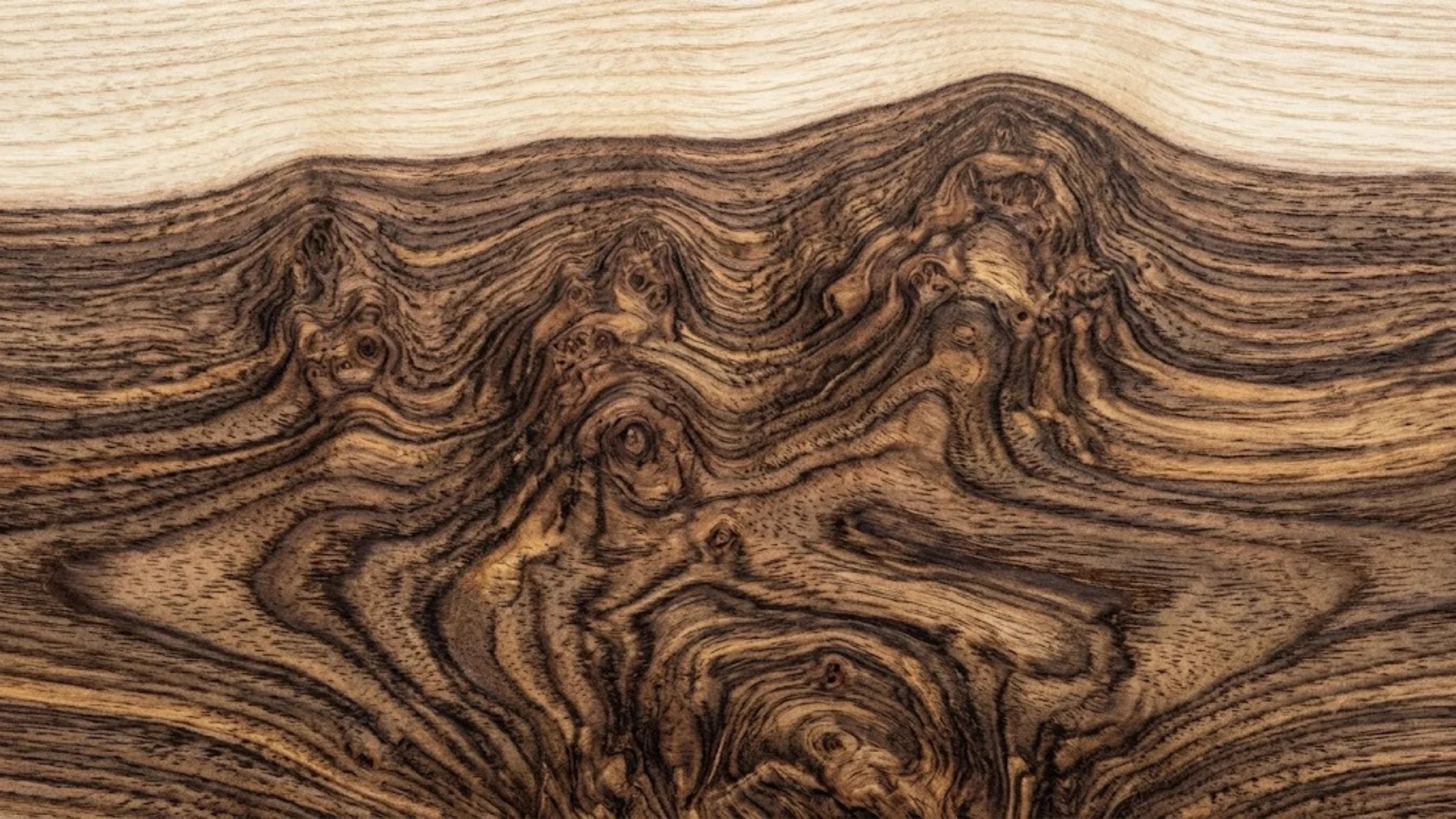
The first thing anyone notices about elm is the grain, and frontloading this point matters because it's genuinely the whole reason people choose it. Elm grain interlocks and swirls rather than running in neat, predictable lines like oak or ash. This happens because elm fibres grow in alternating directions layer by layer, which is exactly what gives you those flowing, almost marbled patterns across a finished slab.
This interlocking structure isn't just decorative. It's also functional. Because the fibres run in different directions, elm resists splitting along a single line, which is precisely why it was historically used for chopping blocks, coffins, and cart wheel hubs. For your furniture project, that translates into a timber that holds up to daily knocks, drink rings, and years of family dinners without cracking along a clean edge.
Colour-wise, elm typically ranges from a soft honey tone through to deeper reddish-brown, often within the same flitch. You'll frequently see darker heartwood streaks running through lighter sapwood, creating natural contrast without needing any stain or dye. Combined with the swirling grain, this is what gives elm furniture its "living" quality: it genuinely looks different depending on the light, the angle, and the time of day.
Why Interlocked Grain Matters for Longevity
A timber's stability over time comes down to how it handles moisture and temperature changes, particularly in New Zealand's variable coastal and inland climates. Elm's interlocked grain structure gives it better resistance to warping and cupping compared with straight-grained species, which matters enormously for large dining tables and benchtops that need to stay flat for decades. If you're comparing species for a bigger commercial or residential build, our piece on redwood vs cedar vs macrocarpa walks through how different timbers perform under similar conditions.

Where Elm Flitches Shine – Ideal Applications
Elm isn't a timber you tuck away as a skirting board or hide under paint. It performs best when it's the actual star of the piece, front and centre, doing the talking.
Statement dining tables are the most popular application by far, and for good reason. A single elm flitch, book-matched or left as one continuous slab, turns an everyday dinner into something that sparks conversation every single time. Our guide to timber slab statement dining tables covers this in more depth if a table is your main project.
Coffee tables and side tables work beautifully too, particularly when you want to showcase a smaller but dramatic section of grain up close, at eye level, where the detail really counts.
Kitchen benchtops and islands benefit from elm's density and knock-resistance, giving you a surface that's genuinely built for daily use rather than just decoration, provided it's finished and sealed correctly for food-safe use.
Feature benches, mantels, and shelving let elm's grain become architectural, almost like a piece of art built into the structure of a room rather than furniture sitting inside it.
Reception desks and commercial fit-outs increasingly use elm because it signals quality and individuality the moment a client walks in, something we've covered in our custom timber slabs for Nelson commercial fit-outs guide.
The Live-Edge Appeal – Bringing the Tree Indoors
Live-edge furniture keeps the natural, uncut outer edge of the log rather than squaring it off, and elm is genuinely one of the best species for this style. Why? Because the same interlocking grain that gives elm its strength also gives live-edge elm pieces a flowing, almost coastal-driftwood quality along the natural boundary, rather than the harsh, splintery edge you sometimes get with more brittle species.
The appeal here goes beyond looks. Live-edge elm connects a finished piece of furniture directly back to the actual tree it came from, bark line, curves, knots and all. For many people building a bespoke home in Richmond or across the wider Tasman region, that connection to a real, specific piece of timber (rather than a manufactured board) is exactly the point. If live-edge is new territory for you, our DIY timber projects guide breaks down what to expect from first cut to final finish.
Elm vs Engineered Timber for Live-Edge Work
It's worth being upfront here: engineered timber simply cannot replicate what a solid elm flitch does. Engineered boards are designed for consistency, which is the opposite of what makes live-edge furniture desirable in the first place. If you're weighing up your options, our comparison of timber slabs vs engineered wood for NZ furniture explains the trade-offs clearly.
Choosing the Right Flitch for Your Bespoke Build
This is where most first-time buyers get stuck, so let's keep it simple. Choosing an elm flitch comes down to matching the timber's natural characteristics to what your finished piece actually needs to do.
Start by thinking about scale. A dining table needs a flitch wide and long enough to seat your household comfortably, ideally without excessive joining, so measure your space before you fall in love with a slab that's simply too small (or too large) for the room.
Next, consider grain orientation. If you want maximum visual drama, choose a flitch with pronounced swirling and colour contrast. If you'd prefer something calmer for a busy family kitchen, a straighter section of the same log can still give you all of elm's strength benefits with a quieter finish.
Then check moisture content and drying. Properly kiln or air-dried elm is essential; timber that hasn't been dried correctly is far more likely to move, crack, or twist once it's inside a heated home. This is exactly why sourcing from an experienced, trusted miller matters so much for bespoke builds, and it's the kind of detail our team talks through with every customer via Plankville's timber services.
Finally, think about grade and defects. A small amount of character, knots, insect trails, subtle checking, is part of what makes elm beautiful, but you'll want an experienced eye assessing whether any given flaw is decorative or structural. Our timber grades and cuts guide is a genuinely useful reference here if you want to understand grading before you buy.
Matching Elm Flitches to Common Projects

Key Benefits of Choosing Elm Flitches
Genuinely one-of-a-kind grain patterns, no two pieces are ever identical
Strong natural resistance to splitting, warping, and daily wear
Warm, versatile colour tones that suit both modern and rustic interiors
Excellent for live-edge designs that keep the timber's natural story intact
Sourced and milled locally, supporting sustainable, traceable timber use across NZ
Ready to Start Your Elm Project? Get in Touch With Plankville
If you've read this far, you're clearly not after another off-the-shelf piece. You want furniture that actually means something, timber with a story, a grain pattern nobody else in Richmond, Tasman, or anywhere else in New Zealand will ever own. That's exactly what an elm flitch delivers.
The next step is simple. Browse the current elm flitch range at Plankville, explore our wider wood products and flitches and slabs selection, or reach out directly via our contact page to talk through your project with our team. You can also see completed builds for inspiration on Plankville in Action, and if you're buying for someone else, a Plankville gift voucher makes choosing easy while still letting them pick their own flitch.
Why Elm Deserves a Place in Your Bespoke Build
Elm flitches aren't just another timber option on a list, they're one of the few materials that genuinely earns the word "bespoke." Between the wild, interlocking grain, the natural strength built into every fibre, and the live-edge appeal that connects a finished piece straight back to the tree it came from, elm gives you something manufactured boards simply cannot replicate.
Whether you're planning a dining table that'll outlast a few house moves or a live-edge feature piece for a new build, elm flitches from Plankville give your project a genuine point of difference, timber that looks like nothing else, because it genuinely is nothing else.
FREQUENTLY ASKED QUESTIONS
-
Elm flitches are mainly used for statement furniture like dining tables, benchtops, and live-edge shelving, where the natural grain and edge of the timber becomes part of the design rather than being hidden or trimmed away.
-
Yes. Elm is prized for furniture because its interlocking grain resists splitting and warping, while its warm colour tones and dramatic figure give finished pieces a distinctive, high-end look without added stain or dye.
-
Elm's wood fibres grow in alternating directions layer by layer, creating an interlocked structure. This produces the swirling, marbled grain elm is known for, rather than the straight lines seen in species like oak or ash.
-
Yes, elm is naturally tough and resistant to splitting, which is why it was historically used for wagon wheels and chopping blocks. Properly finished, it holds up well to daily knocks in a busy home or kitchen.
-
A slab is generally a single cut board, while a flitch refers to the full set of boards cut sequentially from one log, often kept together so the grain and figure match across pieces, ideal for book-matched tables.
-
Absolutely. Elm's flowing grain pairs beautifully with a natural, uncut edge, giving live-edge pieces a soft, organic boundary rather than a harsh or splintery one, which is why it's a favourite for this style.
-
Measure your space first, then look for a wide, ideally book-matched flitch with grain figure that suits your room's style. Confirm it's been properly dried to reduce the risk of warping once installed indoors.
-
Elm furniture needs the same basic care as most solid timber pieces: regular dusting, occasional oiling depending on the finish, and avoiding prolonged direct moisture or sunlight to keep the colour and grain looking their best.
-
Yes, when sourced through experienced local millers who manage supply responsibly. Choosing NZ-milled elm also reduces transport impact compared with imported timber, while supporting local, traceable timber practices.
-
Pricing varies by size, grain quality, and drying method, but elm generally sits in a similar range to other premium feature timbers. It's best to get a direct quote based on your specific project dimensions and style.
