
Quick answer
For cleaning timber tables in a café, wipe between seatings with warm water and a pH-neutral detergent, then dry. Oiled tops need gentle soap and only a sanitiser approved for oil finishes. Never use bleach, steam or scourers. Lacquered tops handle food-safe sanitisers at label strength. Re-oil busy tables every few months and recoat lacquer once the film wears through.
Key takeaways
Cleaning and sanitising are two separate steps: a surface has to be clean before a sanitiser can work properly on it.
Penetrating oils and hardwax oils are worn away gradually by alkaline degreasers and routine disinfectant use, so oiled café tables need a gentler cleaner and more frequent re-oiling.
Two-pack (2K) polyurethane and catalysed lacquers resist chemicals far better than oil, making them the lower-maintenance choice where staff sanitise tables many times a day.
Bleach, steam cleaners, ammonia, acetone and abrasive pads damage almost every timber table finish and should stay off solid-wood tops.
A finish that has worn through is a hygiene problem as well as a cosmetic one, because bare timber absorbs spills and is harder to clean.
The right refinishing interval depends on the finish: oiled tops in a busy café may need refreshing several times a year, while a good 2K lacquer can last years between recoats.
Why is cleaning timber tables in a café so hard on the finish?
A busy café table can be wiped dozens of times a day, and every wipe brings water, detergent and often a sanitiser into contact with the finish. That routine is what keeps you on the right side of your food control plan. It is also, without realising it, what wears out your tables.
Most damage we hear about isn't caused by customers. It comes from a well-meaning cleaning routine that doesn't suit the finish: a spray bottle mixed too strong, a cloth left soaking on the top, or a steam mop used at close. The fix is to match your cleaning products and schedule to the finish on the table, and that's what this guide is about.
If you're still choosing a finish for new furniture, start with our guide to choosing a stain and finish for New Zealand conditions. This post assumes the tables are already on your floor and need to survive daily service.
What's the difference between cleaning and sanitising a tabletop?
Cleaning removes visible food, grease and dirt. Sanitising reduces bacteria on an already-clean surface to a safe level. They're separate steps, and the order matters.
Food safety guidance used across Australia and New Zealand is consistent on this point: sanitisers don't work well when food residue or detergent is still on the surface, so you clean first and sanitise second. The Australia New Zealand Food Standards Code (Standard 3.2.2) requires food contact surfaces and eating utensils to be kept clean and sanitary. Under the Food Act 2014, your Food Control Plan or National Programme sets out how your business does that.
Whether a dining tabletop counts as a food contact surface in your plan is worth confirming with your verifier. Many cafés serve bread, share plates or boards straight onto tables, so most treat them as one. Either way, the wood doesn't care about the paperwork. What matters is that the product you use to meet the rule doesn't destroy the surface it's applied to.
How do you tell whether your table is oiled or lacquered?
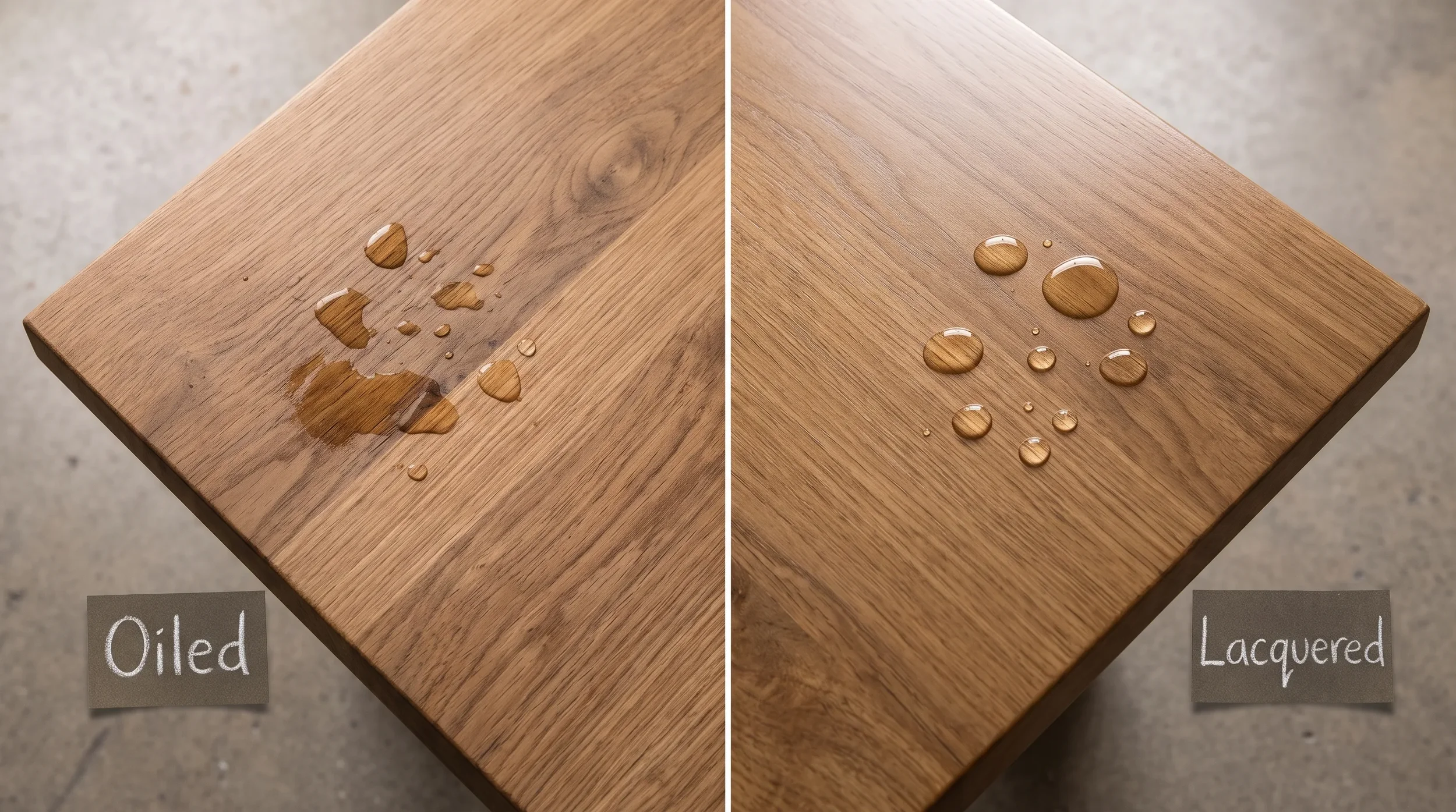
An oiled table feels like wood: you can feel the grain, and the surface has a soft, low sheen. A lacquered or varnished table has a film on top: it feels smooth and slightly plasticky, and wear shows as cloudy, scratched or peeling patches.
Three quick checks help if you're not sure:
Water drop test. Put a few drops of water on a hidden spot. On a well-maintained oil finish they bead at first and slowly darken the wood if left. On lacquer they sit on the surface indefinitely.
Look at the wear points. Lacquer wears to pale, dull or chipped patches where plates slide. Oil wears more evenly and the timber just looks dry and lighter.
Ask the maker. Whoever built or finished the tables should be able to tell you the exact product. That matters, because some oil systems must be maintained with the same brand's products.
Which cleaners are safe on oiled vs lacquered tabletops?
Use a pH-neutral cleaner on every finish. On oiled tops, add only a sanitiser approved for oil finishes; on lacquered tops, most food-safe sanitisers are fine at label strength. The table below matches common finishes to cleaning products.
Finish-to-cleaner reference table
| Finish type | Everyday clean | Sanitiser guidance | Avoid | Typical refresh |
|---|---|---|---|---|
| Penetrating oil (linseed, tung, Danish oil) |
Warm water + few drops of pH-neutral detergent, wrung-out cloth, dry immediately | Use sparingly and only where your plan requires it; wipe off residue with a clean damp cloth | Bleach, ammonia, alcohol sprays, steam, scourers, degreasers | Re-oil when water stops beading; several times a year in a busy café |
| Hardwax oil (e.g. Osmo Polyx, Rubio Monocoat) |
The maker's own soap or surface-care spray | Use a disinfectant the oil maker approves; Rubio Monocoat makes one for Rubio-treated surfaces | Alkaline cleaners, routine general disinfectants, steam, microfibre scrubbing of fresh oil | Spot re-oil worn areas with matching maintenance oil |
| 1K varnish / polyurethane (oil- or water-based) |
Mild detergent and water, dry afterwards | Food-safe quat or alcohol sanitiser at label dilution, wiped dry | Acetone, solvent cleaners, scourers, puddles left standing | Light sand and recoat when film looks worn |
| 2K polyurethane / catalysed lacquer | Mild detergent and water | Most food-safe sanitisers at label dilution | Abrasive pads, acetone, hot pots directly on the top | Recoat when worn through, usually professionally |
| Shellac, wax, nitrocellulose lacquer | Damp cloth only | Not suited to routine sanitising | Alcohol (dissolves shellac), heat, water left standing | Best refinished with a tougher commercial finish |
| Outdoor oil or stain (e.g. Macrocarpa, Cedar picnic tables) |
Soft brush, mild soap, rinse with hose | Sparingly on eating surfaces; rinse afterwards | Bleach, high-pressure water blasters | Re-oil or re-stain every 6–12 months |
A few notes on the table:
Quats (quaternary ammonium compounds) are the most common café sanitiser. As a sanitiser on wood they are gentler than bleach, but residue builds up on surfaces if they're over-concentrated or not dried, which is one reason tables end up sticky. Mix them to the label strength, not stronger.
Alcohol-based sprays are fine on a cured 2K lacquer but can soften shellac and older lacquers, and dry out oil finishes over time.
Concentrated detergent-disinfectants sold for general food premises are a common culprit. At least one UK hospitality furniture supplier warns customers off specific products of this type after seeing them damage new tables. Check the label before any new chemical goes near your tops.
Steam cleaners push hot water into the grain and can strip an oil finish quickly. Keep them for floors and kitchen equipment.
Why does oil wear away faster in a café than at home?
Oil finishes sit in the timber rather than on top, and every alkaline or disinfectant wipe takes a little of that protection with it. At home a table might be wiped once or twice a day. In a café it can be dozens of times, often with a stronger product.
Flooring specialists make the same point about commercial oiled floors: where a cleaning regime routinely uses alkaline or disinfectant products, the oil is stripped progressively and maintenance can't keep up. Tabletops get wiped far more often than floors, so the same logic applies with more force.
That doesn't mean oiled tables are a mistake in hospitality. They look and feel warmer than lacquer, and worn spots can be repaired locally without stripping the whole top. They simply need a cleaning routine built around the oil, and a staff member who owns the re-oiling job.
What does a good café timber table care schedule look like?
A good schedule splits the work into daily wipes, weekly checks, quarterly refreshes and an annual review. Here's a template you can adapt and pin up for staff.
Daily, weekly and quarterly care schedule
| Frequency | Oiled tables | Lacquered tables | Outdoor timber tables |
|---|---|---|---|
| Between seatings |
Scrape crumbs, wipe with damp cloth and pH-neutral detergent, dry with a clean cloth | Same, then sanitiser at label strength if your plan requires it | Brush off crumbs, wipe with damp cloth |
| End of day | Sanitise with an oil-safe product where required; wipe off residue; leave dry, never with a wet cloth on top | Full clean and sanitise, dry thoroughly | Wipe down, tilt or cover tables if heavy rain or dew is forecast |
| Weekly | Use the oil maker's soap for a deeper clean; check for dry, pale patches | Check for cloudy spots, cracks in the film or chipped edges | Scrub with soft brush and mild soap, rinse, check for mould or grey spots |
| Monthly | Spot re-oil high-wear zones (where plates and elbows land) | Tighten fixings and check legs and joints | Check fixings, look for split boards or raised grain |
| Quarterly | Full maintenance oil coat on busy tables | Assess whether any tops need a light sand and recoat | Assess finish; re-oil before summer trading |
| Annually | Full refinish review; rotate tables between high- and low-traffic spots | Plan recoats in a quiet period | Full re-oil or re-stain every 6–12 months, depending on sun exposure |
Rotating tables between busy and quiet positions is an easy win. The window table that takes every brunch rush will wear far faster than the one in the corner, and swapping them evens out refinishing work.
How often should a café refinish its timber tables?
Refinish when the finish stops doing its job, not just on a calendar. For oiled tables that's when water no longer beads and the wood looks pale and dry, often several times a year in a busy café. For lacquered tables it's when the film is worn through or cracked.
Signs a table needs attention now:
Water soaks in and leaves a dark mark instead of beading.
White rings or cloudy patches that don't wipe away.
The surface feels rough or furry after cleaning (raised grain).
The sanitiser leaves a sticky film that keeps coming back.
Grey or black spots appear in the grain, which can mean moisture is getting into the timber.
Leaving a worn table in service is a false economy. Bare timber absorbs coffee, wine and cleaning solution, so it stains faster and becomes harder to clean properly, and the job grows from a quick re-oil to a full sand-back.
Re-oiling tables without closing the café
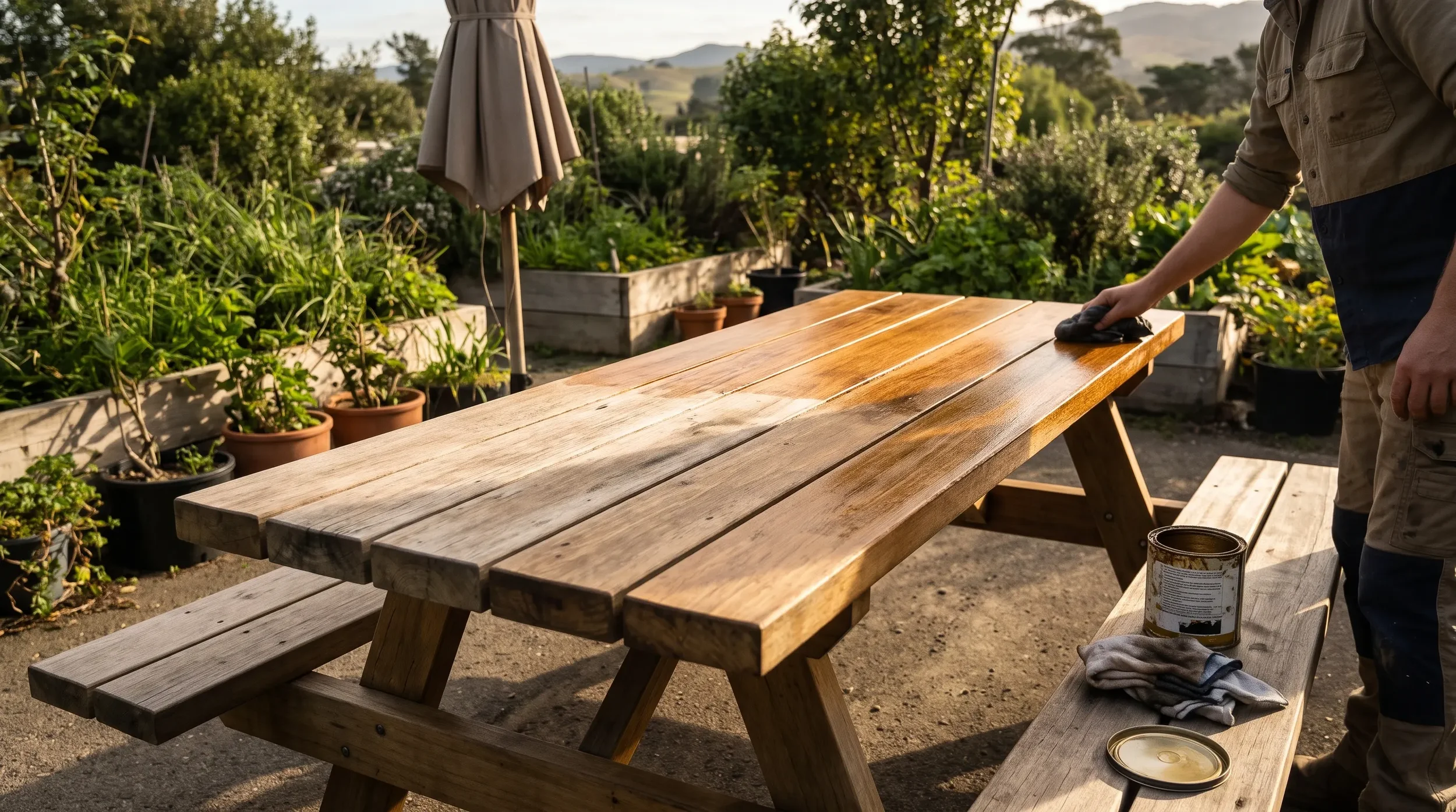
Re-oiling tables is easiest on your quietest day. Most cafés work through a few tables at a time:
Clean the top thoroughly with the oil maker's cleaner and let it dry fully.
Lightly sand any rough or stained areas with fine paper, following the grain.
Apply a thin coat of the matching maintenance oil and wipe off all the excess.
Leave the table out of service for the drying time on the product label.
Use only a damp cloth on freshly oiled tops for the first week, as some makers recommend.
Our outdoor timber furniture refresh guide covers the oiling technique in more detail for outdoor pieces.
What finish should a café choose for new timber tables?
Choose the finish around your cleaning routine. If staff sanitise tables between every seating and you don't want to manage re-oiling, a 2K polyurethane or catalysed lacquer is the most forgiving commercial table finish. If you want the natural feel of oiled timber and can commit to regular maintenance, a commercial-grade hardwax oil with its own approved cleaning products is a good middle ground.
Outdoor café tables are a different case. Lacquer films tend to crack and peel under UV, so oiled or stained timber, maintained regularly, usually holds up better in the open. Our guide to UV-resistant oils for the Nelson sun explains which products cope with Tasman's strong summer light.
How Plankville approaches timber tables for hospitality
At Plankville, our Richmond workshop builds tables from solid, locally grown timber, including Redwood, Macrocarpa, Cedar and other Cypress species, cut as 55mm rough-sawn boards. Thick, solid timber is part of why these tables suit hospitality: when the surface wears, it can be sanded and refinished rather than replaced.
From a maker's perspective, a few things consistently make the difference for venues:
Decide the finish and cleaning routine together. The best finish on paper fails quickly if the cleaning product attacks it.
Write the products into your cleaning schedule. List the exact cleaner, sanitiser and dilution, so a new staff member doesn't grab whatever is under the sink.
Keep a small tin of maintenance oil or touch-up product on site. Small repairs done early stop a full refinish later.
Test new chemicals on the underside first. Any new sanitiser supplier should be tested on a hidden area before it goes on every table.
If you're fitting out a café, bar or restaurant, our post on custom timber slabs for Nelson commercial spaces covers what solid timber brings to a fit-out.
Ready to furnish or refresh your venue?
Cleaning timber tables in a café without damage comes down to three things: knowing your finish, using a cleaner and sanitiser that suit it, and refreshing the finish before bare wood shows through. Get those right and solid timber tables can serve your venue for years.
If you're planning new tables for a café courtyard or need sturdy outdoor seating that stands up to daily service, take a look at Plankville's solid timber outdoor and garden furniture, or visit Plankville in Richmond to talk through timber and finish options for your venue.
FREQUENTLY ASKED QUESTIONS
-
It depends on the finish. Many all-purpose spray-and-wipe products contain quaternary ammonium sanitiser, which a cured lacquer or 2K polyurethane handles well when it's wiped dry. On oiled timber, repeated use gradually strips the oil, so use a pH-neutral cleaner for everyday wiping and keep the sanitiser for where your food control plan requires it.
-
No. Bleach can discolour timber, break down oil finishes and leave residue in the grain. It is also harsh on lacquer over time. Use a food-safe sanitiser at the label dilution instead, and make sure the table is cleaned with detergent first so the sanitiser can work properly.
-
Sticky tables usually mean sanitiser residue, often from mixing a quat sanitiser stronger than the label or not letting it dry fully. Detergent left behind can do the same. Check the dilution, wipe with a clean damp cloth after sanitising if the label allows, and dry the surface. If stickiness persists on an oiled top, the finish may need refreshing.
-
On a 2K polyurethane or catalysed lacquer, alcohol wipes are generally fine. On shellac, alcohol dissolves the finish, and older lacquers can soften or cloud. On oiled timber, frequent alcohol use dries out the surface. If you're not sure what finish your tables have, test on a hidden area first.
-
White rings are moisture or heat trapped in, or just under, the finish. On an oiled table, a light sand of the area and a coat of maintenance oil usually fixes it. On lacquer, rings that sit in the film may need a professional repair or recoat. Coasters under hot cups and cold drinks are the cheapest prevention.
-
The most hygienic finish is one that stays intact under your cleaning routine. A sealed film like 2K polyurethane gives a continuous, wipeable surface that tolerates frequent sanitising. A well-maintained oil finish can also be cleaned effectively, but only if it is refreshed before the timber is exposed. Any worn-through finish is harder to keep clean.
-
Drying times vary by product, so follow the oil maker's label. Many hardwax and maintenance oils are touch-dry within hours but take longer to cure fully. Some makers recommend cleaning only with a damp cloth for the first week, so plan re-oiling for a quiet day and keep sanitiser off fresh oil.
-
Yes. Durable timbers such as Macrocarpa and Cedar suit outdoor seating when they're oiled or stained and maintained. Tasman's strong UV and wet winters mean outdoor tables usually need re-oiling or re-staining every 6–12 months, with a weekly scrub and rinse to keep mould and grey weathering at bay.
-
Microfibre is fine for gentle wiping with water and a mild cleaner. The issue is scrubbing hard with any cloth, especially on freshly applied oil, which can wear the finish. Keep separate, clean cloths for tables, wring them out well, and never leave a wet cloth sitting on a tabletop.
-
Cost depends on the number of tables, their size, the finish and how worn they are. Re-oiling in-house mainly costs product and staff time. Sanding back and recoating with a commercial lacquer is a bigger job, often done by a professional finisher. Getting a quote for a few tables first helps you budget for the full set.
