

Your Furniture Is Already Under Attack
Here's the honest truth: the moment a piece of timber furniture leaves the workshop, New Zealand's weather starts working against it. Salty coastal air, relentless UV rays, sudden downpours and sharp temperature swings all chip away at bare or poorly protected wood. Left unchecked, that beautiful timber table or bench can grey, crack or warp within a single season.
The good news is that this damage is almost entirely preventable. A proper stain and finish routine, matched to your local conditions, can keep your furniture looking sharp for decades instead of years.
New Zealand's UV levels, humidity and coastal salt air are especially harsh on timber furniture.
The right stain and finish combination shields wood from sun damage, moisture and rot.
Oil-based finishes suit most NZ outdoor furniture; water-based finishes work well indoors.
Reapply finishes every 6–12 months outdoors, and every 2–3 years indoors.
Good prep (sanding, cleaning, drying) matters as much as the product you choose.
Locally milled, well-seasoned timber from Plankville takes stain more evenly and lasts longer.
Key Takeaways
New Zealand's high UV levels, humidity and coastal air accelerate timber wear more than most climates.
Oil-based, UV-resistant finishes suit outdoor furniture; gentler finishes suit indoor pieces.
Preparation (cleaning, sanding, drying) is just as important as the product you choose.
Reapply outdoor finishes every 6–12 months and indoor finishes every 2–3 years.
Starting with quality, well-seasoned timber makes staining and finishing far more effective.
What Staining and Finishing Actually Do for Your Timber
Staining and finishing are two different jobs working together. Stain adds colour and a small amount of protection by soaking into the timber's grain, while a finish (oil, varnish, wax or sealant) sits on or in the surface to block out water, UV light and everyday wear. Think of stain as the tone and finish as the shield. When you combine both correctly, you get furniture that looks warmer and richer while standing up to whatever the Tasman weather throws at it.
This matters more in Richmond and the wider Nelson Tasman region than almost anywhere else in the country. You get some of New Zealand's highest sunshine hours alongside coastal humidity, which is a tough combination for untreated wood. Understanding why your furniture struggles here is the first step to protecting it properly.
Understanding New Zealand's Climate Challenge for Timber Furniture
UV Damage and Sun Exposure
New Zealand sits under a thinner ozone layer than most of the Northern Hemisphere, so UV radiation hits harder here. For timber, that means faster breakdown of lignin, the natural compound that holds wood fibres together. Once lignin breaks down, timber turns grey, brittle and prone to splitting. An unprotected outdoor chair can visibly fade within just a few months of a Nelson summer.
Humidity, Rain and Coastal Salt Air
Timber is naturally porous, so it absorbs moisture from rain, morning dew and humid air. That constant wetting and drying cycle causes swelling, shrinking and eventually cracking. If your furniture sits anywhere near the coast, salt-laden air speeds up the process further, drawing moisture into the grain and encouraging mould and mildew to take hold.
Temperature Swings and Timber Movement
Tasman's warm days and cool nights cause timber to expand and contract repeatedly. Without a flexible, breathable finish, this movement creates tiny surface cracks where water can enter. Over time, those small cracks become the entry point for rot. A well-chosen finish flexes with the wood instead of fighting against it, which is why picking the right product genuinely matters more than picking the most expensive one.
Choosing the Right Stain and Finish for NZ Conditions
Not every finish suits every project. Your choice depends on whether the piece lives indoors or outdoors, what timber species you're working with, and how much upkeep you're happy to commit to.
Oil-Based vs Water-Based Finishes
Oil-based finishes penetrate deep into the timber, nourishing the grain and offering strong water resistance, which makes them a favourite for outdoor furniture across New Zealand. Water-based finishes dry faster, carry lower odour and resist yellowing, making them better suited to indoor pieces where appearance and low maintenance matter more than heavy weather resistance.
UV-Resistant Stains for Outdoor Furniture
For anything living on a deck, patio or garden, look specifically for stains labelled UV-resistant or UV-stabilised. These contain pigments and additives that absorb or reflect sunlight before it reaches the wood fibres underneath, dramatically slowing the greying process discussed earlier.
Finishes for Indoor Timber Pieces
Indoor furniture faces far gentler conditions, so a hardwax oil, satin varnish or beeswax finish is usually enough. These options bring out the natural depth of species like macrocarpa or elm without the heavier protective load that outdoor pieces need.

Step-by-Step: How to Stain and Finish Your Timber Furniture
Getting a finish that actually lasts starts well before you open the tin. Preparation does most of the heavy lifting here.
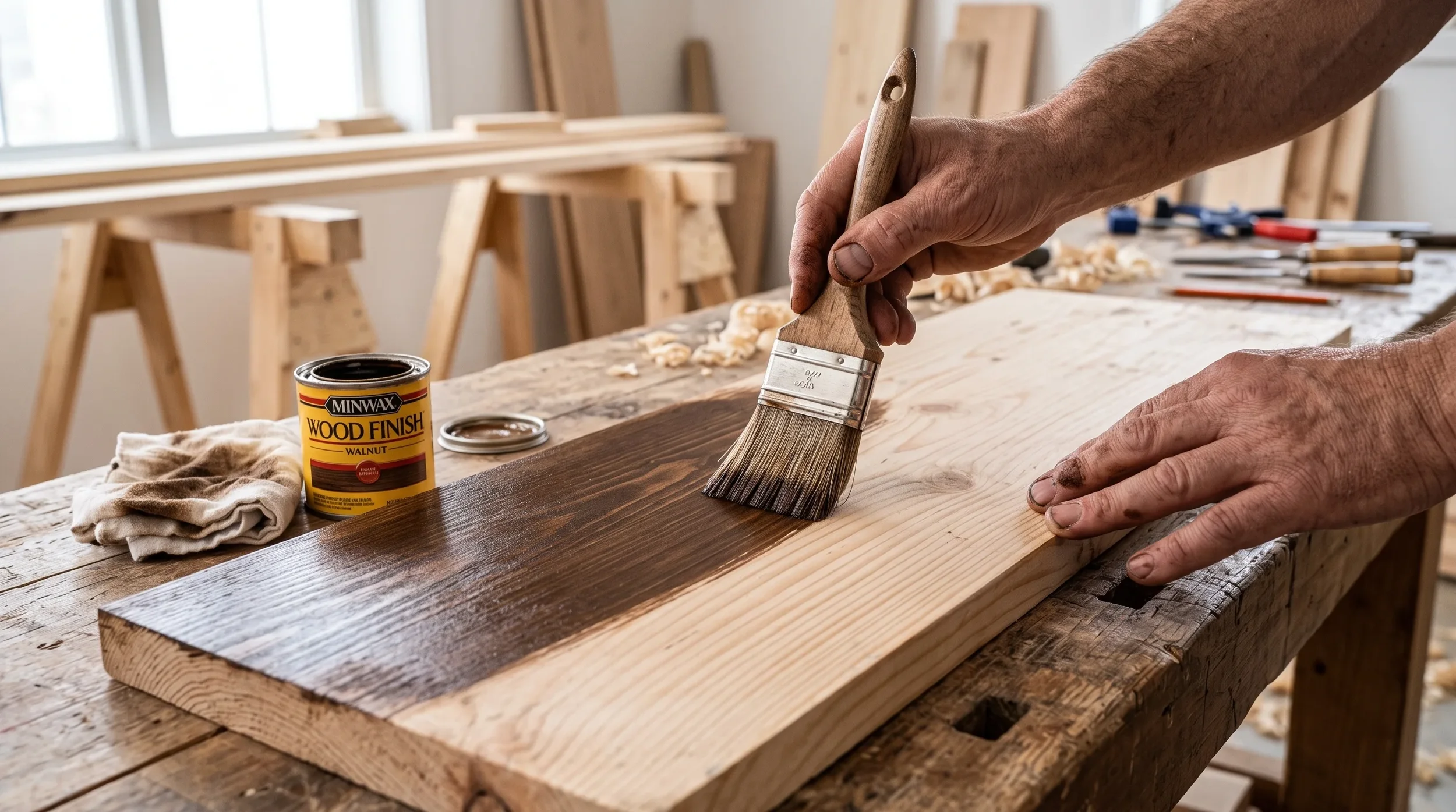
Start by giving the timber a thorough clean to remove dust, grease and any old, flaking finish, then sand along the grain using progressively finer sandpaper until the surface feels smooth and even. Let the piece dry completely, ideally in a covered, well-ventilated space, since trapped moisture underneath a new finish is one of the fastest ways to cause bubbling and premature failure. Once dry, apply your chosen stain in thin, even coats, always working with the grain rather than across it, and allow full drying time between coats rather than rushing to a second layer. Finish with your protective oil, varnish or wax, applying light coats and buffing between applications for a smooth, durable result. Well-seasoned, properly dried timber from suppliers like Plankville's wood products range takes this whole process far more evenly than green or poorly stored timber, because there's less internal moisture fighting against your finish from day one.
Key Benefits of Proper Staining and Finishing
A well-executed stain and finish job pays you back in several practical ways. It extends the working life of your furniture by years, often decades, by keeping moisture and UV rays out of the timber's core. It also protects your original spend, since replacing weathered outdoor furniture costs far more than an annual maintenance session. Beyond durability, a good finish enhances the natural grain and colour of species like macrocarpa, elm or Himalayan cedar, giving your outdoor or indoor spaces a warmer, more considered look. Finally, it reduces the risk of structural problems such as rot or insect damage, which can otherwise turn a simple maintenance task into an expensive repair or replacement job.
Building a Maintenance Schedule That Actually Works
Consistency beats intensity when it comes to timber care. Outdoor furniture generally needs a light clean every few months and a full reapplication of stain and finish every six to twelve months, depending on sun and rain exposure. Indoor pieces are far more forgiving, usually needing just a dust and occasional polish, with a full refinish every two to three years. Marking these dates in your calendar, rather than waiting until damage is visible, keeps your furniture in far better condition and saves considerable money over its lifetime.
Common Mistakes That Shorten Furniture Life
Many of the timber failures we see in Nelson Tasman homes trace back to a handful of avoidable errors. Skipping proper sanding before staining is one of the biggest, since a rough or dirty surface prevents the finish from bonding properly. Applying finish to damp timber is another common issue, trapping moisture that later causes bubbling and peeling. Choosing an indoor-rated finish for an outdoor piece, or ignoring UV-resistance altogether, also shortens lifespan dramatically. Lastly, waiting until damage is obvious before reapplying finish means you're often repairing rather than simply maintaining, which takes more time, more product and more cost.
Ready to Protect Your Timber Investment?
If you're planning a new furniture build or restoring an existing piece, starting with quality, well-seasoned timber makes every later step easier. Explore Plankville's range of wood products or browseflitches and slabs suited to furniture-making, and see real examples of finished work over on Plankville in Action. Not sure which timber or finish suits your project? Get in touch with the team for friendly, local advice, or read more furniture guides on the Plankville blog.
Protecting What You've Built
Staining and finishing isn't a one-off chore, it's an ongoing relationship between your furniture and New Zealand's weather. Get the preparation right, choose a finish suited to where the piece lives, and stay on top of a simple reapplication schedule, and your timber furniture will reward you with decades of use rather than a few short seasons. If you're starting a new piece from scratch, choosing well-seasoned, quality timber from the outset, like the range available through Plankville, gives every coat of stain and finish a far better foundation to work from.
FREQUENTLY ASKED QUESTIONS
-
UV-resistant, oil-based exterior stains generally perform best in NZ conditions, since they penetrate the timber while blocking harmful sun exposure. Look for products labelled UV-stabilised or exterior-grade, and reapply every 6–12 months for outdoor pieces to maintain strong, lasting protection against sun, rain and coastal air.
-
Marine-grade varnishes and UV-stabilised exterior oils tend to be the most durable choices for outdoor NZ furniture. They resist cracking, fading and moisture damage better than standard indoor stains, especially in coastal or high-sun areas like Nelson Tasman, where reapplication every 12–18 months keeps protection strong.
-
Most hardware stores, paint specialists and timber suppliers across New Zealand stock UV-resistant exterior stains suitable for outdoor furniture. It's worth asking staff which products are rated for your specific timber species, since some stains perform noticeably better on hardwoods than on softer timbers like macrocarpa.
-
Finishes containing UV-blocking pigments or additives, often marketed as UV-stabilised oils or stains, offer the strongest resistance to sun damage. Darker tones typically block more UV than clear or very light finishes, so a richer stain colour can add extra protection alongside its aesthetic appeal.
-
Products designed specifically for exterior use in harsh UV and coastal climates, rather than general-purpose indoor stains, consistently perform best. Exterior oils and marine varnishes are formulated to flex with timber movement and resist moisture, both key challenges in New Zealand's variable weather patterns.
-
Choose a UV-resistant, water-repellent finish, apply it to clean, dry, well-sanded timber, and reapply every 6–12 months near the coast, since salt air accelerates wear. Regular light cleaning between reapplications also helps prevent salt build-up and mould from taking hold on exposed surfaces.
-
Look for breathable, flexible finishes that allow the timber to expand and contract without cracking, rather than rigid coatings that trap moisture underneath. Oil-based finishes generally handle humidity better than thick varnishes, which can peel if moisture becomes trapped beneath the surface.
-
Pine is naturally soft and absorbent, so thorough sanding and a sealing pre-treatment help the stain apply evenly and last longer. Apply thin coats, allow full drying time between layers, and choose a moisture-resistant topcoat, since humid conditions can otherwise cause pine to swell and the finish to lift.
-
Many joinery workshops, timber suppliers and furniture restorers across New Zealand, including in the Nelson Tasman region, offer staining and finishing services alongside furniture building. It's worth contacting a local timber specialist directly to discuss your specific piece, timber species and desired finish.
-
Auckland's paint specialists, timber yards and hardware retailers commonly stock UV-resistant and weather-resistant exterior finishes suited to the region's humid, coastal climate. Since Auckland's conditions closely mirror much of the North Island, the same UV-stabilised, oil-based products recommended nationally work well there too.
