
How Timber Flitches NZ Can Transform Your Rustic Home Interior

Timber flitches are thick rough-cut slabs milled straight from a log keeping the natural or live edge of the original tree. In New Zealand, they have become one of the most desired materials for homeowners who want real character and warmth in their living spaces.
Whether you are planning a fireplace mantel in Wanaka, a kitchen island bench in Nelson, or a feature wall in a Coromandel beach house, timber flitches NZ offer something that no factory-cut board ever could: a piece of natural history unique in grain, shape, and story. Each slab carries its own knots, patterns from spalting, and growth rings. No two are the same.
This article walks you through five practical ways flitches can elevate a rustic interior, what species to choose, how to care for them, and why sourcing matters for Kiwi homes.
Key Takeaways
Timber flitches NZ are thick slabs with minimal processing that keep the natural live edge and full character of the source tree.
The most popular NZ species to use for flitches are macrocarpa and eucalyptus. Both offer excellent durability and visual warmth.
Applications range from fireplace mantels and floating shelves to kitchen islands and feature walls as well as outdoor surfaces meant for entertainment.
Regular oiling along with UV protection and food-safe sealing are the three most important maintenance steps to take for indoor flitches.
When you source milled flitches you reduce carbon footprint and support NZ sawmills and craftsmanship.
Each flitch piece is unique. Treat natural variation in grain and edge and colour as a feature rather than a flaw.
Why Rustic Timber NZ Is More Than Just an Aesthetic Choice
Rustic design in New Zealand has roots that go deeper than trend cycles. It reflects a genuine connection to the land, to native bush, to the kind of craftsmanship that values material honesty over polish. Choosing rustic timber NZ is not just about visual appeal. It is about choosing materials that age , improve with use, and tell a story no laminate surface ever could.
Machine-cut timber boards are consistent, predictable and practical. But consistency is not always what you want. In a rustic interior, the curve of a natural edge, the warmth of a wide macrocarpa grain or the deep tones of eucalyptus are the features that stop people in their tracks when they walk into a room.
There is also a sustainability argument. New Zealand-grown plantation timber like macrocarpa has a lower carbon footprint than imported hardwoods. When you source , you support regional sawmills and reduce transport emissions. That combination of character and conscience is part of why rustic timber NZ continues to grow in popularity across the country.
Five Ways to Use Timber Flitches in Your NZ Home
1. Fireplace Mantels That Command Attention
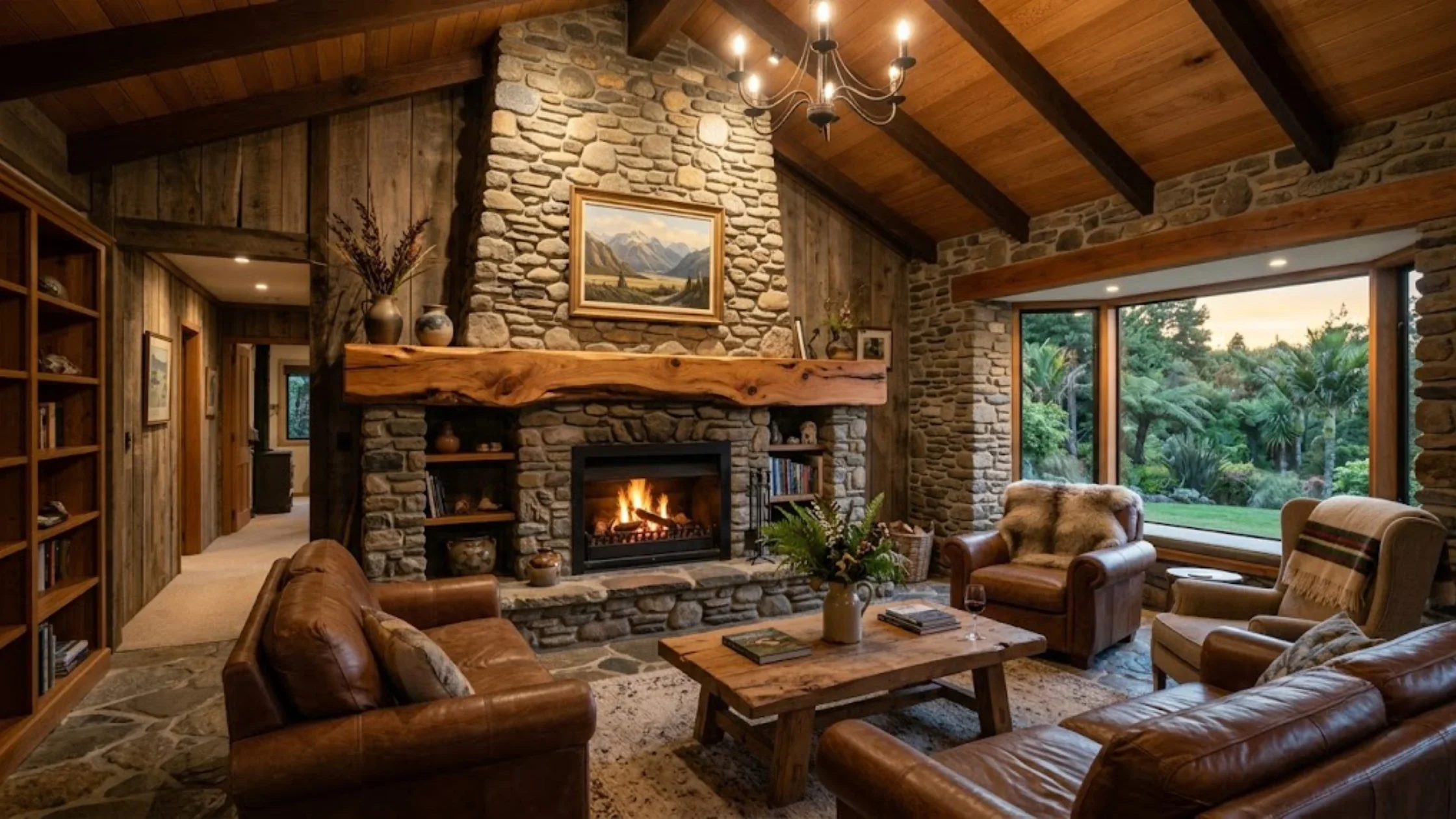
A thick slab of macrocarpa or eucalyptus above a brick or stone fireplace is one of the most powerful upgrades you can make in a rustic living room. The natural edge of the flitch contrasts with the hard geometry of stone, and the warmth of the wood grain draws the eye right away.
A good mantel flitch runs between 80mm and 120mm thick, which provides enough depth to anchor the fireplace without overpowering the room. Some homeowners choose to finish theirs with a matte tung oil for a natural low-sheen look. Others prefer a light beeswax finish that enriches the colour without creating a plastic-looking surface.
2. Floating Shelves with Natural Edge Detail
Floating shelves cut from flitches add organic softness to kitchen, bathroom and living room walls. Unlike standard pine shelving, a live-edge slab shelf becomes a feature in its own right. It softens the straight lines of cabinetry and adds textural depth that painted MDF cannot replicate.
For kitchens, a series of eucalyptus or macrocarpa floating shelves above the bench can create a warm layered look when styled with plants, ceramics and open storage. For bathrooms, a single live-edge shelf above a freestanding basin can transform the whole feel of the room.
3. Kitchen Islands and Benchtops
Timber flitch countertops and kitchen islands are becoming more widespread in modern rustic homes across New Zealand. A wide macrocarpa slab as a breakfast bar or island benchtop creates a visual centerpiece that polished stone and concrete cannot match for warmth.
When sealed with a food-safe finish, macrocarpa and eucalyptus are durable enough for daily kitchen use. Pair a live-edge slab island with matte black tapware concrete floors and simple white cabinetry for a modern rustic aesthetic that works in contemporary New Zealand homes.
4. Timber Feature Walls
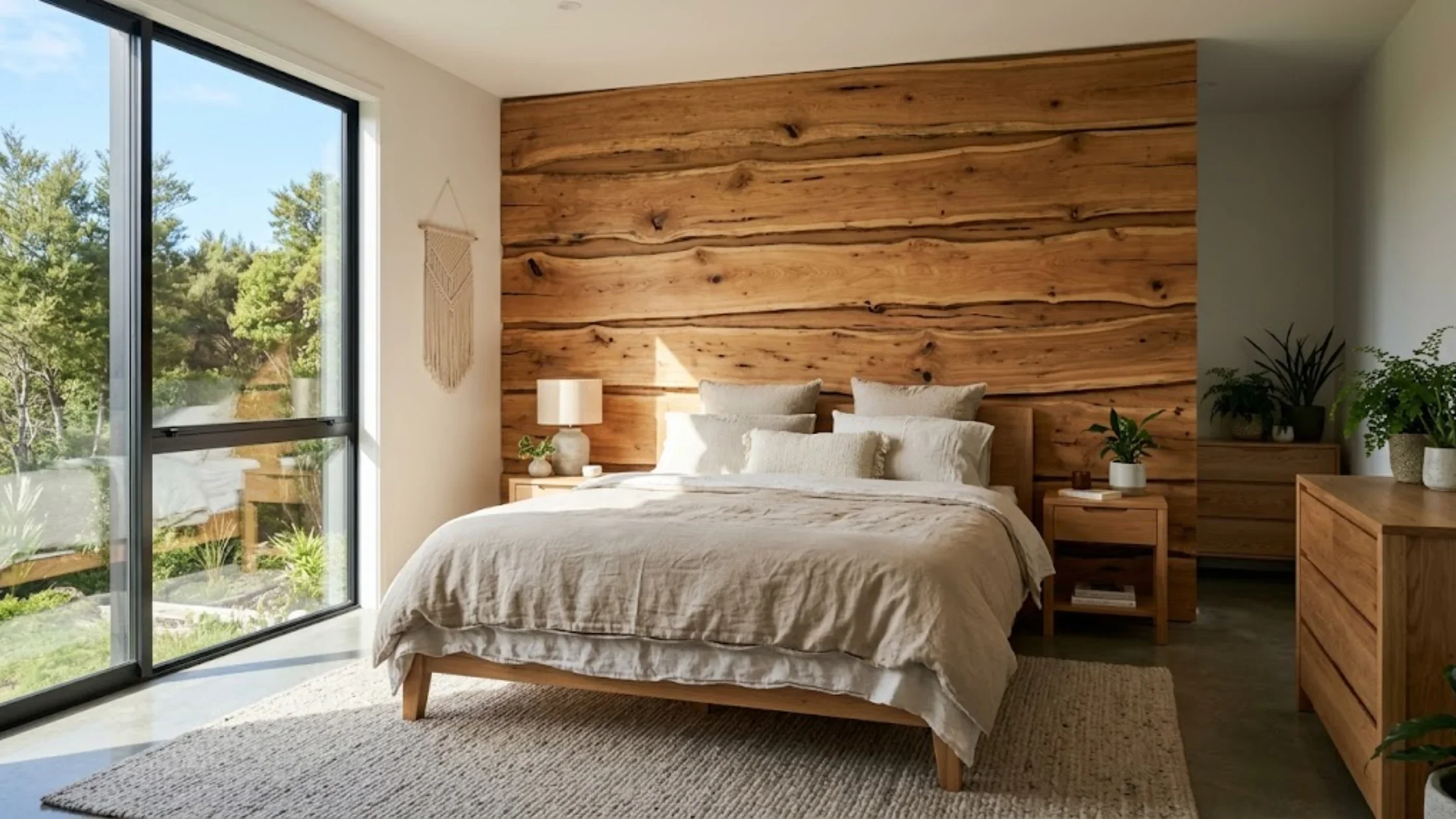
Instead of tongue-and-groove cladding or wallpaper, consider a full feature wall built from vertical or horizontal flitch panels. Each panel brings its own unique grain, colour variation, and edge detail. The combined effect is a wall that feels alive and textural in a way that no manufactured material can replicate.
Feature walls work well behind beds in master bedrooms, along hallway entries, and in open-plan living and dining areas. A single wide slab used as a horizontal element behind a headboard or bench seat delivers the same visual impact at a smaller scale for smaller rooms.
5. Outdoor Entertaining Areas
Timber flitches are not limited to indoor use. Treated , they work well as outdoor bench seats, garden table tops and covered deck elements. A single wide slab on steel trestle legs makes an impressive outdoor dining table for an entertaining deck.
For outdoor applications, choose species with good natural durability and apply an exterior-grade oil finish . Eucalyptus offers excellent hardness and weather resistance when maintained well.
Comparing Popular Timber Species for Flitches in NZ
The choice of the right species matters as much as the application. Here is a breakdown of the most common options available through suppliers like Plankville:
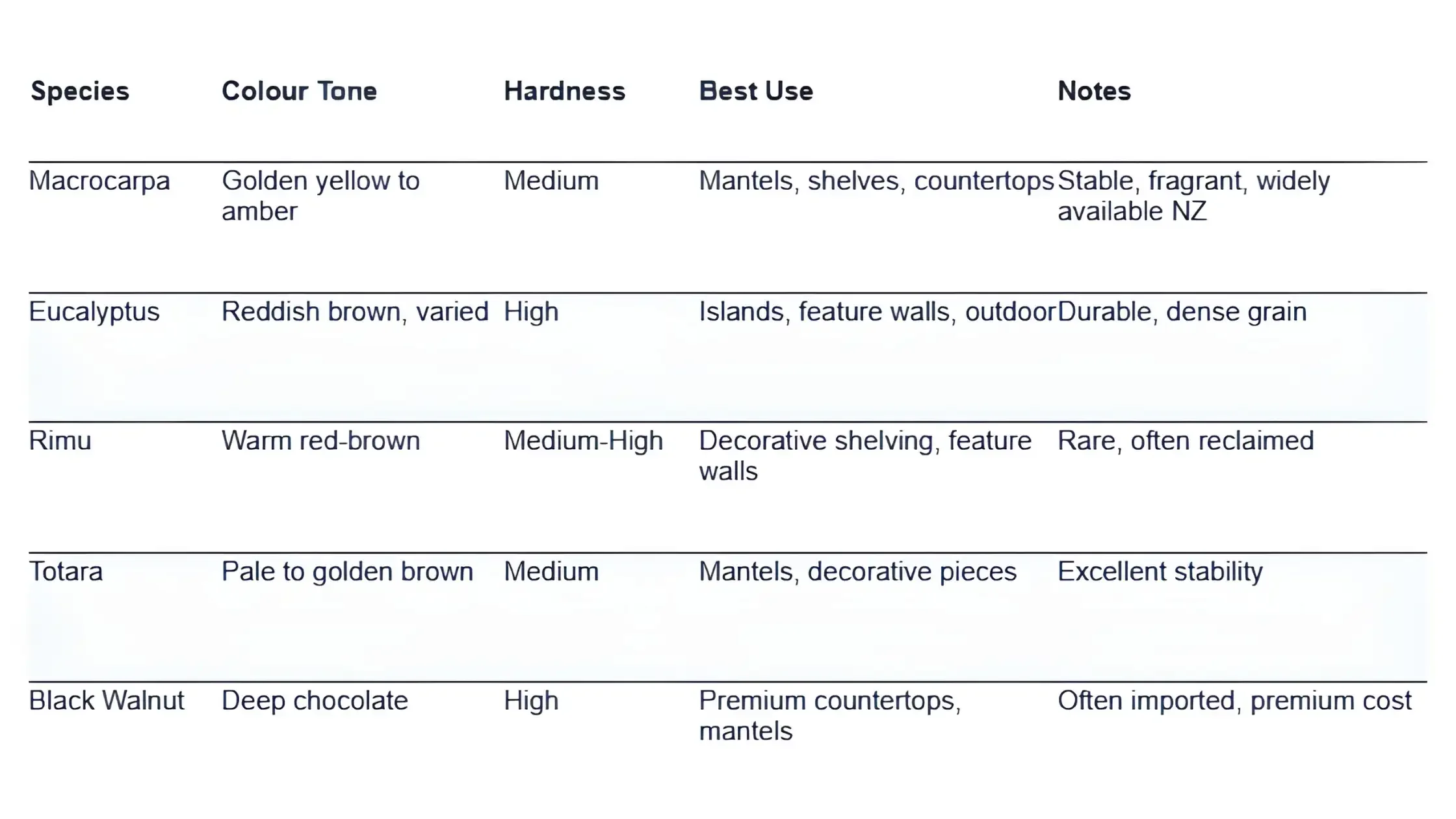
Macrocarpa is the most popular choice for rustic timber NZ applications because of its availability, stability, and distinctive golden colour. Eucalyptus is an excellent option when you want a harder, denser material with more colour variation.

How to Care for Indoor Timber Flitches
Flitches look strong, and they are. But they do need regular maintenance to stay at their best. Here is what to do:
Oil : Apply natural oils like tung or linseed every six to twelve months. This keeps the wood hydrated and the grain looking rich.
Protect from direct sunlight: Prolonged UV exposure fades color over time. Use window coverings or place flitch pieces away from direct sun where possible.
Seal kitchen and bathroom surfaces: For countertops or areas near moisture, use a food-safe sealant. Reapply it each year.
Skip harsh chemical cleaners: Use a damp cloth and mild soap for general cleaning. Strong chemicals strip natural oils and damage the finish.
Fill cracks if needed: You can fill small natural cracks or checks with clear epoxy resin. This stabilizes the piece without hiding the character.
If you want to explore the full range of finishing options for your slab, the team at Plankville's services page can point you in the right direction.
Sourcing Sustainable Timber Flitches NZ
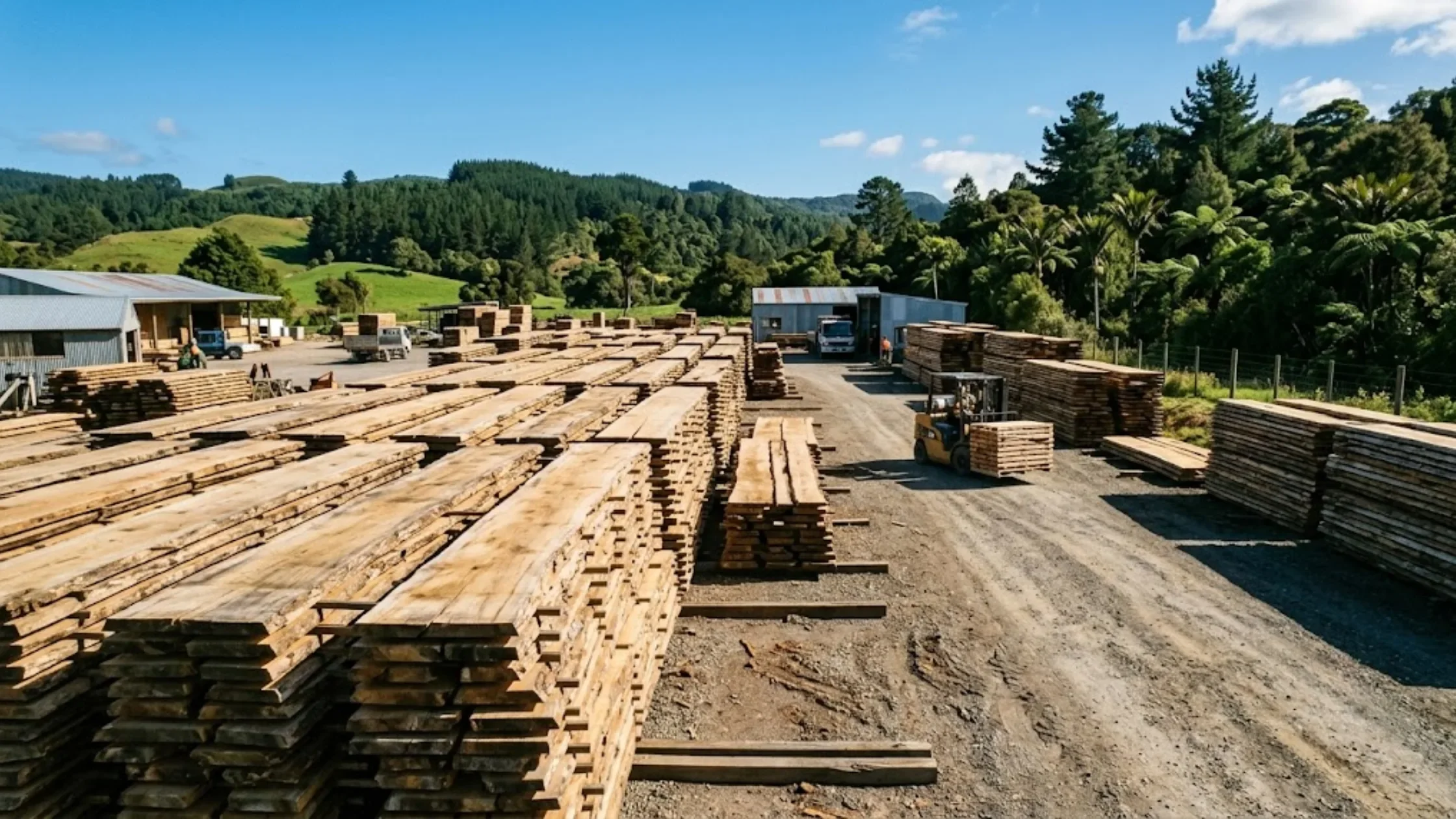
Buying local is not just a feel-good choice in New Zealand. It makes practical and environmental sense. milled timber flitches NZ come from plantation species like macrocarpa, which are grown and harvested here. This keeps the supply chain short and the carbon footprint low.
You can browse the full range of available slabs and species through Plankville's wood products catalogue, which includes everything from rough-cut flitches to finished slabs ready to install. If you are unsure what you need, the flitches slabs more section gives a clear breakdown of what is in stock and what can be custom cut.
If you are buying for someone else, a timber gift is one of the more thoughtful and original options around. Plankville even offers gift vouchers for those who want to give the joy of choosing their own piece.
Things to Know
Timber flitches are not the same as live-edge boards. Flitches are much thicker often 60mm to 150mm, and are cut with minimal processing.
Natural checking (small surface cracks) is normal as timber dries. It does not indicate poor quality and can be stabilised with epoxy.
Not all species are suited to wet areas. Always confirm the species and sealing requirements before you install near moisture.
Wide flitches can be very heavy. A 1.8m macrocarpa slab at 100mm thick can weigh over 80kg. You often need two or more people and heavy-duty fixings to install.
Macrocarpa carries a natural fragrance when cut that mellows. Some people love it; it is worth knowing about before you commit to a large indoor piece.
Colour variation within a single slab is normal and considered a desirable feature, not a defect.
Ready to Find Your Perfect Flitch?
The best starting point is seeing what is available. Head to the Plankville website to browse current stock, or read more about the team and their approach to sourcing and milling. If you have a specific project in mind, use the contact us page to ask about custom cutting, species availability, or delivery options across New Zealand. The team can help match you with the right piece for your space and budget.
FREQUENTLY ASKED QUESTIONS
-
A timber flitch is a thick rough-sawn slab cut from a log keeping the natural or live edge of the original tree.
Standard timber boards are milled to consistent dimensions with straight finished edges. Flitches are much thicker between 60mm and 150mm, and are cut with minimal processing to preserve the natural shape, grain, and edge of the tree. This makes them so distinctive in rustic interiors.
-
Yes, macrocarpa is one of the best available species for kitchen benchtops when sealed .
It has moderate hardness and good dimensional stability. This means it handles the temperature and humidity changes in a kitchen well. A food-safe penetrating oil or hardwax oil finish applied will protect it from moisture and daily wear while keeping its natural character intact.
-
Pricing varies depending on species, thickness, width and length, but expect to pay anywhere from $200 to over $2,000 for a quality flitch slab.
Wider and thicker pieces from premium species cost more. Macrocarpa is the most affordable grown option, while rarer species like rimu or salvaged hardwoods command higher prices. Custom cutting and finishing will add to the final cost.
-
Many homeowners do install floating flitch shelves and mantels themselves, but it requires careful planning and appropriate fixings.
The main challenge is weight. A wide macrocarpa slab can be extremely heavy so you need to locate wall studs, use heavy-duty concealed brackets rated for the load, and have someone assist you. Feature walls and benchtops that involve structural or plumbing considerations are better left to a professional.
-
For most indoor applications, re-oiling every six to twelve months is enough to keep the timber in good condition.
High-use surfaces like kitchen countertops may need more frequent attention particularly in the first year after installation. Watch for the timber looking dry or losing its sheen as a sign that it is time for reapplication. A light sanding before re-oiling helps the product penetrate.
The Bottom Line on Timber Flitches NZ
Rustic timber NZ is not a passing trend. It is a design philosophy rooted in authenticity, and timber flitches are one of the most honest expressions of that philosophy you can bring into your home. They carry the marks of a real tree milled by real people, from New Zealand land.
Whether you're building a feature wall finishing a fireplace, or designing a kitchen that feels warm rather than showroom-sterile, a flitch slab delivers character that manufactured materials can't replicate. Start by exploring what's available, get specific about your application and species requirements, and don't be afraid to ask for expert advice before you commit. The right piece is out there, and it'll look like it was always meant to be in your home.
