
Why Custom Wood Furniture Nelson Homes Choose Lasts Longer Than Anything Flat-Pack
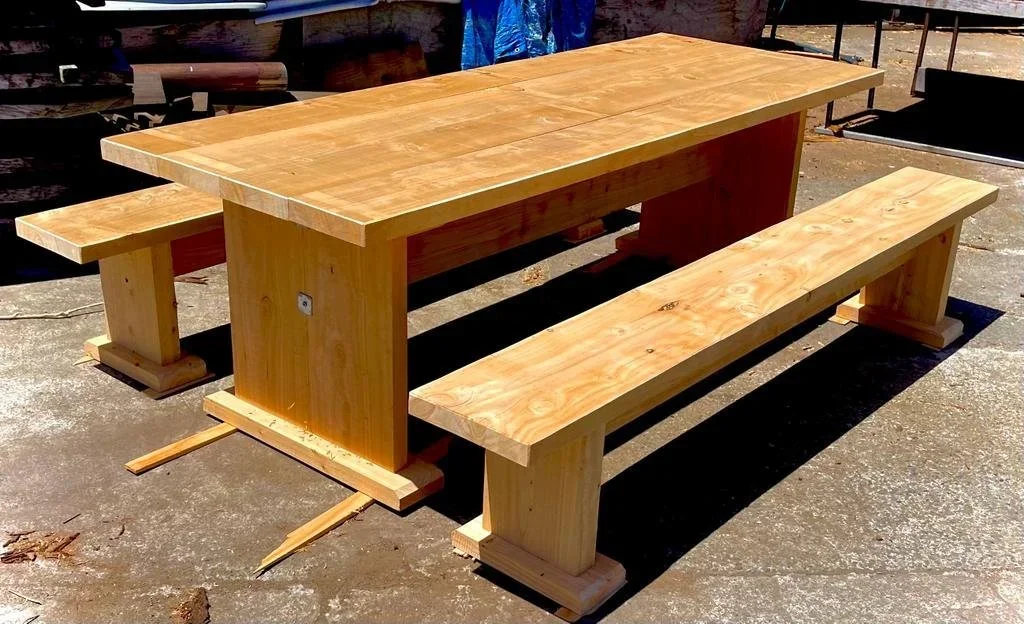
Custom wood furniture built by Nelson craftspeople offers something mass production simply cannot: genuine character, precision fit, and timber that improves with age. When you commission handmade furniture in NZ from a local maker, you are investing in a piece that tells a story rooted in this land.
There is a quiet shift happening across Aotearoa. People are growing tired of chipboard tables that wobble after six months, of shelves that sag under the weight of real books, and of furniture that arrives in a flat-pack box with a confusing instruction sheet and three spare bolts. Instead, Kiwis are turning back to something older and more meaningful: furniture made by hand, from real timber, by people who take genuine pride in their craft.
At Plankville, that shift is exactly what drives every project in their Nelson workshop.
Key Takeaways
Custom wood furniture Nelson craftspeople produce is built from solid local timber using traditional joinery methods, making it far more durable than mass-produced alternatives.
Handmade furniture NZ-wide carries a lower long-term cost per year than cheap imported flat-pack when you account for lifespan and repairability.
Local timber species like Macrocarpa, Rimu, and Totara are naturally suited to New Zealand's climate and carry unique grain character.
The custom design process allows you to solve spatial problems and match existing materials in ways a showroom piece never could.
Buying from a local workshop supports skilled trades, sustainable forestry, and the regional economy.
Every piece of custom timber furniture can be repaired, refinished, and passed on, which flat-pack furniture almost never can.
What Makes Local Timber So Special for Custom Furniture
New Zealand timber is some of the most distinctive in the world. Species like Macrocarpa, Totara, Rimu, and recycled native hardwoods carry a warmth and grain complexity that imported engineered board simply cannot replicate. These timbers have adapted to the New Zealand climate over decades, which means furniture built from them is naturally suited to local humidity levels, temperature swings, and the conditions inside a typical Kiwi home.
When you work with timber sourced locally, the environmental case is equally strong. Shorter supply chains mean lower transport emissions. When sourced from sustainably managed forests or salvaged from demolition sites, local timber supports a genuinely circular economy rather than the extract-and-dispose model that defines most global furniture manufacturing.
Live-edge slabs are a perfect example of what local timber can offer. Rather than cutting away the natural contour of the wood, a skilled maker preserves it. The result is a dining table or bench that carries the silhouette of the original tree, complete with knots, colour variation, and grain movement that no two pieces will ever share exactly.

Handmade Furniture NZ: Why the Process Matters as Much as the Product
The difference between mass-produced and handmade furniture is not just aesthetic. It is structural, ethical, and deeply personal.
Factory furniture is typically built to a price point. That means engineered wood cores, veneer surfaces, and joinery held together with staples or low-grade dowels. These pieces are designed for a production line, not for your living room. They look fine on a showroom floor under perfect lighting, but after a few years of real use, they tell a different story: peeling edges, sagging shelves, and hinges that no longer sit flush.
Handmade furniture NZ craftspeople build differently. Solid timber slabs, traditional mortise-and-tenon or dovetail joinery, hand-applied finishes that let the wood breathe rather than sealing it under plastic. These methods take longer and cost more upfront, but the results are fundamentally different in quality and longevity.
Here is a direct comparison to help put that in perspective:

The table makes it clear: the long-term value proposition of handmade furniture NZ makers produce is not even close.
Custom Wood Furniture Nelson: Designed Around Your Life, Not a Showroom Floor
This is where bespoke furniture separates itself entirely from anything you will find at a big-box retailer. Custom wood furniture Nelson craftspeople create is built specifically for your space, your habits, and your aesthetic.
Got an awkward alcove in your hallway that has never had a proper home for your shoes and coats? A custom maker can solve that. Need a dining table that seats six comfortably but does not overwhelm a compact open-plan kitchen? Done. Want the timber in your new desk to match the original Rimu floors in your 1930s villa? That is exactly the kind of brief a specialist workshop loves.
The design process itself is part of the value. When you contact us at Plankville, you are not filling out an online form and waiting for a generic quote. You are starting a conversation. You can visit the workshop, hold timber samples, talk through the layout of your room, and sketch ideas with someone who actually knows wood.
That experience is slower than clicking "add to cart." It is also infinitely more satisfying.

The Real Cost of Cheap Furniture (And Why Custom Timber Wins Over Time)
There is a common assumption that custom furniture is a luxury for people with large budgets. That assumption does not hold up when you look at the full picture.
A flat-pack dining table might cost $400. If it lasts five years before the veneer lifts or the legs wobble beyond fixing, you have spent $80 per year on it. A custom timber dining table from a Nelson workshop might cost $2,500. If it lasts 40 years, which is a conservative estimate for quality solid timber, that works out to $62.50 per year. And at the end of those 40 years, it can be sanded back and re-oiled rather than sent to the tip.
If you are curious about the deeper economics of this, the Plankville blog post on custom timber furniture worth investment breaks it down thoroughly.
Custom wood furniture also holds sentimental value in a way that factory furniture simply never will. Some of the most meaningful builds happen when clients bring their own timber. An old beam salvaged from a demolished family home. A piece of Macrocarpa milled from trees on the client's own land. Timber from a bach that burned down. A skilled maker can take that material and shape it into something that carries memory forward.
Plankville's wood products showcase exactly the kind of character that results from this approach: pieces with provenance, with grain that catches the light differently at different times of day, with surfaces that age beautifully rather than deteriorating.
Supporting NZ Craftsmanship: Why Buying Local Is a Vote for Something Better
Every custom timber purchase is a decision that ripples outward. When you commission a piece from a Nelson workshop, you are supporting:
A local craftsperson's livelihood and career
Traditional woodworking skills that take years to develop
Sustainable forestry and responsible timber sourcing
The Nelson regional economy and its creative industries
A furniture industry built around quality rather than volume
Mass production erodes all of these things. It shifts jobs offshore, deskills local trades, and floods the market with furniture that ends up in landfill within a decade. The about page at Plankville tells the story of why they started and what they are working to preserve.
There is something quietly radical about choosing a handcrafted piece. It is a statement that you value the maker's time, that you believe in the permanence of quality, and that your home deserves better than flat-pack sameness.

Things to Know
Lead times for custom builds typically run 4 to 8 weeks from design sign-off to delivery, so plan ahead if you have a deadline.
Local timber species respond differently to humidity. Macrocarpa, for example, is especially stable and suits kitchens and bathrooms well.
You can bring your own salvaged timber to a custom maker. If the wood is structurally sound, most workshops will work with it.
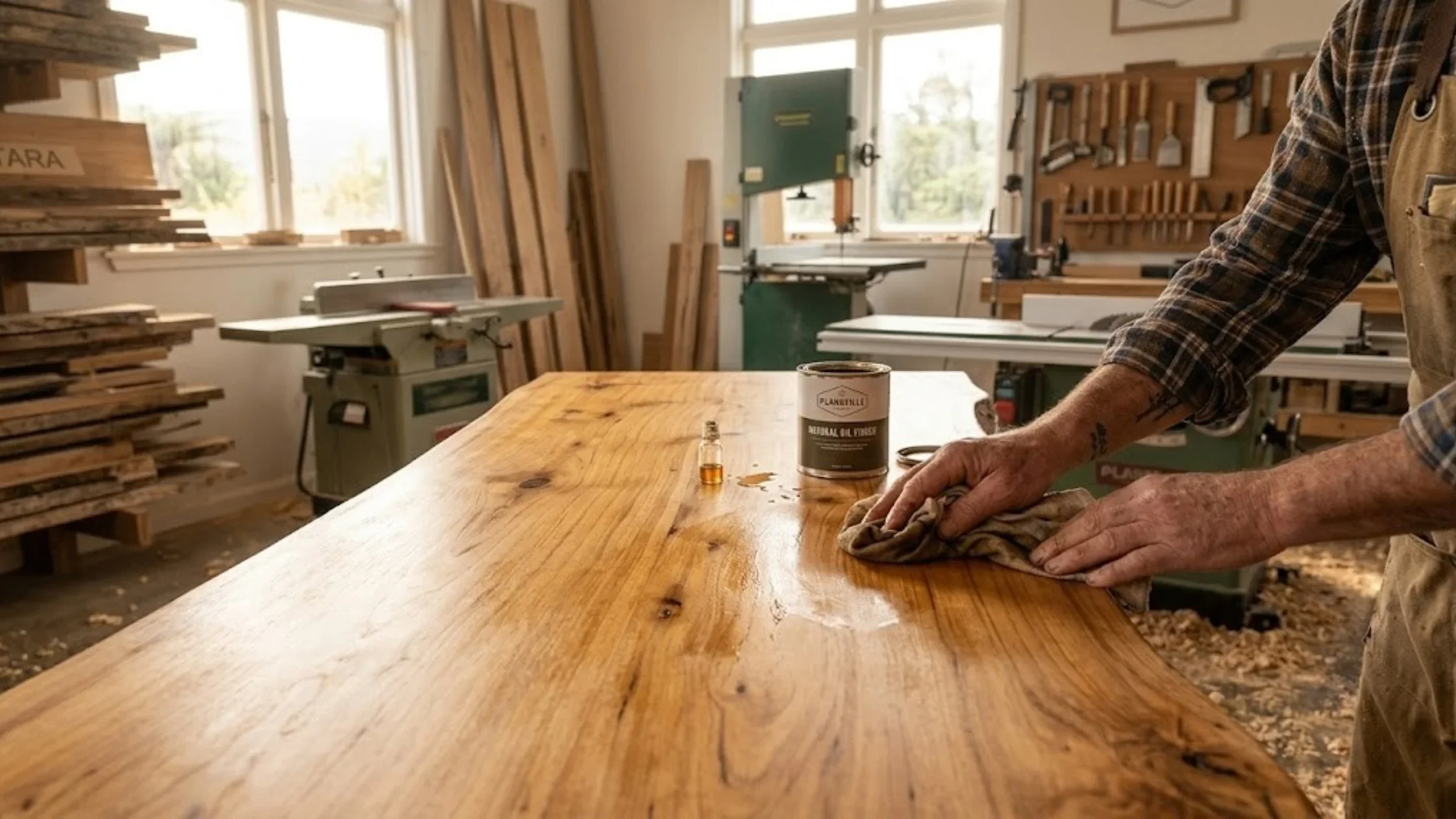
Natural oil and wax finishes are more maintenance-intensive than lacquer but allow the timber to be repaired and renewed over decades.
Plankville ships finished pieces across New Zealand, not just within the Nelson region.
Gift vouchers Plankville offers are available for those wanting to give someone the experience of commissioning their own piece.
Ready to Start Your Custom Build?
Visit the our services page at Plankville to see the full range of what they create, then reach out to start a conversation about your project. Whether you have a clear brief or just a vague idea and a tricky corner, the team can help you shape it into something real. If you want to do some reading first, the custom timber furniture nelson guide 2026 is a practical starting point.
FREQUENTLY ASKED QUESTIONS
-
Most custom timber builds take between 4 and 8 weeks from the time your design is confirmed.
This timeframe covers the timber selection, any necessary drying or preparation, the build itself, and the finishing process. If you have a specific deadline, such as a new home move-in or a Christmas gathering, it is worth getting in touch early so the workshop can plan accordingly.
-
Yes, most custom makers including Plankville will show you actual timber samples and guide you through the options.
Different species suit different uses. Macrocarpa is popular for its stability and warm golden tones. Rimu suits interiors with a heritage feel. Totara is dense and highly durable. Your maker can advise on which timber works best for your specific piece and environment.
-
The upfront cost is typically higher, but the long-term cost per year is usually lower once you account for lifespan.
A custom timber piece built well can last 30 to 50 years with basic care, while most flat-pack furniture lasts 3 to 7 years. When you factor in replacement costs and landfill waste, the economics shift decisively in favour of custom.
-
Yes, Plankville ships finished furniture across New Zealand using reliable carriers.
Pieces are carefully packaged to protect finished surfaces during transit. If you are based in Auckland, Wellington, Christchurch, or anywhere else in the country, delivery is still an option. It is worth discussing this at the quoting stage so freight costs are factored in upfront.
-
Yes, and many makers actively enjoy working with timber that carries personal meaning or history.
The main requirement is that the timber is structurally sound and reasonably dry. Timber that has been stored indoors for some time is usually ready to work with. If you have a beam, plank, or slab from a meaningful source, bring it in and have a conversation about what it could become.
The Bottom Line on Custom Wood Furniture Nelson Homeowners Should Consider
Local timber furniture is not a niche preference or a design trend. It is a considered choice about quality, longevity, environmental responsibility, and the kind of home you want to live in. Custom wood furniture made in Nelson by skilled craftspeople offers something that no online catalogue or flat-pack warehouse ever will: a piece made specifically for you, from material grown in this country, by someone who cares deeply about the result.
If your home deserves furniture that will still be there in 30 years, still looking better with age, still holding the memory of how it came to be, then a conversation with a local timber maker is a very good place to start. Reach out, visit the workshop, touch the timber, and see what becomes possible.
