
Outdoor Furniture Timber NZ: Which Wood Actually Holds Up in Kiwi Conditions

Outdoor furniture timber NZ refers to wood species chosen specifically for their ability to withstand New Zealand's varied climate, from coastal salt air to high UV summers and cold southern winters. The best performing options include macrocarpa, kwila, vitex, and cedar, each offering different strengths depending on your location and budget.
New Zealand is genuinely one of the best places in the world to live outdoors. The backyard deck, the garden bench beside the pohutukawa, the long dining table for summer barbecues: these spaces matter. But the furniture sitting in them takes a beating. Choosing the wrong timber means warping by winter and rot by year three. Choosing the right one means furniture that ages beautifully and holds its place in your outdoor life for decades. This article breaks down exactly what to look for, which woods perform best, and how to design and maintain pieces that last.
Key Takeaways
Macrocarpa is the best all-round choice for outdoor furniture timber NZ, combining local availability, natural durability, and sustainability.
Kwila and vitex offer superior hardness and density but require careful sourcing for environmental responsibility.
Cedar suits lightweight, moveable furniture or covered outdoor settings rather than heavy-duty, fully exposed pieces.
Design decisions, drainage, joinery, fastener choice, have as much impact on longevity as timber selection.
Annual oiling is the single highest-return maintenance task for most outdoor timber species.
Coastal locations require marine-grade stainless steel fixings and more frequent oiling, regardless of timber species.
Why NZ's Climate Makes Timber Selection Critical
New Zealand's weather is not politely predictable. In Auckland you are dealing with humidity and salt air. In Nelson and Tasman you get strong UV and warm summers followed by wet winters. The South Island serves up frost and heavy rain. Canterbury can swing from drought to downpour in a week. Each of these conditions has a different effect on timber.
The core threats to outdoor wood in New Zealand are:
Moisture absorption and release, which causes swelling, cracking, and warping
UV degradation, which breaks down lignin and causes surface greying
Fungal decay, which thrives in humid, warm conditions
Salt air, which accelerates surface degradation near the coast
Insect attack, particularly in untreated softwoods
The timber you choose needs to handle as many of these threats as possible, ideally without requiring constant maintenance.
What Makes a Timber Genuinely Weatherproof
Not all "outdoor timber" is created equal. The term gets used loosely, so it helps to know what characteristics actually matter when you are evaluating wood for an outdoor setting.

If you want to explore the science behind how different species perform over time, the best wood for outdoor furniture NZ breakdown is worth reading before you commit to a species.
The Top Timbers for Outdoor Furniture in New Zealand
Macrocarpa: The Kiwi Favourite
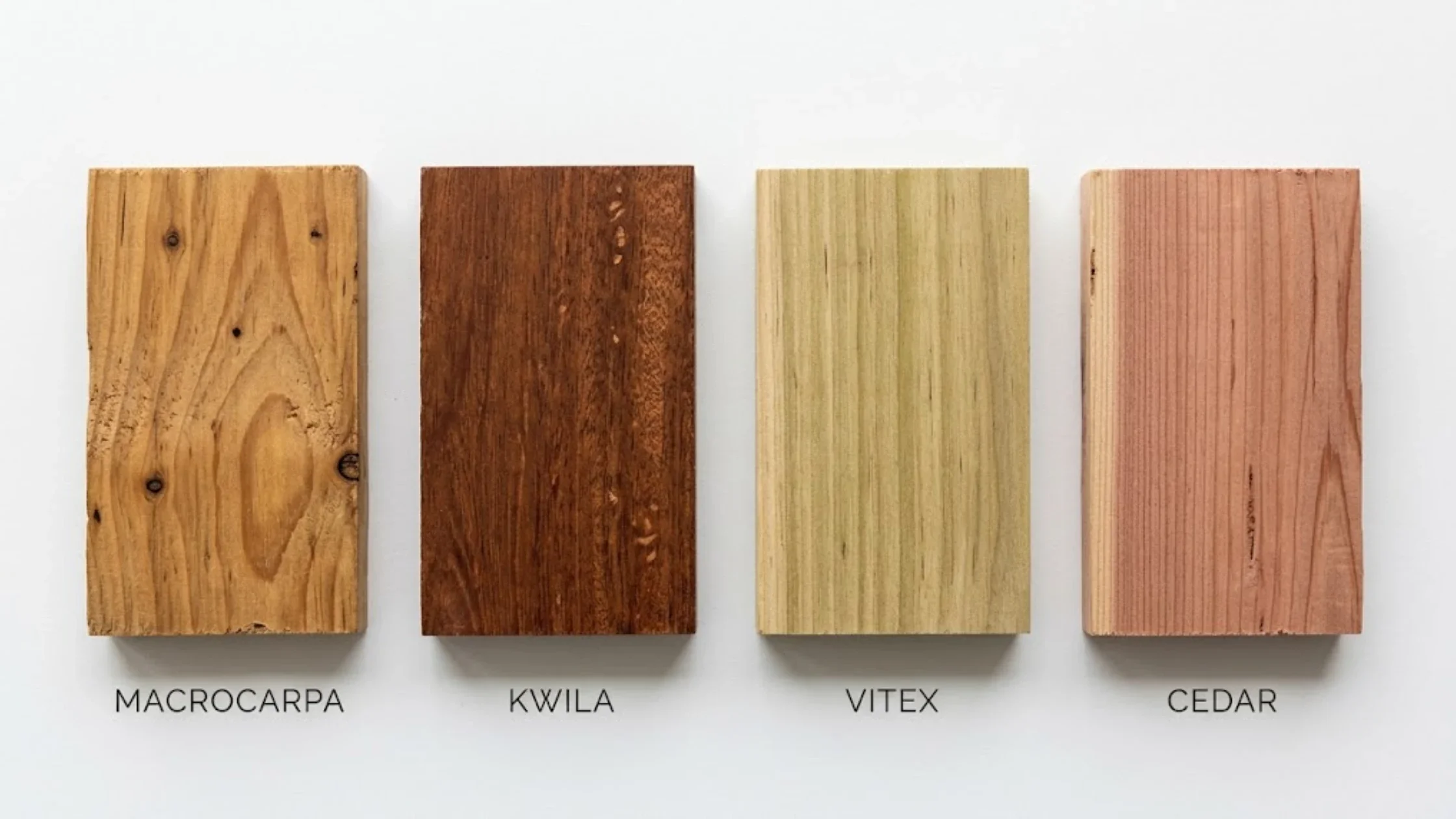
Macrocarpa is arguably the most practical choice for outdoor furniture timber NZ, particularly for anyone who values sustainability. It is grown here, predominantly in the South Island, which means lower transport emissions and traceability. It has a natural durability class of around 2 to 3, with natural oils that resist moisture and fungal decay without needing chemical treatment.
Visually, macrocarpa starts as a warm golden-amber and weathers to an attractive silver-grey over time. If you like the weathered look, you can leave it bare. If you want to preserve the original colour, a quality penetrating oil applied annually will do the job.
The macrocarpa outdoor furniture durability care guide goes deep on how to get the most from this species, including how to handle checking and what oils perform best in NZ conditions.
Ideal uses: outdoor dining tables, garden benches, raised garden beds, slab seats.
Kwila (Merbau): Dense, Rich, and Long-Lasting
Kwila, also known as Merbau, is a tropical hardwood widely used across New Zealand for decking and outdoor furniture. Its density sits around 820 kg/m³, making it one of the hardest options available. The deep reddish-brown colour is striking, and it holds up exceptionally well against moisture, insects, and UV.
The trade-off is sustainability. Kwila is not locally grown, and some sources have poor forestry practices. If you choose kwila, look for FSC-certified stock. When sourced responsibly, it is a genuinely excellent long-term investment.
Ideal uses: heavy outdoor dining furniture, built-in bench seating, furniture paired with existing kwila decks.
Vitex: Stable and Coastal-Friendly
Vitex is a lighter-coloured tropical hardwood with excellent stability, meaning it moves very little as humidity changes. This makes it a strong choice for furniture with precise joinery, where swelling and shrinking can cause joints to fail. It is also naturally resistant to decay, though like kwila it requires ethical sourcing.
Vitex works particularly well in coastal settings because of its stability and resistance to salt air.
Ideal uses: coastal outdoor furniture, loungers, chairs, tables in high-humidity environments.
Cedar: Lightweight and Naturally Aromatic
Western red cedar is less dense than the options above but brings natural decay resistance and a much lighter weight. It is easy to work with, holds fixings well, and has a pleasant natural aroma. Cedar is best suited to furniture that moves around frequently or to covered outdoor spaces like pergolas and verandahs.
It is not the best choice for furniture sitting directly on wet ground or exposed to heavy rain without protection.
Ideal uses: outdoor chairs, covered deck furniture, lightweight benches.
Smart Design Principles That Extend Furniture Life
Choosing the right species is only half the equation. The way outdoor furniture is designed has a significant effect on how long it lasts in NZ conditions.
Drainage and Airflow
Water pooling on surfaces is one of the fastest ways to degrade timber. Slatted table tops, angled seat surfaces, and raised legs all help water drain away quickly. Underneath the furniture, clearance from the ground of at least 50 to 75mm allows airflow that prevents moisture buildup and mould growth.
Joinery and Fasteners
Traditional joinery methods like mortise and tenon are structurally superior and minimise the number of exposed metal fixings. Where screws and bolts are required, marine-grade stainless steel (316 grade) is essential, especially within 5 kilometres of the coast. Standard stainless steel will rust. Standard zinc-plated hardware will rust faster.
Finish Selection
The finish you choose depends on the timber and how much maintenance you are willing to do. Options include:
Penetrating oils (tung oil, danish oil, decking oil): soak into the wood and protect from within, ideal for macrocarpa and kwila
Water-based stains: add colour and UV protection, good for cedar
No finish: works for naturally durable species where you want the weathered aesthetic
For coastal furniture in particular, timber weathering outdoor furniture character explains how to work with the natural ageing process rather than against it.

Layout and Planning Your Outdoor Space
Getting the most from quality timber furniture is also about how you position and organise your outdoor space. A beautifully crafted table in the wrong spot, full sun all day with no shelter, will age faster and need more maintenance.
The outdoor furniture layout ideas pergolas decks article covers how to think about shade, traffic flow, and scale when planning your outdoor setup. If you want ideas specific to New Zealand conditions, timber outdoor furniture ideas nz is full of practical inspiration.
For those in the Nelson and Tasman region looking for something made to order, the custom timber outdoor furniture nelson tasman guide 2026 is particularly relevant, covering local timber availability, craftspeople, and design considerations specific to the region.
Things to Know
Macrocarpa is rated durability class 2 to 3, which means it is suitable for in-ground or above-ground outdoor use without chemical treatment.
The tannins in kwila can bleed out initially, leaving reddish stains on concrete or paving. This stops after a few good rains and a wash.
"Outdoor grade" does not automatically mean durable. Some outdoor-rated timbers still require regular treatment to perform as expected.
Furniture sitting on wet concrete or pavers will degrade at the feet much faster than furniture on a dry timber deck with airflow underneath.
NZ-grown macrocarpa has significantly lower embodied carbon than imported tropical hardwoods, which matters if sustainability is part of your decision.
Cedar is one of the easiest timbers to refinish. Sanding back and re-oiling a weathered cedar piece takes half the effort of other species.

Ready to Choose Your Timber?
The best next step is to get your hands on the actual wood. Grain, colour, weight, and character are things you need to see and feel before committing to a large piece. Plankville stocks a range of slabs and flitches suited to outdoor furniture, and their team can help match you to the right species for your project, location, and maintenance preferences. Browse the wood products range to see what is currently available, or contact us to discuss a custom piece. If you are looking for a gift for someone with a passion for handcrafted timber work, gift vouchers plankville are also available. You can also learn more about the Plankville story and philosophy on the about page, and explore the full range of our services to see how they can help bring your project to life.
FREQUENTLY ASKED QUESTIONS
-
Macrocarpa is the most durable locally grown option available in New Zealand.
It has natural oils and a durability class of 2 to 3, meaning it resists fungal decay and moisture without chemical treatment. It is widely available from NZ plantation sources, which also makes it a more sustainable choice compared to imported tropical hardwoods.
-
Most outdoor timber furniture in NZ benefits from oiling once a year, or twice a year in coastal or high-UV locations.
The best time to apply oil is during dry weather in spring, giving the timber maximum protection before the UV-heavy summer months. If water stops beading on the surface, that is a reliable sign it is time to re-oil.
-
Yes, if the furniture is made from a durable species and is properly maintained, it can stay outside year-round.
Using breathable covers during extended wet periods reduces moisture exposure without trapping condensation underneath. Lifting furniture off wet surfaces using rubber feet or furniture pads also significantly reduces rot risk at the base of legs.
-
Macrocarpa is better for sustainability and ease of working with, while kwila is harder and more resistant to heavy wear.
If environmental impact matters to you, macrocarpa wins clearly. If you need maximum density and impact resistance, such as for a high-traffic outdoor dining setting, kwila is the stronger performer. Both are solid choices when maintained correctly.
-
Well-chosen and properly maintained outdoor timber furniture in New Zealand typically lasts between 15 and 30 years.
Macrocarpa benches and tables with annual oiling routinely last 20-plus years. Kwila in good condition can exceed 30 years. The key variables are timber species, exposure level, quality of joinery, and consistency of maintenance.
The Bottom Line on Outdoor Furniture Timber NZ
Picking the right outdoor furniture timber NZ is one of the most important decisions you will make for your outdoor space, and it is worth taking seriously. The difference between a piece that lasts five years and one that lasts thirty often comes down to species selection, construction quality, and a simple annual maintenance routine. Macrocarpa is the standout choice for most Kiwi homeowners: local, sustainable, naturally durable, and beautiful as it ages. Kwila and vitex are excellent when sourced responsibly. Cedar earns its place in lighter applications and covered settings.
Take the time to choose well, maintain consistently, and invest in quality construction from the start. Your outdoor space will reward you with decades of use, through every season New Zealand throws at it.
