
Best Wood for Garden Beds NZ: Which Timber Should You Choose?

The best wood for garden beds NZ gardeners can rely on is untreated macrocarpa, thanks to its natural rot resistance, chemical-free composition, and lifespan of 10 to 15 years. If budget is your priority, H3 treated pine works well for non-edible gardens, provided you line the interior with heavy-duty plastic.
Raised garden beds have become a staple in Kiwi backyards, from compact urban sections in Auckland to sprawling rural properties in Canterbury. They improve drainage, reduce weeding, warm up faster in spring, and give you total control over your soil quality. But the timber you choose will determine how long your bed lasts, whether your vegetables stay safe from chemical leaching, and how much maintenance you will be dealing with season after season. Get this decision right early, and your garden will reward you for years to come.
Key Takeaways
Macrocarpa is the best wood for garden beds NZ conditions demand, offering chemical-free durability for 10 to 15 years.
H3 treated pine is budget-friendly and appropriate for ornamental beds, but requires lining for food production.
Cedar and redwood, while excellent, are difficult to source affordably in New Zealand.
Untreated pine has a lifespan of just two to five years in NZ conditions and suits only temporary setups.
Timber thickness, galvanised fixings, and proper drainage all affect how long your raised bed will last.
Locally sourced macrocarpa reduces environmental impact and supports New Zealand's sustainable timber industry.
Why Your Timber Choice Makes or Breaks a Raised Bed
Most people focus on what they will grow before they think about what they will build with. That is understandable, but it is also where a lot of raised garden beds go wrong. The wrong timber in New Zealand's climate can rot within two or three seasons, warp under heavy rainfall, or worse, leach chemicals into the soil where your vegetables are growing.
New Zealand's weather varies dramatically. The North Island deals with high humidity and persistent moisture, while the South Island brings hard frosts and temperature swings. Your timber needs to handle all of this without collapsing, splitting, or becoming a health hazard.
Three factors should guide every timber decision:
Durability: How long will it last outdoors in contact with damp soil?
Safety: Does it contain chemicals that could migrate into your food crops?
Sustainability: Is the timber sourced responsibly and appropriate for the New Zealand environment?
The team at Plankville works with Kiwi gardeners regularly and understands exactly what these conditions demand from outdoor timber. Getting familiar with the options before you build will save you money, time, and frustration down the track.
Treated vs Untreated Timber: What Is Actually the Difference?
This is the question most first-time garden bed builders ask, and it deserves a clear answer.
Treated timber has been infused with preservative chemicals, usually copper-based compounds, to resist rot, fungal growth, and insect attack. H3 treated pine is the most common variety you will find at hardware stores across New Zealand and is rated for outdoor, above-ground use.
Untreated timber has no added chemicals. Its durability depends entirely on the natural properties of the species itself.
Here is how the two categories compare across the factors that matter most:
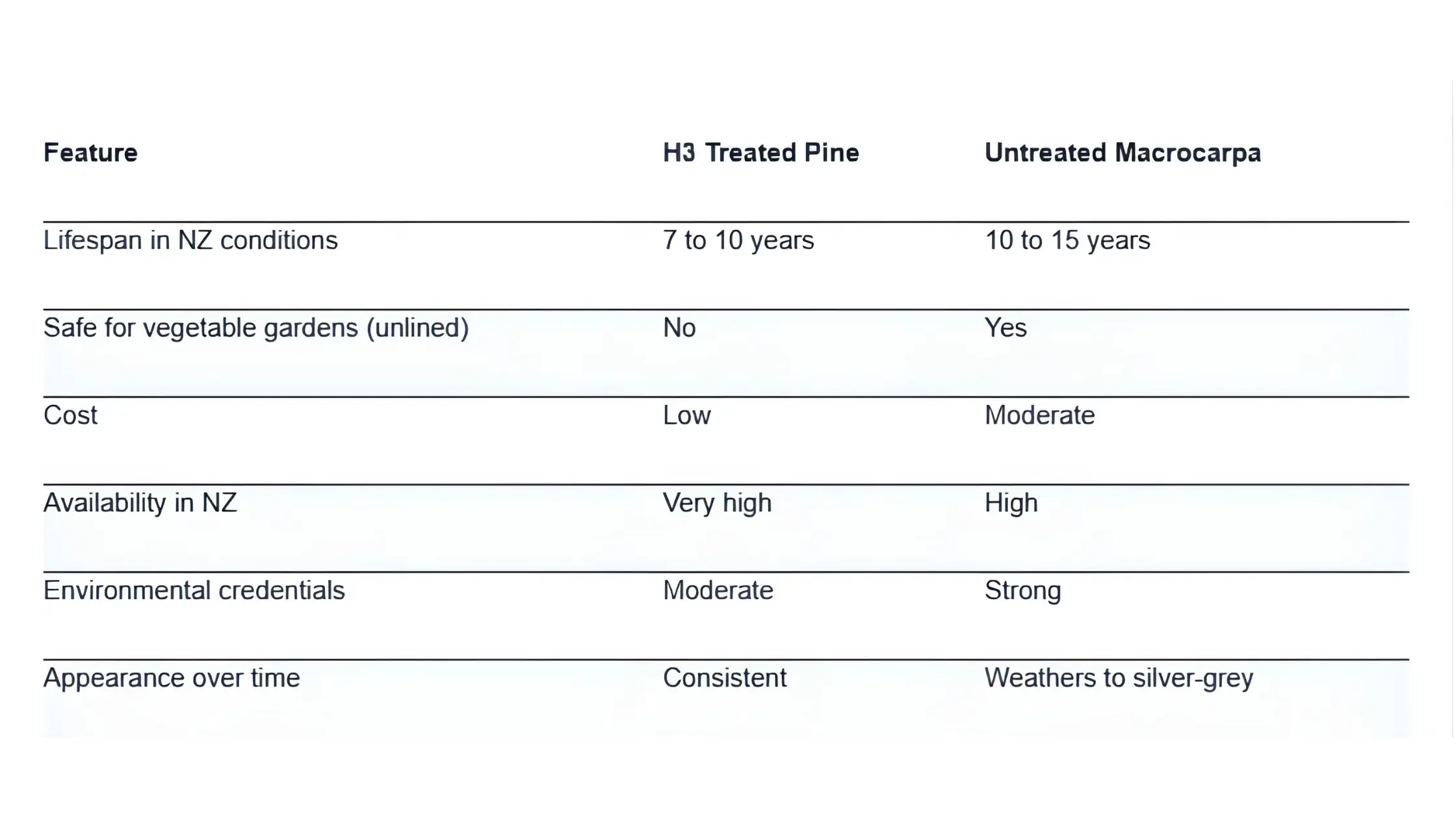
For purely ornamental beds growing flowers or shrubs, treated pine with a liner is a cost-effective choice. For food gardens, untreated macrocarpa is the clear winner.
Macrocarpa: The Benchmark Timber for Raised Garden Beds NZ
If you spend any time on NZ gardening forums or ask at a local timber yard, macrocarpa comes up almost immediately. It has earned that reputation.
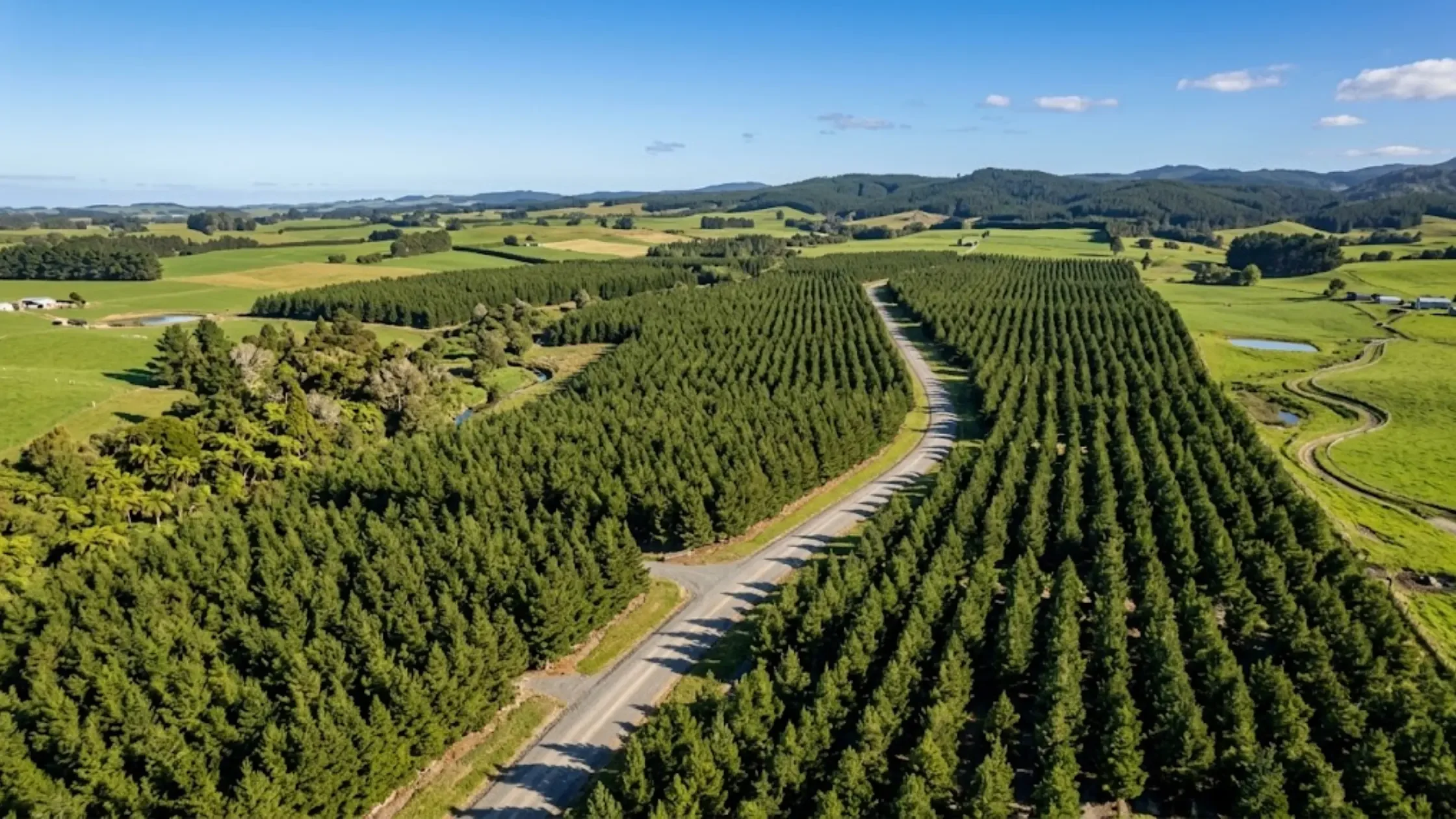
Macrocarpa is a cypress species that was introduced to New Zealand and is now grown extensively across the country, particularly on the South Island's West Coast and in the Waikato region. Because it is locally grown, using it supports New Zealand's timber industry and cuts down on the carbon footprint associated with imported alternatives.
What makes it so well suited to raised garden beds specifically?
Natural oils: Macrocarpa contains aromatic oils that repel insects and inhibit fungal rot without any chemical treatment.
No chemical risk: You can grow tomatoes, herbs, leafy greens, and root vegetables directly against macrocarpa timber without any barrier needed.
Aesthetic appeal: Fresh macrocarpa has a warm golden tone that weathers gracefully to a soft silver-grey, blending beautifully into the natural landscape.
Structural strength: Macrocarpa slabs and sleepers are dense and heavy, meaning they hold their shape under soil pressure and do not warp easily.
Genuine longevity: In most New Zealand conditions, properly installed macrocarpa beds last between 10 and 15 years without any treatment.
You can explore the full range of wood products at Plankville, including milled macrocarpa slabs in a variety of dimensions suited to both small courtyard beds and large productive kitchen gardens.

Other Timber Options Worth Considering
Cedar and Redwood
Both species are excellent for garden beds and are widely used in North America and parts of Europe. They offer natural rot resistance and a long lifespan, with cedar lasting 15 to 20 years in garden conditions. The problem in New Zealand is availability. Cedar and redwood are difficult to source locally, which drives the price up significantly and makes them an impractical choice for most Kiwi gardeners.
Recycled Timber
Using reclaimed timber can be an environmentally appealing option, but it requires careful vetting. Old railway sleepers, fence posts, and structural timber from demolition sites may contain residual preservatives including copper chrome arsenate (CCA), which was widely used in treated timber before being phased out for residential use. If you go the recycled route, inspect the timber carefully, avoid anything with a greenish tint (a hallmark of older CCA treatment), and never use it unlined in a vegetable garden.
Untreated Pine
Cheap, widely available, and easy to work with. Untreated pine is fine for a short-term project or a temporary garden setup, but expect a lifespan of just two to five years in New Zealand's climate. It is not a long-term solution.
If you are planning planter garden beds that need to last and look good season after season, macrocarpa is still the most sensible investment.
Building Your Raised Bed: Practical Tips Before You Start
Once you have chosen your timber, the construction side is reasonably straightforward. A few details will make a significant difference to how long your bed holds up:
Minimum dimensions: Use timber at least 150mm tall and 40mm thick. Thinner boards will bow under soil pressure.
Corner fixings: Galvanised screws or brackets are essential. Standard steel will rust quickly in NZ conditions, weakening the joints within a couple of seasons.
Avoid ground contact where possible: Raising the base of your bed slightly off the soil level with a gravel layer or weed mat underneath reduces moisture retention at the base of your timber.
Lining for treated timber: If you do use treated pine, line the interior with heavy-duty polythene sheeting (at least 200 microns) before filling with soil.
Fill depth: Most vegetables need at least 300mm of growing depth. Herbs and shallow-rooted plants can manage with 200mm.
For gardeners who want their beds to handle the colder months, read this detailed breakdown on winter proof raised garden beds NZ to understand how timber choice and bed design interact with frost conditions.

Sustainability and Sourcing Timber in New Zealand
Choosing locally grown timber like macrocarpa is one of the most straightforward ways to reduce the environmental footprint of your garden project. Imported timber, even high-quality cedar, travels a significant distance before it reaches your backyard.
New Zealand has a strong framework for sustainable forestry, and many suppliers work directly with responsible mills that replant and manage their resources carefully. When you buy from a local supplier who is transparent about their sourcing, you are supporting that entire chain.
You can read more about Plankville's values and approach to responsible timber sourcing on the about page. If you are curious about what services are available beyond standard timber sales, the our services page covers custom sizing, milling options, and delivery across New Zealand.
And if you are thinking about gifting someone a gardening project, Plankville also offers gift vouchers that make a thoughtful present for any keen gardener in your life.
Things to Know
Macrocarpa from New Zealand is not the same as macrocarpa sourced overseas. The local version is grown in conditions that produce particularly dense, oil-rich wood.
H3 treated pine is safe for garden beds growing non-edible plants, but always use a plastic liner if you are growing food crops.
Timber thickness matters as much as species. A 25mm macrocarpa board will degrade faster than a 50mm board of the same species.
The silvering that occurs on weathered macrocarpa is purely cosmetic and does not indicate decay or weakness in the timber.
Recycled timber can be a smart environmental choice, but CCA-treated timber is never appropriate for vegetable gardens under any circumstances.
Galvanised hardware is not optional in New Zealand's climate. Stainless steel is even better for coastal regions with salt air exposure.
Ready to Start Building?
Head to the Plankville website to browse the full range of macrocarpa timber and garden bed options, or contact us directly to discuss custom sizing for your specific project. Whether you are building one small herb garden or a full productive vegetable plot, the team can help you choose the right dimensions and timber grade for your needs.
FREQUENTLY ASKED QUESTIONS
-
H3 treated pine contains copper-based preservatives that can leach into soil, so it is not recommended for direct contact with food crops.
The safest approach is to line the interior of your treated pine bed with heavy-duty polythene sheeting before adding soil. This creates a physical barrier between the timber and your growing medium. Many Kiwi gardeners use treated pine for flower beds and switch to macrocarpa for their edible gardens.
-
Untreated macrocarpa typically lasts between 10 and 15 years in New Zealand garden conditions without any additional treatment.
Its natural oils provide genuine rot and insect resistance, making it one of the most durable untreated timber options available locally. Longevity will vary depending on soil moisture levels, drainage quality, and timber thickness.
-
Use timber at least 40mm thick and 150mm tall for a stable, long-lasting raised garden bed.
Thinner boards are more prone to bowing under soil pressure, particularly once the bed is watered regularly. For larger beds over 1.5 metres wide, consider adding a central cross-support to prevent the long sides from spreading over time.
-
Older railway sleepers were often treated with creosote or CCA, both of which are harmful and should never be used in vegetable gardens.
If you source newer recycled sleepers that are confirmed to be CCA-free, they can work well as a structural material. Always ask for documentation on the original treatment type before purchasing recycled timber for food gardens.
-
Plankville is a dedicated New Zealand timber supplier offering macrocarpa slabs and sleepers in sizes suited to garden bed construction.
Buying from a specialist supplier means you get timber that has been properly milled and dried, which reduces warping and extends the lifespan of your finished bed. Local sourcing also means shorter lead times and the ability to request custom cuts.
The Bottom Line on Best Wood for Garden Beds NZ
If there is one decision that will shape the success of your raised garden bed project more than any other, it is the timber you choose. For most New Zealand gardeners growing vegetables, herbs, or fruit, untreated macrocarpa is the obvious answer. It is local, chemical-free, durable, and genuinely beautiful. Treated pine has its place in ornamental gardens where food safety is not a concern, but it is not a like-for-like substitute.
Invest in quality timber from the start, use galvanised fixings, and build your beds to the right dimensions, and you will be harvesting from them for well over a decade. Visit Plankville to explore the full range and get your project started on solid ground.
