
Understanding Timber Grades in New Zealand: A Simple Guide for Homeowners

Beginning a home project is an exciting milestone, whether you are building that sun-soaked timber deck or putting up a sturdy garden fence. However many homeowners find themselves staring at a stack of wood at a yard feeling overwhelmed by terms like SG8, H3.2, or No.1 Framing. It feels like you need a secret decoder ring just to buy a few planks.
Choosing the right wood isn't just about how it looks; it's about making sure your hard work lasts for decades rather than rotting away after a few rainy seasons. In New Zealand, our unique climate and strict building codes mean that "timber grades" are the most essential language you need to speak before you start swinging a hammer. This guide will peel back the layers of complexity showing you how to pick the perfect timber for your specific project with total confidence.
Key Takeaways
Purpose over Appearance: Structural grades (SG) are for safety and strength, while landscaping grades focus on durability and outdoor aesthetics.
The Number Matters: In NZ, SG8 is the standard for most home framing providing the reliable strength needed for houses.
Environment is King: The "H" (Hazard) class determines where wood can live—from dry indoor rooms to wood buried deep in the soil.
Value in Knowledge: Understanding these grades saves you money by preventing you from over-buying premium wood where it isn't needed, or under-buying and risking structural failure.
The Foundation of Timber Grades in New Zealand
When we talk about timber grades New Zealand homeowners run into, we are really talking about a classification system that tells you what a piece of wood can do. Timber has a natural origin, and every tree grows . Some have large knots, some have straight grain, and others might have slight bends.
To keep our homes safe, experts sort this wood into "grades." This process ensures that when a builder picks up a piece of timber marked for construction, they know how much weight it can hold. For a homeowner, this system is your best friend. It acts as a quality and performance guarantee ensuring that the wood you buy for a retaining wall is different—and much tougher—than the wood used for a decorative indoor shelf.
Structural Timber: The Bones of Your Home
If you are building anything that needs to bear weight—like a wall, a floor, or a roof—you are looking at structural timber. This is where the term "Stress Graded" or "SG" comes in. In your local timber yard or at Plankville, you will most see SG8.
SG8 is the "all-rounder" of New Zealand construction. It has been tested to confirm it meets the stiffness and strength required by NZ building standards. While you might see SG10 or SG12 for heavy-duty engineering, SG8 is the gold standard for most residential renovations. This timber is often kiln-dried to prevent it from shrinking or warping once it's inside your walls. Using the right structural grade makes the difference between a floor that feels solid and one that creaks every time you walk across the room.
Landscaping Timber: Braving the Elements
Landscaping timber is a different beast. Unlike the wood hidden inside your dry walls, landscaping timber needs to survive the harsh Kiwi sun, heavy rain, and the hungry insects that live in our soil. This is where we move from "SG" ratings to "Hazard" or "H" classes.
For homeowners, the most common landscaping grades are H3.2, H4, and H5. H3.2 is perfect for things that get wet but aren't touching the ground, like deck boards or fence pickets. If the wood is going to touch the dirt such as a fence post or a retaining wall sleeper, you must use H4 or H5. These grades have been treated with special preservatives that act like a shield stopping rot and bugs from turning your beautiful garden project into mulch. For those looking for specialized wood products that look natural but stay strong, grasping this distinction is essential.
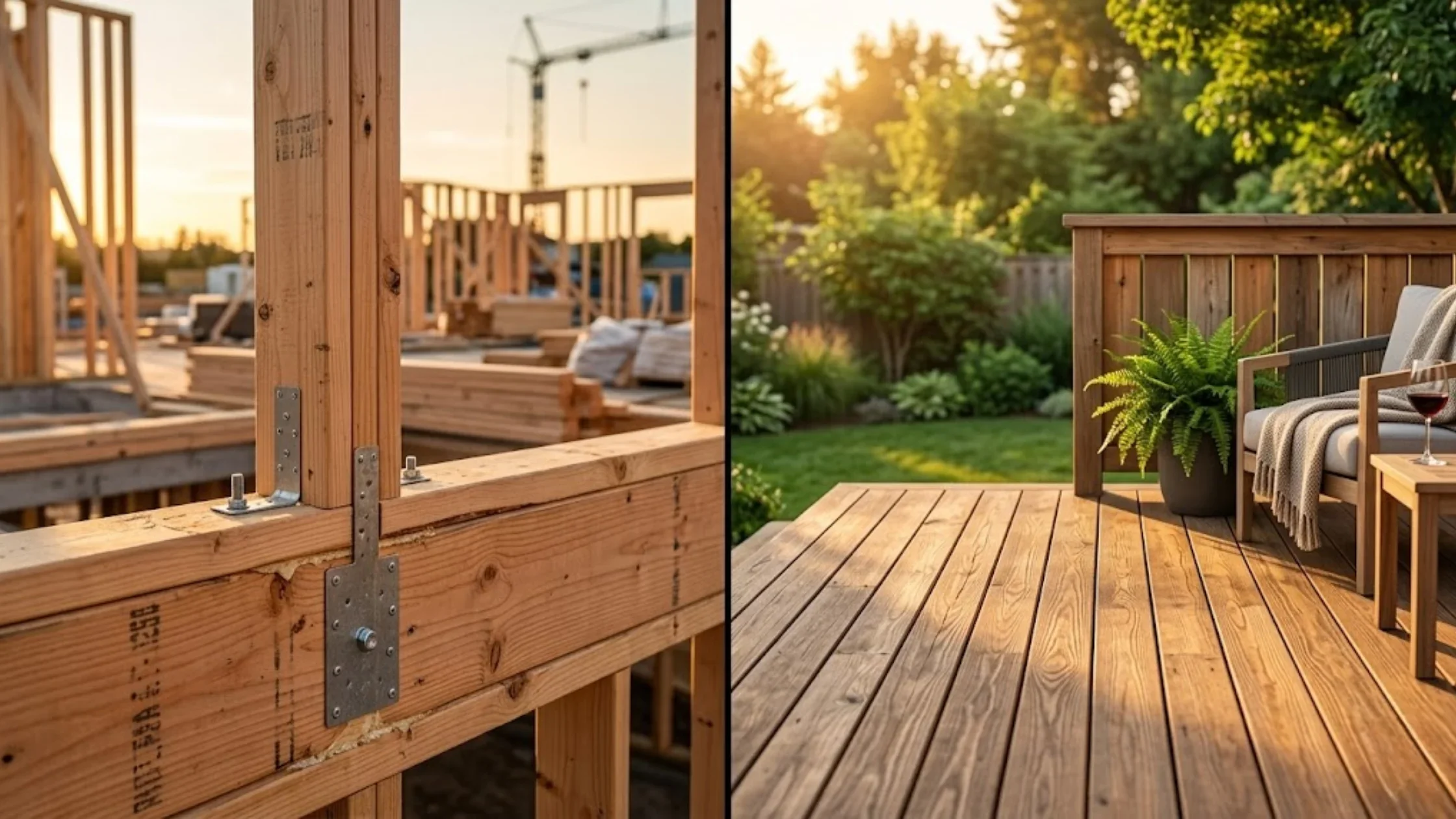
Making the Right Choice for Your Project
The key to a successful DIY project is matching the timber to its environment. If you use structural framing timber outside without the right treatment, it will fail. On the other hand, using heavy-duty H5 poles for a small indoor project is an unnecessary expense.
When you visit Plankville, the focus is on providing you with timber that fits the purpose. A great tip for homeowners is to always look for the "grade stamp" on the end of the timber. This little mark tells the story of the wood: where it was processed, its strength rating, and its treatment level. By learning how to read these stamps, you take the power back into your own hands. You no longer have to guess if a piece of wood is "good enough"—you will know for a fact that it is the right tool for the job.
Why Quality Timber Matters for Your Peace of Mind
High-quality timber is an investment in your home's future value. Using a NZ timber guide to make informed choices means you won't be doing the same job twice in five years. Cheap ungraded wood might look like a bargain at first, but the cost to replace a rotted deck or a sagging roof far outweighs the initial price of quality graded materials.
Beyond the technical specs, there is a sense of pride that comes from knowing your home is built with the best local materials. New Zealand timber is world-class, and when you choose the right grades, you are supporting sustainable forestry and ensuring your home remains a safe, beautiful sanctuary for your family.
Ready to Start Your Project?
Don't let the technical jargon hold you back from creating the home of your dreams. Whether you are planning a massive renovation or a simple garden upgrade, the team at Plankville is here to help you navigate the world of timber with ease. We believe that every homeowner deserves to understand what they are buying.
If you have questions about which grade is right for your specific plan, or if you want to see the quality of our New Zealand timber for yourself, we would love to chat. Reach out to us today to discuss your project needs and let's get your build started on the right foot.
FREQUENTLY ASKED QUESTIONS
-
SG8 stands for "Structural Grade 8." It is the most common strength rating for timber used in New Zealand house building. This grade means the wood has been tested and verified to have specific stiffness and strength properties. It is the standard choice for wall studs, floor joists, and roof rafters. Use of SG8 ensures your building meets the safety requirements of the New Zealand Building Code and provides a stable frame for your home that can withstand local conditions and loads.
-
No, H3.2 timber is not designed for ground contact. H3.2 is treated for "outside, above ground" use, which means it can handle rain and moisture but will rot if buried in soil. For fence posts or any wood that touches the earth, you must use at least H4 or H5 treated timber. These higher treatment levels contain more preservatives to protect the wood against the much more aggressive fungi and insects found in the ground, and this ensures your fence stays standing for many years.
-
Merchant grade is a budget-friendly timber that may have more visual defects like large knots, cracks, or chips. It is best for projects where look doesn't matter such as temporary bracing or hidden supports. Premium grade (sometimes called No. 1 or Clears) is selected for its beautiful appearance and fewer knots. If your timber will be visible—like on a deck, a feature wall, or furniture—putting money into a higher appearance grade will give you a much cleaner and more professional finish.
-
The colors are dyes added during the treatment process to help builders and inspectors identify the wood's "Hazard" level at a glance. In New Zealand pink often indicates H1.2 treatment, which is used for internal framing to protect against borers and moisture. Blue is sometimes used for similar internal purposes. These dyes don't provide the protection themselves; they serve as a visual code so you can be sure the right wood is used in the right part of your house.
-
No, SG10 is stronger and stiffer than SG8. The number refers to the "E-Modulus" (stiffness) of the timber. While SG8 is the standard for most homes because it provides enough strength for typical spans, designers use SG10 when a project needs more strength such as for longer spans in open-plan living areas or under heavier loads. However, for most DIY homeowner projects, SG8 provides more than enough strength and is easier to find and more cost-effective than SG10.
-
Untreated timber (often called "untreated radiata pine" in NZ) acts like a sponge for moisture. If left outside, it will begin to decay almost . Within a few months to a couple of years (depending on the weather), the wood will lose its structural integrity, become soft, and crumble or grow mold. Always ensure any timber used outdoors has at least an H3.2 rating to make sure it has chemical protection against the elements and biological decay.
-
Yes, you can paint treated timber, but it needs to be dry first. Many treated timbers H3.2 and H4 used in landscaping, are sold "wet" from the treatment process. If you paint it right away, the moisture trapped inside will cause the paint to bubble and peel. It is best to let the timber "weather" or dry out over a few weeks (or months, depending on the season) until the surface feels dry to the touch and the wood has shrunk to its stable size before you apply a high-quality primer and topcoat.
-
No. 1 Framing is an older visual grading term that has been replaced by the "SG" (Structural Grade) system in New Zealand. While "No. 1" refers to the look and quality of the wood (fewer knots and straighter grain), the modern SG8 or SG10 system is preferred because it provides a mechanical guarantee of how much weight the wood can hold. If you see wood labeled as No. 1 Framing, it is high-quality wood that suits construction, but check for an SG stamp to get building consent.
-
Yes, New Zealand Radiata Pine is an excellent and versatile timber. While it is a "softwood," it takes treatment well, which makes it durable for a wide range of uses. It is sustainable, grows in our climate, and is easy for homeowners to cut, nail, and screw. Because it is so used, the grading and treatment systems for NZ pine are some of the most advanced in the world giving you great peace of mind.
-
Retaining walls are under a lot of pressure from the weight of the soil and are in contact with wet earth. This means you must use "landscaping" timber with a treatment level of H4 or H5. H4 is suitable for low retaining walls in well-drained soil, but H5 is recommended for critical walls or where the wood will be in very wet conditions. Always check with a specialist or your local council, as walls over a certain height may require a specific structural engineering design.
