
Which Timber Needs the Least Maintenance for Outdoor Furniture in New Zealand?
We all love relaxing outside in the fresh Kiwi breeze. But nobody likes spending their precious weekends scrubbing, sanding, and staining dirty garden tables. Choosing the wrong wood means your lovely seats will quickly rot, warp, or split under our harsh Southern Hemisphere sun and heavy rain.
This guide will show you which natural woods survive best in New Zealand with the least amount of hard work. We will compare popular local choices like Macrocarpa, Western Red Cedar, Redwood, and other tough timbers so you can pick the perfect one for your home.
Key Takeaways
Macrocarpa is the best all-rounder for Kiwi backyards because it is strong, heavy, and very easy to look after.
Leaving wood bare is the easiest choice because it naturally turns a beautiful silver-grey and requires zero work.
Avoid cheap woods that need chemical treatments, as they warp quickly in our harsh sun.
Sustainably sourced timber from local mills helps the environment and supports New Zealand communities.
The Secret to Outdoor Furniture That Outlasts the Weather
Buying outdoor furniture is a big investment for your home. Sadly, many people buy cheap sets only to watch them turn green with mould or fall apart after just a few winters. The secret to furniture that lasts for decades is choosing a wood that looks after itself. By picking a timber that is naturally strong against bugs and wet weather, you can keep your garden looking beautiful without constant chores.
Comparing the Best Outdoor Woods for Our Climate
This article helps you compare the best natural woods for outdoor use. We look at how different timbers age and how much work they need to stay strong. We will focus on how local woods behave in our unique climate so you can make a smart, easy choice.
The Quick Answer for Busy Kiwi Homeowners
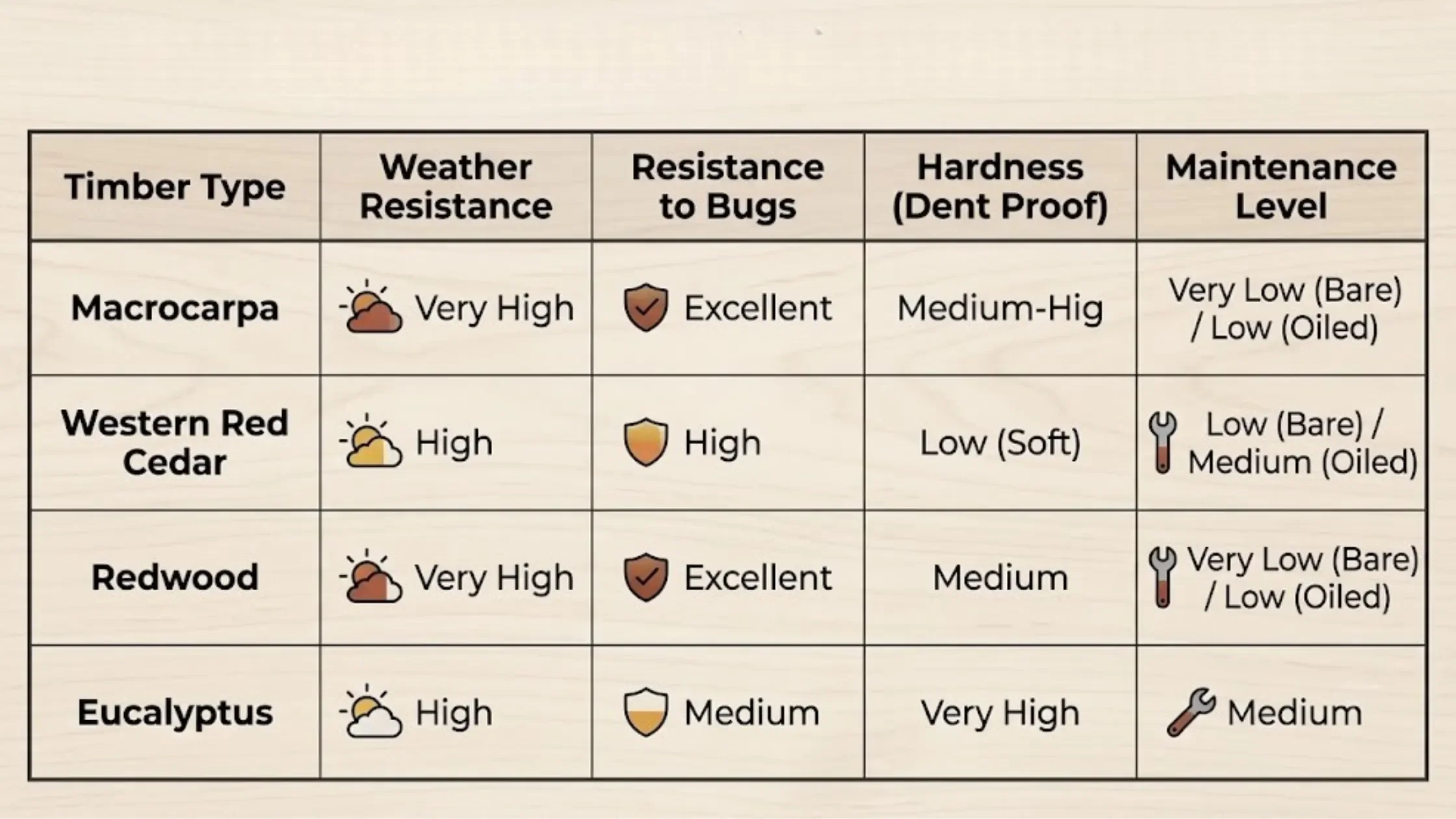
If you want the absolute lowest maintenance, Macrocarpa and Redwood are your best friends in New Zealand. Left untreated, they naturally weather to a beautiful silver-grey colour and do not need regular painting or staining to stay strong. Western Red Cedar is incredibly stable and does not warp, but it is softer and needs more care to prevent scratches.
Understanding the New Zealand Climate Challenge
Our beautiful country has very unique weather that is incredibly tough on wood. The ultraviolet (UV) rays from our sun are extremely strong, which quickly breaks down the natural bonds in timber.
Why Our Sun and Rain Destroy Cheap Wood
The wet winters and hot, dry summers create a constant cycle of soaking and drying. When wood gets wet, it swells up. When the hot sun dries it out, it shrinks. This movement makes cheap woods crack, bend, and split apart.
The Role of Natural Preservatives in Timber
Some special trees grow their own natural oils and resins. These juices act like a shield, blocking out dampness, destructive bugs, and rot. Because these defenses are deep inside the wood fibers, you do not need to apply smelly chemicals to keep them safe.
Comparing the Top Low-Maintenance Timbers
Macrocarpa: The Rugged Kiwi Classic
Macrocarpa is one of the most famous and loved timbers in New Zealand. It is a dense, heavy wood that feels incredibly solid and safe.
Maintenance Needs: Very low. You can leave it completely bare to turn a rustic grey, or apply a light oil once a year to keep its golden glow.
Durability: High. It has natural chemicals that stop bugs and rot from eating it. Learn more about why Macrocarpa is popular for NZ outdoor timber.
Best Used For: Large, chunky picnic tables, heavy benches, and rustic garden structures.
Western Red Cedar: The Stable Performer
Cedar is a premium, imported wood known for being lightweight and very straight. It rarely warps or twists, even when the weather changes quickly.
Maintenance Needs: Low to medium. It does not rot, but because it is quite soft, it can get dented by heavy shoes or garden toys.
Durability: Good. It handles wet weather beautifully but needs a protective coating if you want to prevent dents. Read our guide on Redwood vs Cedar vs Macrocarpa in NZ.
Best Used For: Elegant, modern chairs, light tables, and high-end outdoor furniture.
Redwood: The Beautiful Protector
Redwood is a stunning timber with a rich, reddish-brown color that looks incredibly warm and inviting. It is highly resistant to shrinking and swelling.
Maintenance Needs: Very low. It holds its shape perfectly and resists decay naturally.
Durability: Outstanding. It is highly resistant to wood-boring insects and damp ground.
Best Used For: Large dining tables and stylish loungers that stay outside all year.
Other Durable Options: Lawson Cypress and Eucalyptus
Lawson Cypress is another fantastic choice that smells sweet and resists rot well. Eucalyptus (often called Blue Gum) is incredibly hard and strong against scratches, though it can be trickier to cut. You can explore these in our specialty timber for creative builders and designers guide.

The Weathering Journey: Golden Brown to Silver Grey
When you first buy high-quality wood furniture, it has a gorgeous, warm color. Over a few months, the Kiwi sun will wash away the top layer of color, turning it into a beautiful, silvery-grey shade.
Why Weathering is Actually Good for Your Wood
This silver color is not rot! It is actually a natural sun block that the wood creates to protect itself from UV damage. It looks very modern and does not hurt the strength of the furniture at all. Discover more about timber weathering and how it adds character to outdoor furniture.
How to Keep the Original Warm Wood Tone
If you do not like the silver look, you can easily stop it. All you need to do is apply a simple coat of outdoor timber oil once a year. This keeps the wood hydrated and blocks the sun from changing its color.
Comparing Timber Maintenance for Kiwi Gardens
Key Benefits of Naturally Durable Timber
No Bad Chemicals: Unlike cheap treated pine, these woods do not have nasty chemical poisons inside them, making them completely safe for children and pets.
Saves You Time: You do not have to spend your weekends painting or sanding.
Saves You Money: Because they do not rot, these chairs and tables last for decades instead of just a couple of years.
Better for Nature: These trees are grown sustainably in New Zealand, which is much better for the earth than plastic or imported rainforest woods. You can read about this in our article on locally milled timber and sustainability.
Conclusion
Choosing the right wood for your outdoor space means you can spend more time relaxing and less time doing chores. Natural timbers like Macrocarpa, Cedar, and Redwood are built by nature to survive the wet, sunny, and windy Kiwi weather. They look incredible, smell wonderful, and will stand proud in your garden for many years to come.
If you are ready to find the perfect timber for your next outdoor project, we are here to help. At Plankville, we love milling beautiful, high-quality local woods that are perfect for Kiwi families.
Come visit us to see our wide range of stunning timbers! Check out our wood products or explore our about page to learn how we mill sustainable timber. You can also contact us today for friendly, expert advice on your next garden project.
FREQUENTLY ASKED QUESTIONS
-
The best timber for outdoor furniture in New Zealand is Macrocarpa. It is a highly durable local wood that naturally fights off rot and insects without needing nasty chemical treatments. It is also heavy and strong, meaning it will not blow over in high winds or warp easily under our harsh Southern Hemisphere sun.
-
No, Macrocarpa does not need any chemical treatments to survive outdoors. It is naturally classified as a durable timber because of the protective resins grown inside the wood fibers. This makes it completely safe for making outdoor tables, garden benches, and veggie patches where children and pets play.
-
To stop your timber from turning silver-grey, you should apply a high-quality outdoor wood oil or UV-blocking stain once a year. The grey color is caused by the sun washing out the wood’s natural colors. Applying an oil keeps the timber hydrated and preserves its original golden-brown warmth.
-
Both are amazing, but they have different strengths. Cedar is incredibly stable, meaning it will not twist or bend, but it is a softer wood that can get dented easily. Redwood is slightly harder and has a gorgeous, deep reddish color. Both are exceptionally good at resisting wet weather and wood rot.
-
Untreated Macrocarpa furniture can easily last fifteen to twenty-five years or more when kept off direct, wet soil. Its natural oils keep the core wood strong and free from decay. To get the maximum lifespan, ensure your furniture has good drainage so water does not pool under the legs.
-
No, you do not need to sand your furniture every year if you let it age naturally. Sanding is only necessary if the wood gets rough splinters, or if you are trying to remove old paint or peeling varnish. If you use a simple timber oil, you can just clean the surface and apply a new coat directly.
-
High-quality woods like Macrocarpa and Redwood will absorb some rainwater and dry out safely without rotting. However, cheap woods like pine will quickly swell, crack, and grow green mould. Buying naturally durable timber is the best way to ensure your furniture survives wet Kiwi winters.
-
Yes, choosing local Kiwi timber is much better for the environment. Imported woods like teak often travel thousands of miles on ships, which creates heavy pollution. Local woods like Macrocarpa are grown sustainably right here in New Zealand, supporting local families and reducing carbon emissions.
-
You can easily clean green mould by scrubbing the timber with a mixture of warm water, mild soap, and a splash of white vinegar. Avoid using harsh bleach or high-pressure water blasters, as they can damage the delicate wood fibers and make the surface rough and prone to splinters.
-
Yes, building your own garden furniture is a highly rewarding project! Using local timber slabs makes the process much easier because the wood is already cut to beautiful, sturdy thicknesses. You can read our handy beginner's guide to timber DIY projects in Richmond to get started today.
