
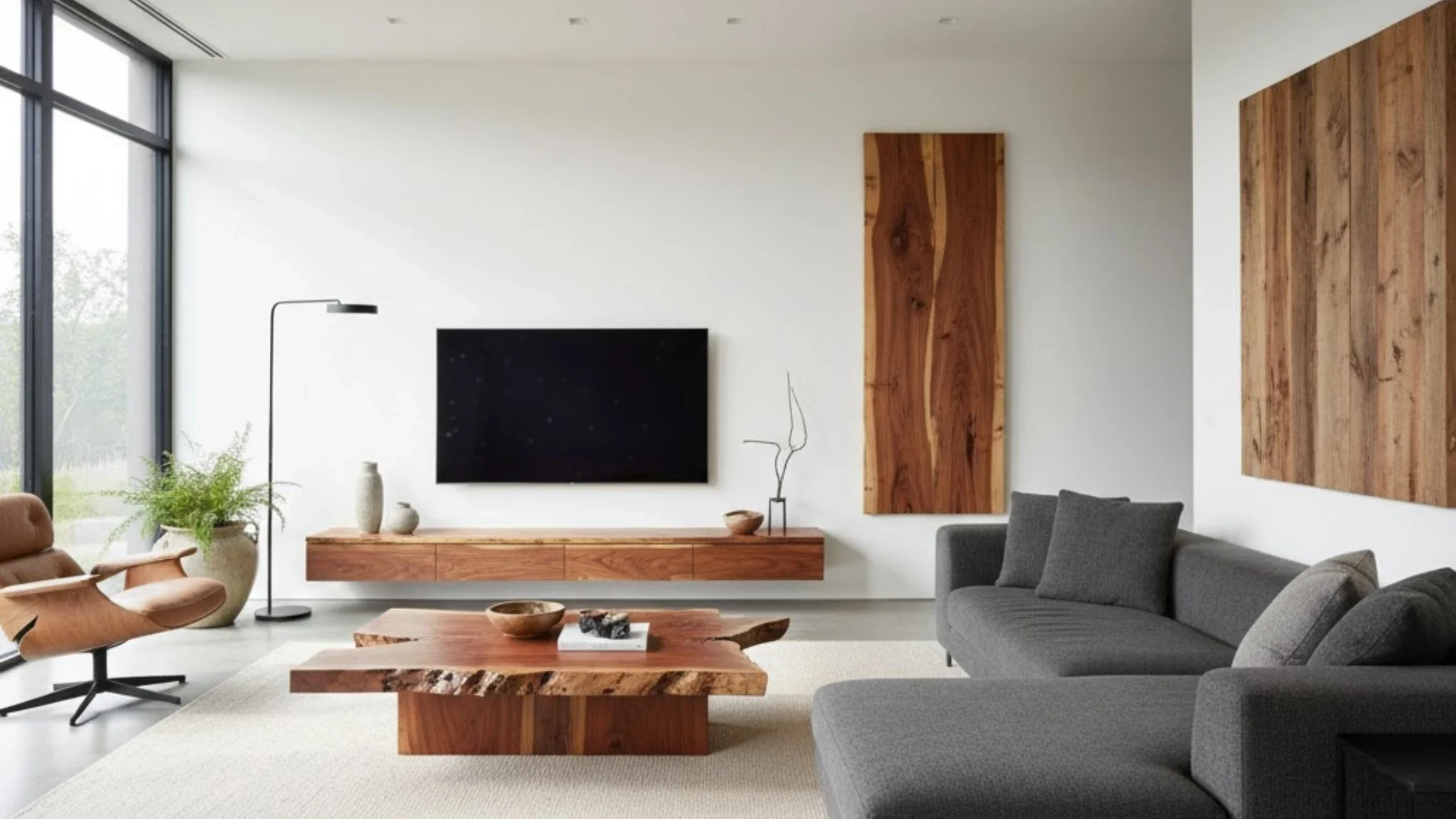
Balancing Raw Timber with Modern Minimalist Design
Imagine walking into a room that feels both incredibly fresh and deeply grounded. It has the clean lines of a modern gallery, but there is a warmth you can almost feel on your skin. That magic usually comes from one specific element: a flitch. In the world of timber, a flitch is a thick, magnificent slab of wood cut directly from a log, keeping its natural, organic edge intact. It is nature’s own fingerprint, and it is becoming the "secret sauce" for the Modern Farmhouse trend sweeping through the Tasman region.
If you are looking to elevate your home, incorporating Plankville timber flitches isn't just about adding furniture; it is about bringing a piece of the New Zealand landscape indoors. But how do you make a rugged, raw-edged piece of wood look sophisticated rather than "cluttered"? The secret lies in the delicate balance between rustic soul and minimalist discipline.
Key Takeaways
A flitch is a natural timber slab that keeps the tree's original shape.
Balance rustic wood with clean, minimalist lines to avoid a "cluttered" look.
Focus on one "Hero Piece" per room for the best visual impact.
Locally sourced New Zealand timber offers better durability and soul.
What Exactly is a Flitch?
Before we dive into the styling, let’s understand the material. A timber flitch is essentially a vertical slice of a tree. Unlike standard lumber that is squared off into perfect rectangles, a flitch celebrates the "live edge"—the bark line and the natural curves of the trunk. This means no two pieces are ever the same. When you run your hand across a finished flitch, you are touching the history of a tree grown right here in our soil.
The Beauty of Contrast: Rustic Meets Minimalist
The "Modern Farmhouse" look relies on contrast. Think of a minimalist room as a blank canvas: white walls, sleek black metal fixtures, and plenty of open space. On its own, this can feel a bit cold. When you introduce a raw timber edge, you instantly provide a focal point that breathes life into the room.
To achieve this balance, follow the rule of "One Big Hero." Instead of filling a room with many small wooden trinkets, choose one significant flitch piece. This could be a massive dining table with a wany edge or a floating mantelpiece above a simple fireplace. By surrounding this one "loud" rustic piece with "quiet" minimalist elements, you allow the natural beauty of the wood to take centre stage without overwhelming the senses.
Practical Ways to Use Flitches in Modern Homes
Integrating these slabs into your home is easier than you might think. Many homeowners in Nelson and across Tasman are moving away from mass-produced furniture in favour of bespoke timber that tells a story.
The Kitchen Island: A thick macrocarpa or gum flitch makes for a stunning breakfast bar. The golden hues of the wood pair beautifully with matte white cabinetry.
The Entryway Statement: A live-edge bench in your hallway creates an immediate sense of "home" for guests, offering a sturdy, tactile welcome.
The Home Office: In our digital world, working on a desk made from a solid timber slab helps you feel connected to the physical world. It turns a workspace into an inspiring sanctuary.
Why Quality and Origin Matter (The EEAT Factor)
When choosing timber for your home, expertise matters. You want wood that has been properly dried and milled to ensure it doesn't warp or crack over time. This is where the craftspeople at Plankville shine. With decades of experience in New Zealand timber, they understand how different species react to our unique climate. Choosing locally sourced wood isn't just a style choice; it’s a commitment to sustainability and quality that lasts for generations.
Taking the Next Step with Plankville
Ready to transform your living space? Whether you are building a new home in Richmond or renovating a classic cottage in Mapua, a custom flitch is the bridge between the outdoors and your interior world. You don’t need to be a design expert to make this work; you just need the right piece of wood and a vision for a warmer, more beautiful home.
FREQUENTLY ASKED QUESTIONS
-
A timber flitch is a large, thick slab of wood cut directly from a log, often retaining its natural "live edge" rather than being squared off. In modern home design, flitches are used to create one-of-a-kind furniture pieces like dining tables, kitchen islands, and shelving. They are highly valued because they showcase the unique grain, knots, and curves of the original tree, making every piece of furniture a unique work of art.
-
Maintaining a timber flitch table is quite simple if it has been finished correctly. For daily cleaning, use a soft, damp cloth to wipe away dust and crumbs. Avoid using harsh chemical cleaners which can strip the natural oils or varnish. To keep the wood looking its best, it is recommended to use a high-quality furniture wax or oil once or twice a year, depending on the environment, to keep the timber hydrated and glowing.
-
Yes, live edge timber is a perfect addition to a modern kitchen, especially as a breakfast bar or island topper. It provides a "soft" organic touch that breaks up the hard surfaces of stone, tile, and stainless steel. When used in a kitchen, ensure the timber is sealed with a food-safe, moisture-resistant finish to protect it from spills and heat while maintaining its rustic charm.
-
In New Zealand, species like Macrocarpa, Eucalyptus (Gum), and Totara are popular choices for flitches. Macrocarpa is loved for its golden honey tones and durability, while Eucalyptus offers incredible hardness and striking grain patterns. The choice often depends on the desired colour and the level of "character" (knots and swirls) you want in your home.
-
Warping is prevented through a professional milling and drying process. It is vital that the timber is "seasoned" or kiln-dried to the correct moisture level before it enters your home. Working with experts like Plankville ensures that the timber has been handled correctly from the forest to the workshop, and using proper mounting techniques allows the wood to "breathe" slightly with seasonal temperature changes.
-
Absolutely! You don't need a massive farmhouse to enjoy the beauty of a flitch. In smaller spaces, consider using a timber slab as a floating wall shelf, a slim console table behind a sofa, or even a custom headboard. These smaller applications provide all the warmth and texture of raw wood without taking up too much floor space or making the room feel small.
-
The main difference is the shape and the milling style. Regular boards are "dimensional lumber," meaning they are cut into standard rectangular sizes with straight edges. A flitch is a full-width slice of the log that includes the outer edges of the tree. This preserves the natural taper and "wanes" of the trunk, resulting in a much more organic and artistic appearance compared to factory-cut boards.
-
Yes, it is actually a cornerstone of "Warm Minimalism." The goal of minimalist design is to have fewer things, but better things. A single, high-quality timber flitch serves as a functional piece of furniture and a decorative sculpture all in one. By keeping the rest of the room simple and uncluttered, the complex textures of the raw wood become a beautiful, natural focal point.
-
Choosing locally sourced New Zealand timber flitches is a very sustainable choice. It reduces the "carbon miles" associated with shipping heavy wood from overseas. Additionally, many flitches are salvaged or sourced from trees that have reached the end of their life, ensuring that the wood is repurposed into a beautiful heirloom rather than being wasted or turned into firewood.
-
The cost of a custom flitch piece varies based on the wood species, the size of the slab, and the complexity of the legs or base. While they are more of an investment than mass-produced furniture, they are built to last a lifetime and often increase in sentimental value. Investing in a piece from a local specialist ensures you are getting a handcrafted product tailored specifically to your home’s dimensions.
