
The Difference Between Rough-Sawn and Dressed Timber for Outdoor Projects

Choosing the Right Look for Your Kiwi Backyard
You’ve finally decided to build that dream deck or a sturdy new fence to keep the dog in. You head down to the yard, and suddenly you’re faced with two piles of wood that look completely different. One is fuzzy, dark, and smells like a forest floor; the other is smooth, shiny, and looks like it belongs inside a high-end villa.
At Plankville, we know that choosing between rough-sawn vs dressed timber is the difference between a project that looks "good enough" and one that stops the neighbours in their tracks. Getting it wrong doesn't just hurt the eyes—it can affect how long your wood lasts in the unpredictable New Zealand weather. Whether you are building a rugged retaining wall or a sleek outdoor dining table, picking the right finish is the first step toward a job well done.
Key Takeaways
Rough-sawn timber is best for structural work, fences, and rustic garden beds.
Dressed timber (smooth) is ideal for furniture, handrails, and decking where skin contact happens.
Rough surfaces hold stains and paints better but can be harder to clean.
Dressed timber has exact measurements, while rough-sawn can vary slightly in size.
What Exactly is the Difference?
When we talk about timber finishes, we are really talking about what happened to the wood after it left the sawmill.
Rough-sawn timber is the "natural" version. After the log is cut into boards, it goes straight to the stack. It retains the marks from the big circular or band saws, giving it a textured, slightly "hairy" feel. It’s authentic, chunky, and carries a heavy-duty vibe. If you want your project to feel like it grew out of the ground, this is your go-to.
Dressed timber, often called "machine-gauged" or "D4S" (Dressed Four Sides), has been put through a planer. This machine shaves off the rough outer layer to create a surface that is buttery smooth and perfectly square. It looks "finished" right off the shelf. In the world of dressed timber NZ enthusiasts love, this is the choice for anything that needs to look sophisticated and sharp.
You can explore our full range of wood products to see these textures side-by-side.
When to Use Rough-Sawn Timber
Rough-sawn timber is the unsung hero of the New Zealand backyard. Because it hasn't been planed down, it is usually slightly thicker than its dressed counterparts, giving it a bit of extra "heft."
One of the biggest benefits of a rough finish is its relationship with liquids. The open grain and "fuzzy" surface act like a sponge for timber stains and preservatives. If you are building a boundary fence or a pergola and you want the colour to last for years without peeling, rough-sawn is a brilliant choice.
It’s also much more forgiving. If you’re building a retaining wall and you accidentally bang it with a shovel, a scratch on a rough-sawn surface just blends in. It’s tough, it’s honest, and it’s usually more budget-friendly. Most timber used for landscaping falls into this category because it handles the elements with such grace.
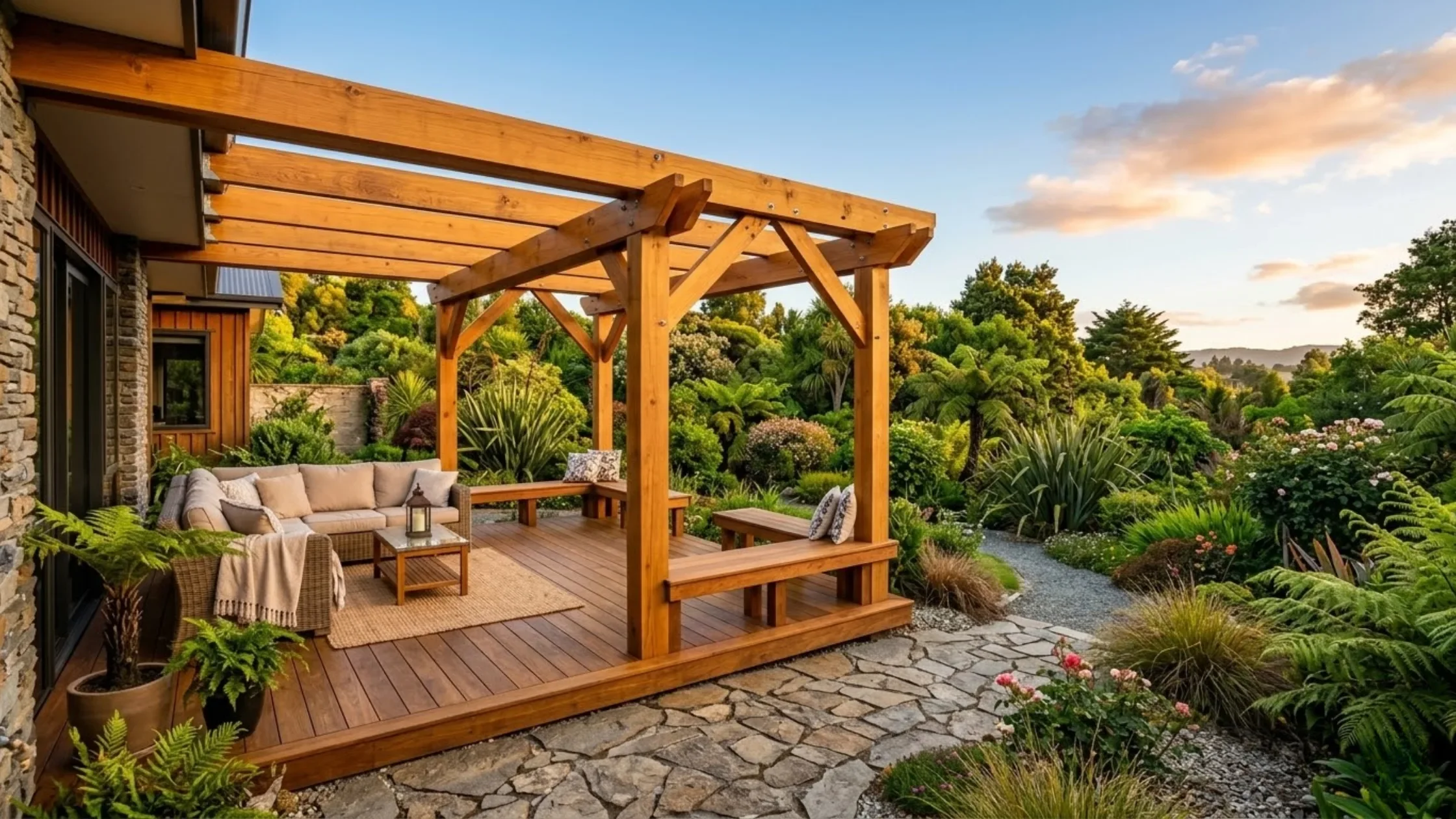
When Dressed Timber is the Right Choice
While rough-sawn is great for the "bones" of your garden, dressed timber is for the parts you touch.
Think about a deck railing. You don't want your guests getting splinters while they enjoy a summer BBQ. Dressed timber is planed to precise dimensions, which makes it much easier to join together. If you are building outdoor furniture or a modern screen for a town-house patio, the clean lines of dressed wood provide a high-end, architectural look.
It’s important to note that because the wood has been shaved down, a "100x50" dressed board will actually be smaller (usually around 90x45mm). This precision is vital for timber finishing where every millimetre counts for a perfect fit.
Making the Choice for Your Project
Choosing the right finish isn't just about looks; it's about the "feel" of your home.
If you live in a rural area or have a cottage-style garden, the rugged charm of rough-sawn timber creates a seamless transition between your home and nature. On the other hand, if you have a modern, minimalist home with clean glass and steel, the fuzzy texture of rough wood might look out of place. In that case, the sharp, uniform edges of dressed timber will complement your home's design much better.
At Plankville, we help you match the timber to the task. We understand that your outdoor space is an extension of your life. Whether you need the raw strength of the sawmill or the refined touch of the planer, we ensure the wood you take home is fit for the New Zealand sun and rain.
Ready to Start Your Project?
Don't leave your timber choice to guesswork. A quick chat with an expert can save you hours of sanding or the heartbreak of a finish that doesn't stick. At Plankville, we live and breathe wood. We can help you calculate exactly what you need and give you the best advice on which finish will make your project shine.
Contact Plankville today to discuss your outdoor project and get the perfect timber delivered to your door.
FREQUENTLY ASKED QUESTIONS
-
Yes, generally rough-sawn timber is more affordable. This is because it requires fewer steps to produce. Dressed timber has to go through an extra machine (the planer) and requires more handling and quality control, which adds to the final price per metre.
-
You certainly can! In fact, rough-sawn timber holds paint and stain very well because the surface area is larger and more porous. However, it will take much more paint to cover than smooth wood, and you’ll likely need to use a thick-napped roller or a sprayer to get into all the nooks and crannies.
-
The finish itself doesn't determine the lifespan; the wood species and treatment do. However, dressed timber can stay cleaner because dirt and mould have fewer places to hide. Rough-sawn timber can trap moisture in its texture, so it’s important to use high-quality oils or stains to protect it.
-
Gauging is a process similar to dressing where the timber is planed to a consistent width and thickness. It might not be as "pretty" as fully dressed timber, but it ensures every board is the same size, which is essential for building straight walls or level floors.
-
Yes, but it is a lot of work! If you want a smooth finish, it is almost always cheaper and easier to buy dressed timber from the start. Sanding a whole fence's worth of rough wood would take days and a lot of sandpaper.
-
When timber is "dressed," the planer shaves off about 5mm from each side. So, a board that starts as 100mm wide while "green" or rough will end up around 90-95mm once it is smooth. Always check the "actual" size versus the "nominal" size.
-
Rough-sawn is the classic choice for garden beds. It looks natural and the extra thickness helps the boards last longer against the damp soil. Just make sure the wood is untreated (like Macrocarpa) if you are worried about chemicals leaching into your veggies.
-
Yes. Because the wood fibres are torn by the saw rather than sliced by a blade, it is much more likely to catch on skin or clothes. We always recommend dressed timber for seating, handrails, or any area where children will be playing.
-
Most common construction timbers like Pine and Macrocarpa are available in both finishes. Some hardwoods are almost always sold dressed because they are used for high-end furniture or decking where a rough finish wouldn't be practical.
-
The best way to maintain it is with a high-quality timber oil or stain every 2-3 years. Since you can't easily wipe it down, using a soft brush to remove cobwebs and dust before reapplying your coating will keep it looking fresh.
