
How to Build a Custom Outdoor Timber Bench Using Slabs or Flitches
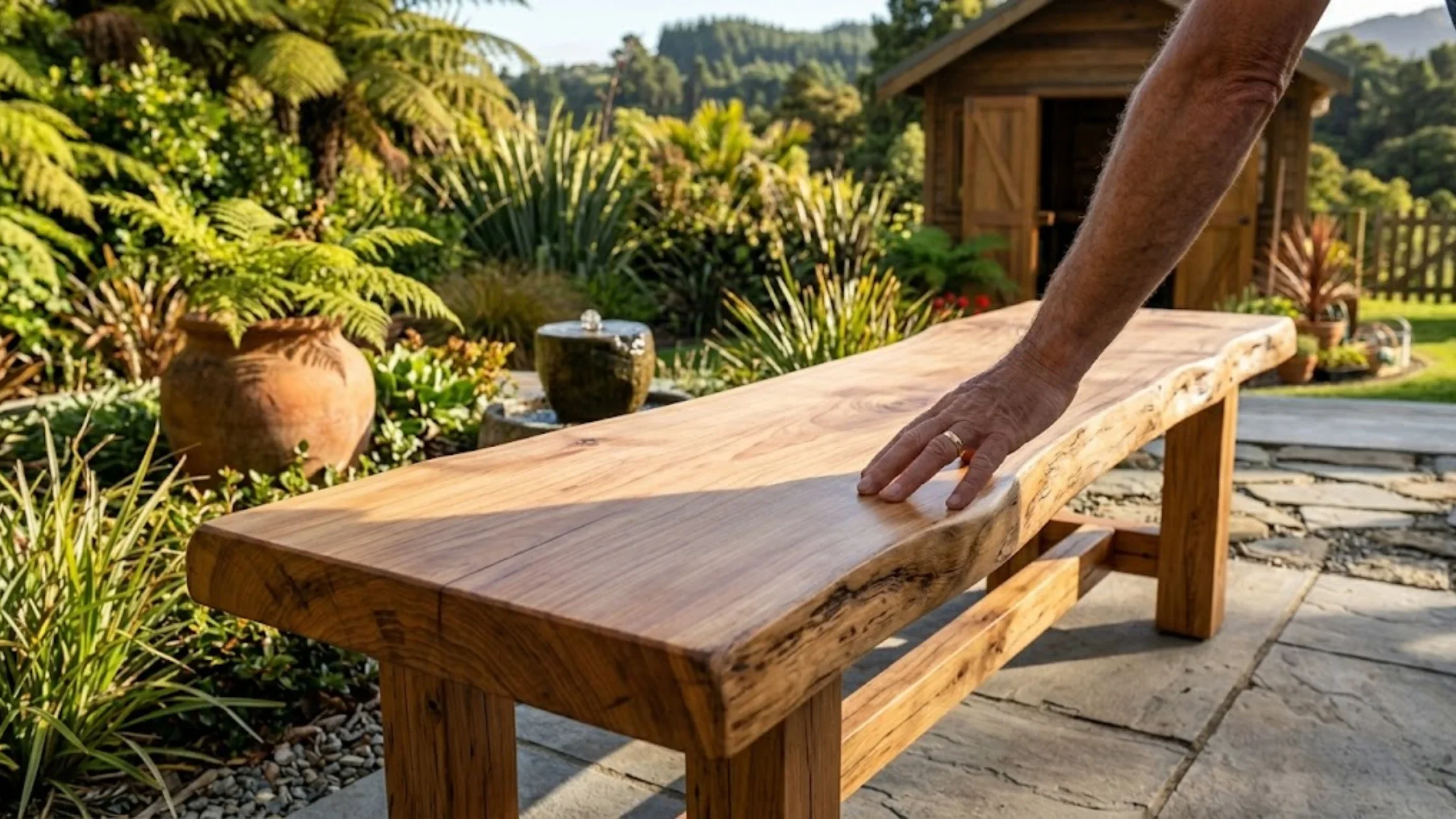
Building an outdoor wooden bench is a fun and rewarding project. If you want a lovely, natural place to sit in your garden or on your patio, a wood slab bench is the perfect choice. This guide will explain exactly what this project is about and how you can do it yourself. We will walk you through picking the best wood, preparing it, putting it together, and keeping it safe from the rain. Let us get started on creating a beautiful custom seat that you will love for years!
Key Takeaways
Choose dry, stable wood like macrocarpa or totara to handle outdoor weather.
Measure your garden or deck space carefully before cutting your timber slab.
Sand the wood thoroughly to prevent splinters and create a smooth seat.
Pick a strong base design, such as floating metal legs or solid timber blocks.
Seal your bench with a high-quality outdoor wood oil to stop cracks and sun damage.
Why Choose Slabs or Flitches for an Outdoor Timber Bench?
The natural look of live-edge timber
Live-edge timber means the wood keeps the natural, wavy shape of the tree on its sides. It does not look like a boring, straight block from a factory. Instead, it looks beautiful and rustic, bringing a piece of the wild forest right into your garden.
Why slabs and flitches work well for outdoor seating
Slabs are thick pieces of wood cut straight down the middle of a tree log. Flitches are very similar. Because they are thick and solid, they are incredibly strong. When you treat them right, they can easily survive hot sun, strong winds, and heavy rain without breaking.
Choosing custom timber slabs for a unique bench design
Every single tree grows differently. When you use custom wood slabs, your outdoor timber bench will be completely one of a kind. The wood grain, the knots, and the edges will be entirely unique to your home. No one else will ever have the exact same seat as you!
What You Need Before You Build a Wooden Outdoor Bench
Best timber for bench seat projects
You need strong wood that lives a long time outside. In New Zealand, macrocarpa and totara are brilliant choices. They naturally fight off bugs and rot. You can find excellent, ready-to-use options by visiting our timber yard.
Tools, screws, and finishing supplies
Get all your tools ready before you start. You will need a good saw for cutting, an electric sander, strong outdoor screws, and a drill. You also need quality outdoor wood oil to paint on at the very end. Having the right tools makes the whole job quick and easy.
Measuring your outdoor bench top and seat length
Grab your tape measure and walk outside. Look at your garden or deck and decide exactly where the bench will go. Make sure your timber bench seat will fit nicely without blocking any paths or doors. Write the numbers down so you know exactly what size to cut.
How to Choose the Right Timber Slab or Flitch
Selecting dry, flat, and stable wood slabs
Always pick wood that is fully dry. If the wood is still wet inside, it will bend, twist, or crack as it dries in the sun. You also want to look for a piece that is nice and flat. A flat slab makes sitting much more comfortable.
Choosing macrocarpa, totara, or recycled native timber
Macrocarpa smells wonderful and is very tough. Totara is another amazing native wood that lasts for decades outside. You can also look for old, recycled native timber. Recycled wood has lots of history and adds instant charm to your garden project.
Finding the right thickness for timber bench seats
A good outdoor bench top needs to be thick so it does not snap. Aim for the wood to be at least 50mm to 75mm thick. This thickness guarantees the bench stays strong, even when three or four heavy adults sit down at the same time.
What Bench Design Works Best Outdoors?
Floating slab bench design
A floating design uses hidden metal legs underneath the wood. It makes the heavy piece of timber look like it is magically floating in the air. This style is very modern, neat, and looks fantastic on clean, wooden decks.
Block-style timber bench seat design
This style uses thick, solid wooden blocks for the legs instead of metal. It is incredibly strong and looks very traditional. If you want your bench to look like a classic park seat, the block style fits perfectly into green gardens.
Choosing the best outdoor bench design for your space
Think about the style of your house. If you have a modern patio, try the neat floating look. If you have a big, wild garden or lots of trees, the chunky block style looks wonderful. Choose the one that makes you happiest.
How to Build a Wooden Bench Step by Step
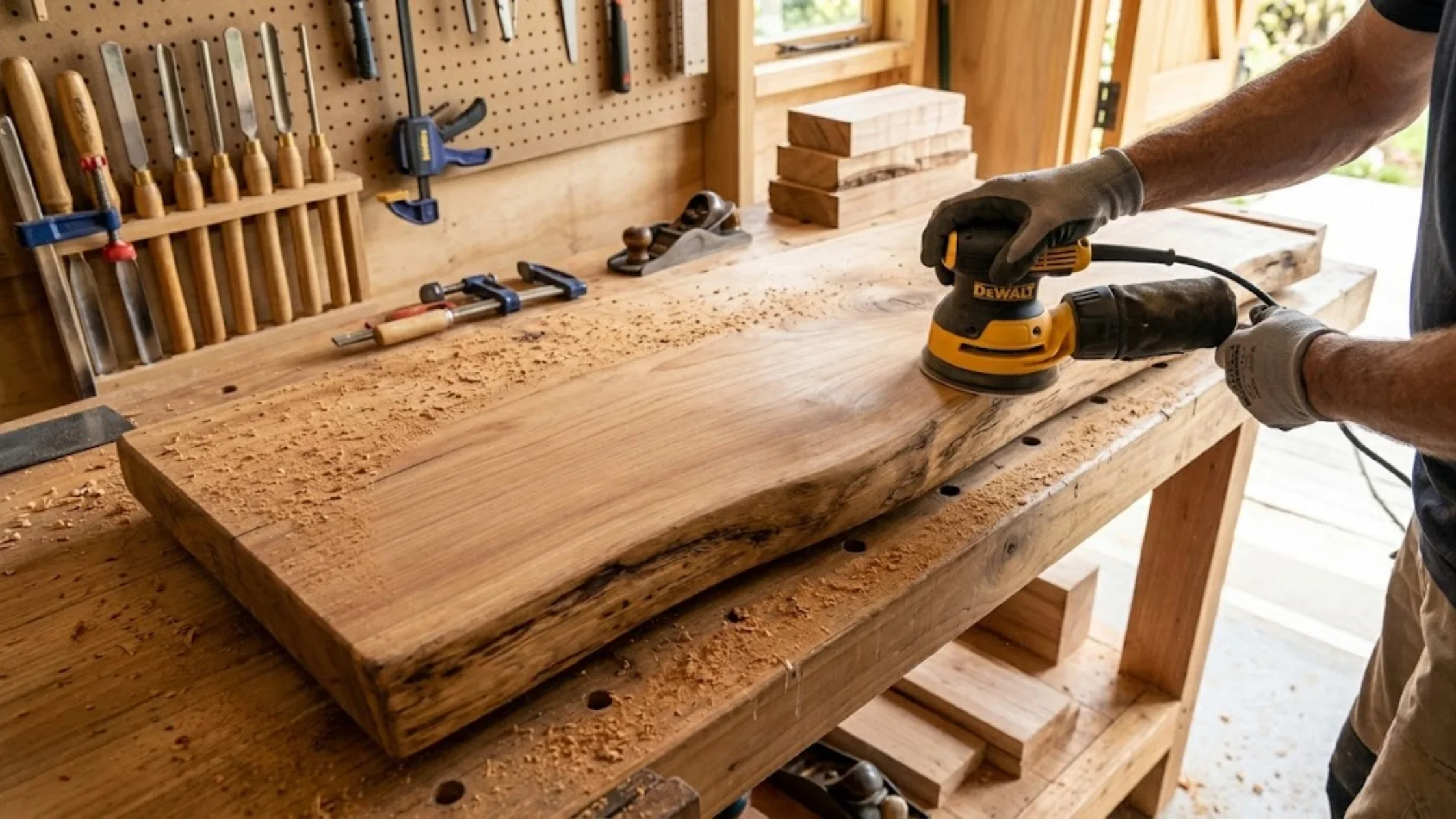
Step 1: Prepare and sand the timber
Start by making the wood perfectly smooth. Use your electric sander to take away any rough patches or sharp splinters. Take your time here. Nobody wants to get a splinter when they sit down to relax!
Step 2: Flatten and clean the slab
Make sure the top surface is completely flat and even. Once the sanding is done, wipe away all the dusty wood bits with a damp cloth. Having a totally clean surface is very important for the oil later on.
Step 3: Cut and install the legs
Cut your legs so that the bench will stand about 45cm off the ground. This is the perfect height for sitting comfortably. Attach the legs firmly to the bottom of the slab using your long outdoor screws.
Step 4: Secure the bench top
Place your big timber slab right on top of your chosen legs. Fix it down tightly. Give it a good push to make sure it does not wobble at all. It needs to feel as solid as a rock.
Step 5: Check stability and comfort
Now for the best part—sit on it! Give it a little wiggle while you sit. If it feels solid, safe, and comfortable under your legs, you have done a fantastic building job.
How to Make Your Timber Bench Weather-Resistant
Best oils and sealers for outdoor wood benches
You must protect your new bench from the rain and the sun. Use a high-quality outdoor timber oil or stain. The oil sinks deep into the wood and creates a magic shield that stops water from getting inside and causing damage.
Why sealing matters for timber bench seating
If you do not seal the wood, the sun will quickly turn it a dull grey colour. Worse, the rain will make the wood crack and rot away. Sealing keeps the beautiful golden colour bright and keeps the wood strong for many years.
How often to recoat outdoor wooden benches
You should check your bench once every year. If the wood starts to look dry, pale, or thirsty, give it another fresh coat of oil. It is a very quick job that saves the wood and keeps your bench looking brand new.
Where Can You Use a Wood Slab Bench Outdoors?
Garden seating ideas
Place your wooden outdoor bench under a big, shady tree or right next to your bright flowers. It creates a lovely, quiet spot where you can drink your morning tea, listen to the birds, or read a good book.
Deck and patio seating
A timber bench seat looks brilliant pushed up next to a large outdoor dining table. It gives you lots of extra room for your family and friends to sit together when you have an outdoor barbecue or party.
Commercial and landscaped outdoor spaces
Cafes, local parks, and businesses love using these benches too. They are tough enough for busy public areas and look so much nicer and friendlier than cold metal or cheap plastic seats.
DIY Outdoor Bench Tips for Better Results
How to prevent warping and splitting
Try to keep your bench out of direct, burning sunlight all day long if you can. Also, painting the cut ends of the wood with extra sealer really helps stop the wood from cracking open in the heat.
How to improve comfort and edge finish
Take your sander and gently round off the sharp top edges of the bench. A soft, curved edge is much nicer on the back of your legs when you sit for a long time compared to a sharp corner.
How to maintain outdoor wood benches over time
Wash the bench with mild soapy water and a sponge if it gets muddy or covered in bird dirt. Reapply your outdoor oil every summer. Taking good care of it means your bench will easily last a lifetime.
Build Your Custom Outdoor Timber Bench with Plankville
Explore slabs, flitches, and custom timber options
Are you feeling ready to build? We have amazing wood products waiting for you. Come and look around to find the absolute perfect piece of wood for your new garden project.
Contact Plankville for help choosing the right wood
If you are not sure what type or size of wood to buy, just ask us! We work with timber every single day. We are very happy to answer your questions and help you find exactly what you need.
Start your outdoor wood slab bench project today
Do not wait any longer! Grab your tools and come visit us. Building your own custom bench is fun, surprisingly easy, and gives you a beautiful, practical seat to enjoy forever.
FREQUENTLY ASKED QUESTIONS
-
To build a custom outdoor timber bench, start by selecting a dry, thick wood slab like macrocarpa. Sand the timber until it is completely smooth to remove any rough edges. Choose a sturdy leg design, such as wooden block legs or hidden metal brackets. Secure the timber slab firmly to the legs using heavy-duty outdoor screws. Finally, apply a high-quality outdoor oil to protect the wood from the weather.
-
The best timber for an outdoor bench seat in New Zealand includes macrocarpa and totara. Macrocarpa is highly popular because it naturally resists insects and rot without needing harsh chemical treatments. Totara is also incredibly durable for wet outdoor conditions. Always ensure the timber is properly dried and sealed with outdoor oil to prevent splitting and warping in the sun and rain.
-
You can make a wooden outdoor bench weather-resistant by sealing it with a premium outdoor timber oil or wood stain. Ensure the wood is completely clean and dry before you brush on the sealer. The oil penetrates deep into the wood, blocking out water and harmful UV rays. To maintain this protection and keep the wood looking beautiful, reapply the sealer at least once a year.
